
























Key Takeaway
As investors emerge from a turbulent June marked by artificial intelligence-related volatility, July 2026 presents a compelling opportunity for market participants seeking to capitalize on seasonal strength and improving fundamentals. Analysts across major financial institutions, including Wells Fargo and Goldman Sachs, are forecasting a robust summer rally driven by several converging factors: historically strong July seasonality, resilient corporate earnings growth, and a potential stabilization in interest rate expectations. The S&P 500 has already gained more than 8% year-to-date, while the technology-heavy Nasdaq Composite has advanced approximately 11%, suggesting that despite recent turbulence, the underlying bull market remains intact.
The recent pullback in AI-related stocks, which saw the so-called Magnificent Seven decline by roughly 12.7% in June, appears to be more a function of positioning adjustments and profit-taking rather than a fundamental deterioration in demand. This creates what many strategists view as an attractive entry point for investors who may have missed the earlier stages of the AI-driven rally. However, success in this environment requires a nuanced understanding of the shifting market dynamics, including the ongoing rotation from large-cap technology names into previously underperforming sectors such as financial services, healthcare, and small-cap stocks.
For investors seeking to navigate this complex landscape, tools like Intellectia.AI’s AI Stock Picker can provide valuable insights into emerging opportunities and help identify stocks positioned to benefit from the broadening market rally.
Understanding the June Volatility: What Really Happened
The AI Selloff: Positioning vs. Fundamentals
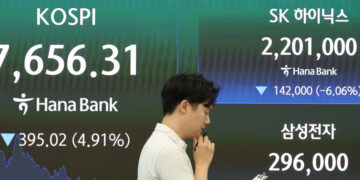
The market turbulence that characterized June 2026 was primarily driven by growing concerns about the sustainability of the artificial intelligence boom that has powered equity markets for the past three years. Investors began questioning whether the massive capital expenditures by technology giants would ultimately translate into proportional revenue growth, leading to a sharp repricing of AI-related stocks. The Magnificent Seven, which had been responsible for a disproportionate share of S&P 500 gains in recent years, experienced a collective decline of approximately 12.7% during the month.
However, a deeper analysis suggests that this selloff was driven more by portfolio rebalancing and risk management than by any fundamental weakness in AI demand. Companies like Nvidia, Microsoft, and Alphabet continue to report strong demand for their AI infrastructure and services, with data center revenues reaching record levels. The pullback appears to have been exacerbated by systematic de-risking from quantitative funds and profit-taking by investors who had enjoyed substantial gains from the AI trade. This distinction between positioning-driven volatility and fundamental deterioration is crucial for understanding the potential for a July rebound.
Interest Rate Uncertainty and Fed Policy
Compounding the AI-related volatility was renewed uncertainty surrounding Federal Reserve policy. Sticky inflation readings and resilient economic data led market participants to recalibrate their expectations for rate cuts, with many analysts now anticipating one or two additional rate hikes before the end of 2026. The appointment of Chair Warsh brought a more hawkish tone to Fed communications, though the central bank has deliberately avoided providing forward guidance that could trigger additional market volatility.
The relationship between Treasury yields and equity valuations became particularly acute during June, with sharp spikes in the 10-year yield triggering broad-based de-risking across growth stocks. This sensitivity to interest rate expectations highlights the importance of monitoring bond market developments for clues about equity market direction. As we enter July, many strategists believe that the worst of the rate repricing may be behind us, creating a more stable backdrop for risk assets.
The Case for a July Rally: Seasonality and Catalysts
Historical Patterns Favor Bulls
July has historically been one of the strongest months for U.S. equities, with data stretching back over a century showing consistent outperformance during the first half of the month. Wells Fargo analysts have highlighted that July ranks among the best seasonal periods for stocks, with average returns significantly exceeding those of other summer months. This historical pattern is supported by several structural factors, including the deployment of new capital at the start of the second half, window dressing by institutional investors, and generally lighter trading volumes that can amplify positive momentum.
The seasonal strength is particularly pronounced following periods of elevated volatility like those experienced in June. Market resets that wash out speculative excess and return positioning to more neutral levels often create the foundation for sustained rallies. With the VIX having spiked during June’s turbulence but now showing signs of normalization, the technical backdrop appears increasingly favorable for a summer advance.
Earnings Growth Remains Resilient
Despite concerns about AI spending sustainability, corporate earnings growth has remained remarkably robust heading into the second quarter reporting season. S&P 500 companies are expected to deliver year-over-year earnings growth that exceeds historical averages, with particular strength in technology, healthcare, and financial services sectors. This fundamental support provides a cushion against potential volatility and suggests that equity valuations, while elevated by historical standards, are not entirely disconnected from underlying profitability.
The breadth of earnings growth has also improved, with companies outside the mega-cap technology complex showing accelerating profit momentum. This broadening of earnings leadership is a healthy development that should support a more inclusive rally rather than one dependent on a handful of dominant stocks. Small-cap stocks, which had lagged significantly year-to-date, have begun to show signs of life as investors rotate toward more attractively valued segments of the market.
Sector Rotation: The New Market Dynamic
From Tech to Financials and Healthcare
One of the most significant developments in recent weeks has been the apparent rotation out of high-flying technology stocks and into previously underperforming sectors such as financial services and healthcare. This shift represents a natural rebalancing after years of technology dominance and reflects improving fundamentals in these lagging sectors. Financial stocks, in particular, have benefited from the higher interest rate environment, which has expanded net interest margins for banks and improved the profitability of insurance companies.
Healthcare stocks have also attracted renewed investor interest as valuations have become increasingly compelling relative to the broader market. The sector offers defensive characteristics that appeal to investors seeking shelter from potential volatility, while also providing exposure to long-term demographic trends and innovation in biotechnology and medical devices. This rotation does not necessarily indicate that investors are reducing risk overall, but rather that they are reallocating capital toward areas offering better risk-adjusted return potential.
The Small-Cap Renaissance
Small-cap stocks have staged a notable comeback in recent weeks, with the Russell 2000 outperforming the large-cap indices by a significant margin. This represents a dramatic shift from the first half of 2026, when small-caps lagged badly as investors crowded into mega-cap technology names. The improved performance reflects several factors, including more attractive valuations, greater sensitivity to domestic economic conditions, and the potential for regulatory relief under the current administration.
The small-cap rally has been particularly pronounced in sectors such as regional banking, industrials, and consumer discretionary, all of which stand to benefit from a stronger domestic economy. For investors who have been underweight small-caps due to their recent underperformance, the current environment may offer an attractive opportunity to increase exposure before the trend becomes more widely recognized.
Geopolitical Developments: Iran Ceasefire and Energy Markets
Stabilization in the Middle East
A significant factor contributing to improved market sentiment has been the announcement of a ceasefire between the United States and Iran, along with the gradual reopening of the Strait of Hormuz. While local skirmishes continue and full shipping capacity will take time to restore, the de-escalation of tensions has removed a significant source of geopolitical risk premium from energy markets. This development has helped stabilize oil prices and reduced concerns about supply disruptions that could have triggered inflationary pressures.
The decline in energy prices has multiple positive implications for the broader economy and financial markets. Lower fuel costs reduce inflationary pressures, giving the Federal Reserve more flexibility in managing monetary policy. They also provide a form of tax cut for consumers, freeing up disposable income for other spending categories. The combination of reduced geopolitical risk and lower energy costs creates a more favorable backdrop for risk assets as we move through the summer months.
Impact on Inflation Expectations
The easing of energy prices has contributed to a moderation in inflation expectations, which is critical for equity market valuations. While core inflation remains sticky due to persistent pressures in services sectors, the decline in headline inflation driven by energy costs provides psychological relief for investors who had been concerned about runaway price increases. This dynamic supports the case for a more accommodative Federal Reserve stance over the medium term, even if near-term policy remains restrictive.
The interplay between geopolitical developments, energy markets, and inflation expectations underscores the complexity of the current investment environment. Investors must remain attentive to these macro factors while also focusing on company-specific fundamentals and valuation metrics. Tools like Intellectia.AI’s AI Screener can help identify stocks that are well-positioned to navigate this multifaceted landscape.

The AI Investment Thesis: Evolution, Not Extinction
Capital Expenditure Trends
Despite the June volatility, the fundamental case for AI investment remains compelling. Major technology companies continue to announce massive capital expenditure programs dedicated to building out AI infrastructure, with spending expected to exceed $200 billion globally in 2026. This investment wave is being driven by genuine demand for AI capabilities across industries, from cloud computing and enterprise software to autonomous vehicles and healthcare diagnostics.
The recent earnings reports from companies like Broadcom and Cerebras illustrate both the opportunities and risks in the AI space. While these companies reported strong top-line growth, concerns about margin compression and the sustainability of current growth rates triggered sharp stock pullbacks. This reaction suggests that the market is becoming more discerning about AI investments, rewarding companies with clear paths to profitability while punishing those with uncertain business models.
Productivity and Economic Impact
Beyond the immediate investment implications, AI technology continues to demonstrate its potential to drive productivity gains across the economy. Goldman Sachs Research estimates that AI could boost global productivity growth by 1.5 percentage points annually over the coming decade, with particularly significant impacts in knowledge-intensive industries. This productivity enhancement should translate into higher corporate profits and economic growth, providing fundamental support for equity markets.
The productivity benefits of AI are already becoming visible in sectors such as software development, customer service, and content creation. As these technologies mature and adoption broadens, the economic impact should become increasingly pronounced. For long-term investors, the current volatility may represent an opportunity to establish positions in high-quality AI-related companies at more attractive valuations than were available earlier in the year.
Investment Strategies for the July Rally
Diversification and Risk Management
While the outlook for July appears favorable, prudent investors should maintain a diversified approach that accounts for potential volatility. The rotation from technology into other sectors suggests that a balanced portfolio may outperform one concentrated in the winners of the past several years. Consider increasing exposure to financial services, healthcare, and small-cap stocks while maintaining selective positions in high-quality technology names that have been unduly punished in the recent selloff.
Risk management remains essential, particularly given the potential for renewed volatility around Federal Reserve communications and geopolitical developments. Investors should consider position sizing carefully and maintain adequate liquidity to take advantage of potential dislocations. Stop-loss orders and options strategies may be appropriate for managing downside risk in individual positions.
Long-Term Positioning
For investors with longer time horizons, the current environment offers opportunities to establish positions in high-quality companies at reasonable valuations. The broadening of market leadership beyond the Magnificent Seven is a healthy development that should create more sustainable market gains over time. Focus on companies with strong competitive positions, durable cash flows, and reasonable valuations rather than chasing momentum in the most speculative corners of the market.
The integration of AI into business processes represents a secular trend that will likely drive investment returns for years to come. However, identifying the ultimate winners in this transformation requires careful analysis of business models, competitive dynamics, and valuation metrics. Consider using Intellectia.AI’s platform to access advanced analytical tools that can help identify the most promising opportunities in this rapidly evolving landscape.
Conclusion
July 2026 presents a compelling opportunity for investors willing to look beyond the volatility that characterized June. The convergence of strong seasonal patterns, resilient corporate earnings, and improving geopolitical conditions creates a favorable backdrop for equity markets. While risks remain, including potential Federal Reserve hawkishness and ongoing concerns about AI spending sustainability, the balance of evidence suggests that a summer rally is the most likely outcome.
The key to success in this environment will be maintaining a flexible approach that can adapt to the ongoing rotation between sectors and market capitalizations. Investors who can look beyond the recent turbulence to identify high-quality companies at attractive valuations should be well-positioned to benefit from the next leg of this bull market. As always, diversification and risk management remain essential components of any successful investment strategy.
Ready to capitalize on the July rally? Sign up for Intellectia.AI today and access powerful AI-driven tools to identify the best opportunities in this evolving market landscape. Our platform combines advanced analytics with intuitive design to help you make smarter investment decisions.
Source: Original Article