




















- On 27 June 2026, TeraWulf Inc. was moved into larger-cap Russell indices, including the Russell 1000, Russell Midcap, and Russell 1000 Growth, while being removed from several small-cap, microcap, and value benchmarks.
- This reshuffling signals a reclassification of TeraWulf within the index ecosystem, with potential implications for institutional ownership patterns, liquidity, and how investors compare it with other growth-oriented mid- and large-cap names.
- We’ll now examine how TeraWulf’s inclusion in the Russell 1000 Growth Index may influence its evolving investment narrative and risk profile.
Capitalize on the AI infrastructure supercycle with our selection of the 52 best ‘picks and shovels’ of the AI gold rush converting record-breaking demand into massive cash flow.
TeraWulf Investment Narrative Recap
To own TeraWulf today, you need to believe its pivot from volatile bitcoin mining toward long-term AI and HPC hosting contracts can eventually support a healthier balance sheet despite large current losses. The Russell 1000 and Midcap Growth inclusion raises WULF’s profile but does not, by itself, change the core near term catalyst around executing its AI infrastructure buildout, or the biggest risk of heavy capital needs and tenant concentration.
Against this backdrop, the recent reshuffle into larger cap Russell growth indices sits alongside bullish analyst expectations that were already assuming rapid revenue expansion and ongoing losses. That index move could interact with those expectations by influencing which institutional investors track or compare WULF to other growth names, but the fundamental questions around high capex, negative equity and the sustainability of major AI hosting deals such as Fluidstack and Google remain central.
Yet behind the index upgrade, investors should be aware that concentrated tenant exposure and rising capital intensity could still…
Read the full narrative on TeraWulf (it’s free!)
TeraWulf’s narrative projects $1.2 billion revenue and $138.5 million earnings by 2029.
Uncover how TeraWulf’s forecasts yield a $26.17 fair value, a 24% upside to its current price.
Exploring Other Perspectives
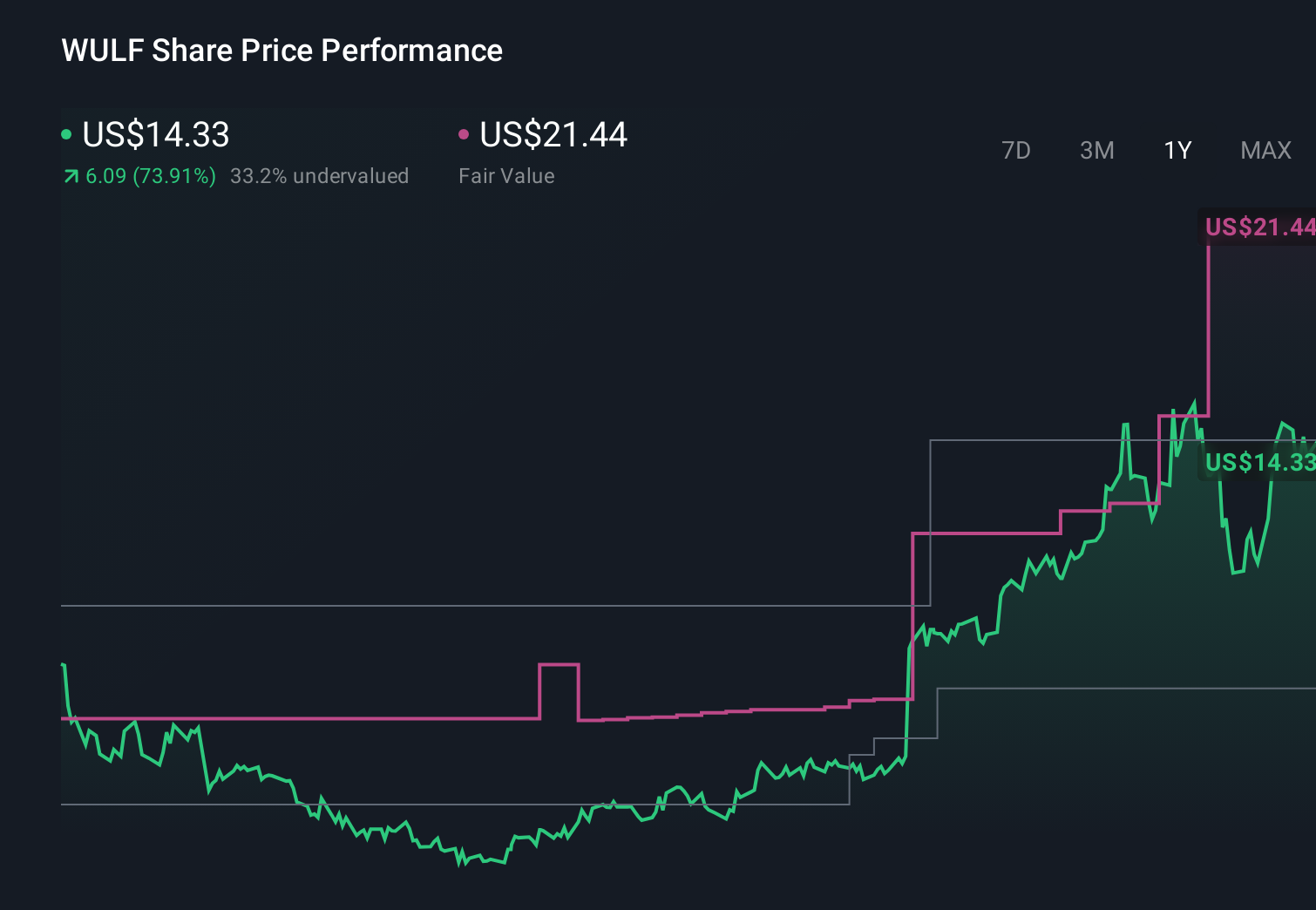
Before this index move, the most optimistic analysts were already penciling in about US$2.4 billion in revenue and positive earnings by 2029, while others worried that rapid AI buildout could magnify capital and tenant risks, reminding you that opinions differ widely and that both bullish and cautious narratives may shift as this new index status beds in.
Explore 5 other fair value estimates on TeraWulf – why the stock might be worth 15% less than the current price!
Reach Your Own Conclusion
Disagree with existing narratives? Extraordinary investment returns rarely come from following the herd, so go with your instincts.
Ready For A Different Approach?
Every day counts. These free picks are already gaining attention. See them before the crowd does:
This article by Simply Wall St is general in nature. We provide commentary based on historical data
and analyst forecasts only using an unbiased methodology and our articles are not intended to be financial advice. It does not constitute a recommendation to buy or sell any stock, and does not take account of your objectives, or your
financial situation. We aim to bring you long-term focused analysis driven by fundamental data.
Note that our analysis may not factor in the latest price-sensitive company announcements or qualitative material.
Simply Wall St has no position in any stocks mentioned.
Valuation is complex, but we’re here to simplify it.
Discover if TeraWulf might be undervalued or overvalued with our detailed analysis, featuring fair value estimates, potential risks, dividends, insider trades, and its financial condition.
Have feedback on this article? Concerned about the content? Get in touch with us directly. Alternatively, email [email protected]
Source: Original Article