








Monday, July 6, 2026
No Result
View All Result
  • Home
  • Market Overview
    • All
    • Crude Oil Prices
    • Cryptocurrency News
    • Economy News
    • ETFs
    • Foreign Exchange News
    • Indices
    • Stock Market
    OPEC+ agrees on raising output targets, starting in August

    OPEC+ agrees on raising output targets, starting in August

    Exclusive | All that glitters: Hong Kong pension fund to offer more gold ETFs

    Exclusive | All that glitters: Hong Kong pension fund to offer more gold ETFs

    Weaker Commodity Prices Set to Tip Australia Into Trade Deficit

    Weaker Commodity Prices Set to Tip Australia Into Trade Deficit

    Oil prices slip as OPEC+ output hike fuels oversupply concerns

    Ducommun (DCO) Reclassified Into Growth Indices Is Its Investment Story Quietly Shifting Gears?

    Ducommun (DCO) Reclassified Into Growth Indices Is Its Investment Story Quietly Shifting Gears?

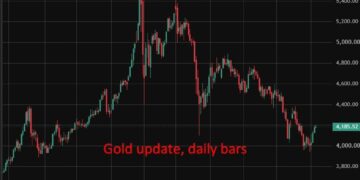
    Wall Street splits on gold as forecasts range from $4,800 to $6,000

    Wall Street splits on gold as forecasts range from $4,800 to $6,000

    • Crude Oil Prices
    • Cryptocurrency News
    • Economy News
    • ETFs
    • Indices
    • Stock Market
    • Foreign Exchange News
    • Commodities News
  • Forex Market
    • All
    • Central Banks News
    • Currencies
    • Interest Rate
    • Nonfarm Payroll
    British Pound holds mid-1.3300s vs USD as Hormuz risks loom

    British Pound holds mid-1.3300s vs USD as Hormuz risks loom

    The perceived inflation wedge: Why households experience inflation differently from official statistics

    The perceived inflation wedge: Why households experience inflation differently from official statistics

    Trump’s War Means Higher Global Interest Rates for Years to Come

    Trump’s War Means Higher Global Interest Rates for Years to Come

    Weekend – ECB’s Moulin says bank in ‘good position’ as oil-driven inflation eases

    Weekend – ECB’s Moulin says bank in ‘good position’ as oil-driven inflation eases

    RBNZ set to hike rates to 2.50% on July 8 as inflation persists, poll shows

    RBNZ set to hike rates to 2.50% on July 8 as inflation persists, poll shows

    CBE issues new rules governing banks’ investments in corporate, securitisation bonds

    CBE issues new rules governing banks’ investments in corporate, securitisation bonds

    Survey: Central Banks Boost Gold Reserves to Counter Inflation and Geopolitical Risks

    CBE instructs banks to increase support for national healthcare initiatives

    CBE instructs banks to increase support for national healthcare initiatives

    COMMENT: Why Iran's central bank is starving banks of liquidity

    COMMENT: Why Iran's central bank is starving banks of liquidity

    • Central Banks News
    • Currencies
    • Interest Rate
    • Nonfarm Payroll
  • Commodities
    • All
    • Gold
    • Oil and Gas
    • Silver

    Gold prices rise as cooling rate hike bets hit dollar

    Record gold prices fuel surge in resale, easing import pressure

    Record gold prices fuel surge in resale, easing import pressure

    Oil Prices to Extend Decline as Discount ME Stockpile Selloff and Higher OPEC Supply Pressure Crude

    Oil Prices to Extend Decline as Discount ME Stockpile Selloff and Higher OPEC Supply Pressure Crude

    Gold Price Forecast: XAU/USD Holds 4,000 Ahead of FOMC Minutes as US Debt Forces Central Banks to Increase Gold Focus

    Gold Price Forecast: XAU/USD Holds 4,000 Ahead of FOMC Minutes as US Debt Forces Central Banks to Increase Gold Focus

    The Era of Cheap U.S. Natural Gas May Be Coming to an End

    The Era of Cheap U.S. Natural Gas May Be Coming to an End

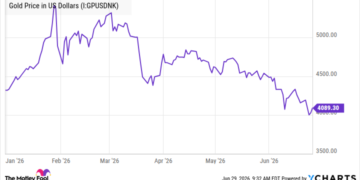
    Gold Was Volatile in the First Half of 2026. Here’s How to Invest in Gold for the Rest of the Year.

    Gold Was Volatile in the First Half of 2026. Here’s How to Invest in Gold for the Rest of the Year.

    • Gold
    • Oil and Gas
    • Silver
  • Crypto
    • All
    • Bitcoin
    • Ethereum
    • Litecoin
    • Ripple
    • Solana
    • XRP
    XRP Price Stalls at $1.07 Resistance After June Rejections

    XRP Price Stalls at $1.07 Resistance After June Rejections

    Bitcoin, Ethereum, XRP, Dogecoin Rally as ‘Extreme Fear’ Persists: Analyst Expects a ‘Quick’ Move Upward for BTC After ‘Shallow’ Correction

    Bitcoin, Ethereum, XRP, Dogecoin Rally as ‘Extreme Fear’ Persists: Analyst Expects a ‘Quick’ Move Upward for BTC After ‘Shallow’ Correction

    XRP price at Jul 5, 2026 at 9pm EDT?
 Prediction Market

    XRP price at Jul 5, 2026 at 9pm EDT? Prediction Market

    Ripple’s $3.3B Stake Puts XRP Rails Into Nigeria’s Arteries

    Ripple’s $3.3B Stake Puts XRP Rails Into Nigeria’s Arteries

    Solana flashes its first buy signal since 2025 – Is $90 next for SOL?

    Solana flashes its first buy signal since 2025 – Is $90 next for SOL?

    Vitalik Buterin Says Ethereum to Undergo Broad Overhaul Over Next 3 to 4 Years

    Vitalik Buterin Says Ethereum to Undergo Broad Overhaul Over Next 3 to 4 Years

    • Bitcoin
    • Ethereum
    • Litecoin
    • Ripple
    • Solana
    • XRP
  • Chart
  • Economic Calendar
No Result
View All Result
Home Market Overview Economy News

Why the world’s chokepoints still govern the global economy

Why the world’s chokepoints still govern the global economy
Share on FacebookShare on Twitter

MAPS never stopped mattering. We merely convinced ourselves they did.

For almost three decades, globalisation encouraged governments and businesses alike to believe that technology, markets and just-in-time supply chains had conquered geography.

Production shifted to wherever costs were lowest, capital flowed with unprecedented ease, and the physical map appeared increasingly subordinate to the digital economy.

Recent events have exposed that assumption as one of the defining strategic miscalculations of our time.

Around one-fifth of globally traded crude oil passes through the Strait of Hormuz, while the Suez Canal carries roughly one-third of global container traffic.

Meanwhile, the Strait of Malacca remains one of the world’s busiest maritime corridors and the principal maritime gateway linking East Asia with the Indian Ocean, the Middle East and Europe.

These are not merely shipping routes; they are the arteries through which the global economy breathes.

Few countries have a greater stake in this return of geography than Malaysia.

Situated astride the Strait of Malacca, Malaysia’s prosperity has always depended as much on its strategic location as on its natural resources.

At a time when multinational corporations are reassessing supply chains and governments are recalibrating national security strategies, Malaysia occupies one of the most strategically valuable positions in the emerging geoeconomic landscape.

More importantly, these waterways are no longer merely geographical features.

They function as economic institutions, shaping commodity prices, insurance premiums, investment decisions and supply-chain resilience in much the same way that financial markets, payment systems and capital markets influence the global economy.

Their uninterrupted operation underpins international commerce; their disruption reverberates across industries and continents. This represents one of the defining transformations of the contemporary international political economy.

If the first article in this series argued that geopolitical uncertainty has become the new currency of power, this second proposition follows naturally: geography determines where that currency is minted, traded and priced.

Maritime chokepoints have become the exchanges through which geopolitical risk is transmitted into the global economy.

When Geography Becomes An Economic Institution

The world’s major maritime chokepoints – the Strait of Hormuz, Bab el-Mandeb, the Suez Canal, the Strait of Malacca and increasingly the Taiwan Strait – should no longer be viewed simply as narrow waterways connecting oceans.

They are strategic economic institutions that sustain the movement of energy, manufactured goods, agricultural commodities, semiconductors and intermediate inputs upon which the global economy depends.

When these arteries function normally, their significance is often overlooked.

Their value becomes apparent only when they are disrupted.

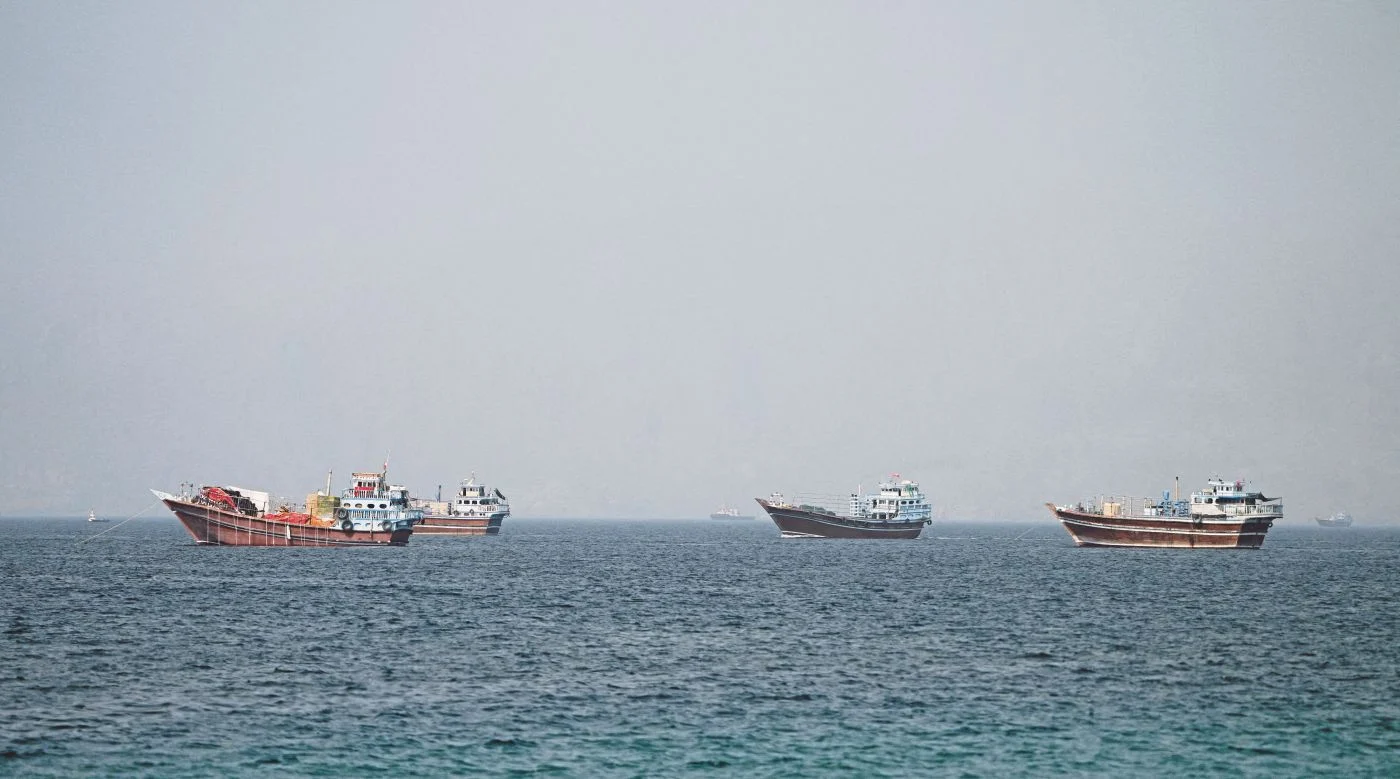
The tensions surrounding the Strait of Hormuz in 2026 provided a vivid reminder of this reality.

Even after military tensions subsided and shipping resumed, commercial confidence recovered far more slowly.

Shipping companies, insurers and commodity traders continued to factor geopolitical uncertainty into freight rates, insurance costs and operational decisions.

The episode demonstrated that markets respond not merely to actual conflict, but to the probability that disruption may occur.

Risk itself has become an economic variable.

The same logic applies to the Red Sea. Repeated attacks on commercial vessels forced many shipping lines to reroute around the Cape of Good Hope, extending voyages by thousands of nautical miles, increasing fuel consumption, reducing fleet availability and raising transportation costs across multiple industries.

A relatively narrow maritime corridor generated consequences that reached manufacturers in Asia, retailers in Europe and consumers around the world.

The Suez Canal reinforces the same lesson. The grounding of the Ever Given in 2021 demonstrated that a single incident could interrupt hundreds of billions of dollars in global trade within days.

No military confrontation was required. The episode simply exposed how heavily global commerce depends upon a handful of critical geographical corridors.

The Taiwan Strait illustrates that geography today is no longer about the movement of oil alone. It also underpins the movement of semiconductors, advanced electronics and the digital infrastructure upon which the modern economy increasingly depends.

Any sustained disruption would reverberate far beyond Northeast Asia, affecting industries ranging from artificial intelligence and automotive manufacturing to telecommunications and advanced defence technologies.

In every case, geography becomes economics.

From Efficiency to Resilience

For much of the post-Cold War period, efficiency defined globalisation. Companies optimised production around cost, speed and scale.

Inventories were minimised, production dispersed across multiple jurisdictions and redundancy was viewed as inefficiency.

Today, resilience increasingly defines geoeconomics.

Corporations now evaluate investment destinations using criteria once associated primarily with national security planners: political stability, maritime security, alliance networks, energy resilience, logistics redundancy and strategic access to reliable shipping routes.

Supply-chain resilience has become as important as production efficiency.

The objective is no longer simply to produce at the lowest possible cost, but to ensure that production can continue during periods of geopolitical uncertainty.

This represents a profound transformation in how businesses assess comparative advantage. Geography has once again become a commercial asset rather than merely a physical characteristic.

For Malaysia, this shift presents both opportunity and responsibility. The country’s strategic location, established manufacturing ecosystem, sophisticated financial sector and longstanding commitment to an open trading system position it favourably as firms diversify supply chains and seek trusted partners within the Indo-Pacific.

Malaysia’s diplomatic tradition further reinforces this advantage.

By maintaining constructive relations with major powers while remaining firmly anchored within Asean, Malaysia has cultivated a reputation for strategic balance and policy predictability.

In an increasingly fragmented international environment, these qualities enhance investor confidence and strengthen the country’s role as a regional commercial hub.

Yet geography alone is never sufficient.

Strategic location must be complemented by efficient ports, world-class logistics, institutional credibility, regulatory certainty, digital infrastructure and sustained investment in human capital.

Geography creates opportunity; policy determines whether that opportunity is realised.

The broader lesson extends well beyond Malaysia.

The 21st century is witnessing the return of geography as a central organising principle of international economics.

Artificial intelligence, cloud computing, advanced manufacturing, renewable energy and digital commerce all depend upon physical infrastructure – ports, undersea cables, shipping lanes, logistics hubs and maritime chokepoints.

Even the digital economy ultimately rests upon tangible geographical foundations.

The countries that prosper in the decades ahead will not necessarily be those with the largest economies or the strongest militaries. They will be those that best understand how geography, economics and diplomacy reinforce one another.

History has not ended. Geography has returned – and with it, the enduring reality that control over the world’s arteries of commerce remains one of the oldest and most effective forms of strategic power.

Source: Original Article

Previous Post

BoK warns of risks from single-stock leveraged ETFs

Next Post

Solana flashes its first buy signal since 2025 – Is $90 next for SOL?

RelatedPosts

OPEC+ agrees on raising output targets, starting in August

by MarketNewsBoard
52 minutes ago
OPEC+ agrees on raising output targets, starting in August

 The Organization of Petroleum Exporting Countries and its allies (OPEC+), including Russia, agreed to raise their output targets by 188,000 barrels a day starting in...

Read moreDetails

Exclusive | All that glitters: Hong Kong pension fund to offer more gold ETFs

by MarketNewsBoard
57 minutes ago
Exclusive | All that glitters: Hong Kong pension fund to offer more gold ETFs

MPFA to relax gold ETF investment approval rules as part of Hong Kong government’s push to turn the city into a regional gold trading hub....

Read moreDetails
Next Post
Crude Oil Prices Plummet to Pre-War Levels Amid Supply Surge

Crude Oil Prices Plummet to Pre-War Levels Amid Supply Surge

Ripple’s $3.3B Stake Puts XRP Rails Into Nigeria’s Arteries

Ripple’s $3.3B Stake Puts XRP Rails Into Nigeria’s Arteries

Recommended.

Pound Holds Steady as BoE Focuses on Inflation. Forecast as of 02.07.2026

Pound Holds Steady as BoE Focuses on Inflation. Forecast as of 02.07.2026

July 2, 2026
Europe is rewriting its landmark MiCA regulatory rulebook as hard July 1 deadline passes

Europe is rewriting its landmark MiCA regulatory rulebook as hard July 1 deadline passes

July 1, 2026

Trending.

No Content Available
Market News Board | Market Analysis,Charts & News

MarketNewsBoard delivers trusted financial news, real-time market analysis, interactive charts, and economic insights across the global financial markets.

Covering Forex, Commodities, Stocks, Indices, Cryptocurrencies, and major economic events...

Follow Us

Market Overview

  • Forex Market
  • Commodities
  • Cryptocurrency News
  • Stocks
  • Indices
  • Crude Oil Prices
  • Economic Calendar

Resources

  • Central Banks News
  • Economy News
  • Interest Rate
  • Nonfarm Payroll
  • Charts

Tools

  • Currency Heat Map
  • Correlation Matrix
  • Market Sentiment
  • Currency Cross Rates
  • Crypto Rates
  • About Us
  • Contact Us
  • Disclaimer
  • Privacy Policy
  • Terms and Conditions

© 2026 MarketNewsBoard | Market Analysis, Charts & News.

AAPL
$308.63
AMZN
$242.67
BTC-USD
$63,384.02
EURUSD=X
$1.14
DX-Y.NYB
$100.96
NVDA
$194.83
TSLA
$393.45
DOW
$27.71
^N225
$68,919.14
JPY=X
$161.79
GBPUSD=X
$1.33
CAD=X
$1.42
NG=F
$3.17
BZ=F
$72.19
NFLX
$77.65
GOOG
$356.18
MSFT
$390.49
^RUT
$2,996.11
^FTSE
$10,679.03
AUDUSD=X
$0.693
CHF=X
$0.804
HG=F
$6.22
ETH=F
$1,757.50
No Result
View All Result
  • Home

© 2026 MarketNewsBoard | Market Analysis, Charts & News.