


















Czech Central Bank Raises Key Rate to 3.75% Amid Inflationary Pressures
Czech National Bank’s Decision and Market Reactions
Background and Reasons for the Rate Hike
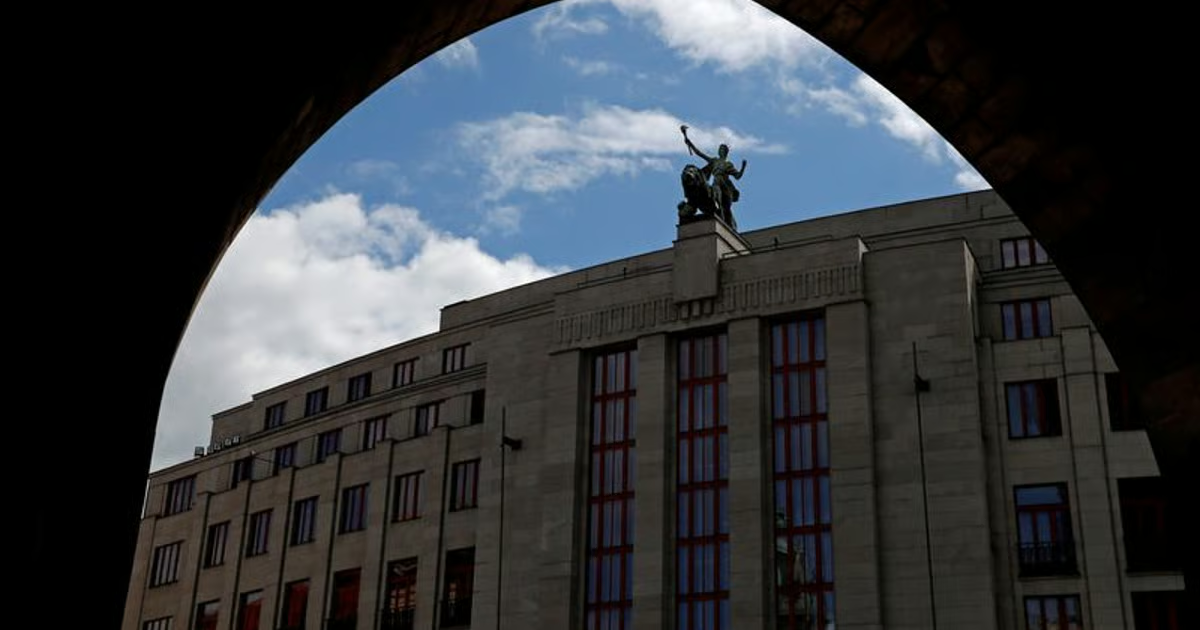
PRAGUE, June 18 (Reuters) – The Czech National Bank (CNB) raised interest rates on Thursday, as expected, for the first time in four years to get ahead of inflationary pressures coming from fast-growing wages, the services sector and the impact of the Iran war.
The hike by 25 basis points takes the main two-week repo rate to 3.75%. A slight majority of analysts in a Reuters poll had forecast the move, while markets had also priced in the hike and see a possible further increase by the end of the year.
Global Context and Oil Market Impact
Investors have scaled back expectations of rate hikes in the past two weeks, with the United States and Iran this week reaching an interim agreement to end their war that followed U.S. and Israeli air strikes on Iran in February.
The conflict closed the Strait of Hormuz, a key waterway for global oil and gas markets, causing prices of oil, gas and other products to soar. Oil prices have fallen to below $80 a barrel, from peaks well above $100.
Central Bank Communication
Czech central bank Governor Ales Michl will comment on the bank’s decision at a 3 p.m. (1300 GMT) news conference.
Debate and Outlook for Further Rate Moves
Arguments against the hike – coming after a series of cuts that stopped in May 2025 – were that policy was still restrictive at current levels and the economy was not overheating.
Rate Hike Pricing Over Next Year
RATE HIKE PRICING OVER NEXT YEAR HAS EASED
In early June, forward rate agreements had indicated up to four rate hikes over the next year – pricing that Czech policymaker Jan Prochazka had said in a Reuters interview looked unrealistic, helping cool market thinking.
Michl, speaking to Bloomberg in an interview published last Friday, said the case for a rate hike in June had strengthened.
Historical Context and Inflation Trends
The rise is the first since June 2022, when the bank lifted the main rate to a more than two-decade high of 7.00% amid a surge of inflation into double-digit territory caused by high energy prices after Russia’s invasion of Ukraine.
The bank entered this recent energy price surge in better condition, with inflation holding below 3%, the top end of the bank’s tolerance band around its 2% target.
Current Inflation and Wage Growth
But while the headline inflation rate was at 2.1% year-on-year in May, services inflation continued to grow at nearly 5%, and wages rose nominally at their fastest pace in three years in the first quarter, at over 8%.
Reporting Credits
(Reporting by Jason Hovet and Jan Lopatka; Editing by Aidan Lewis)
Source link