

















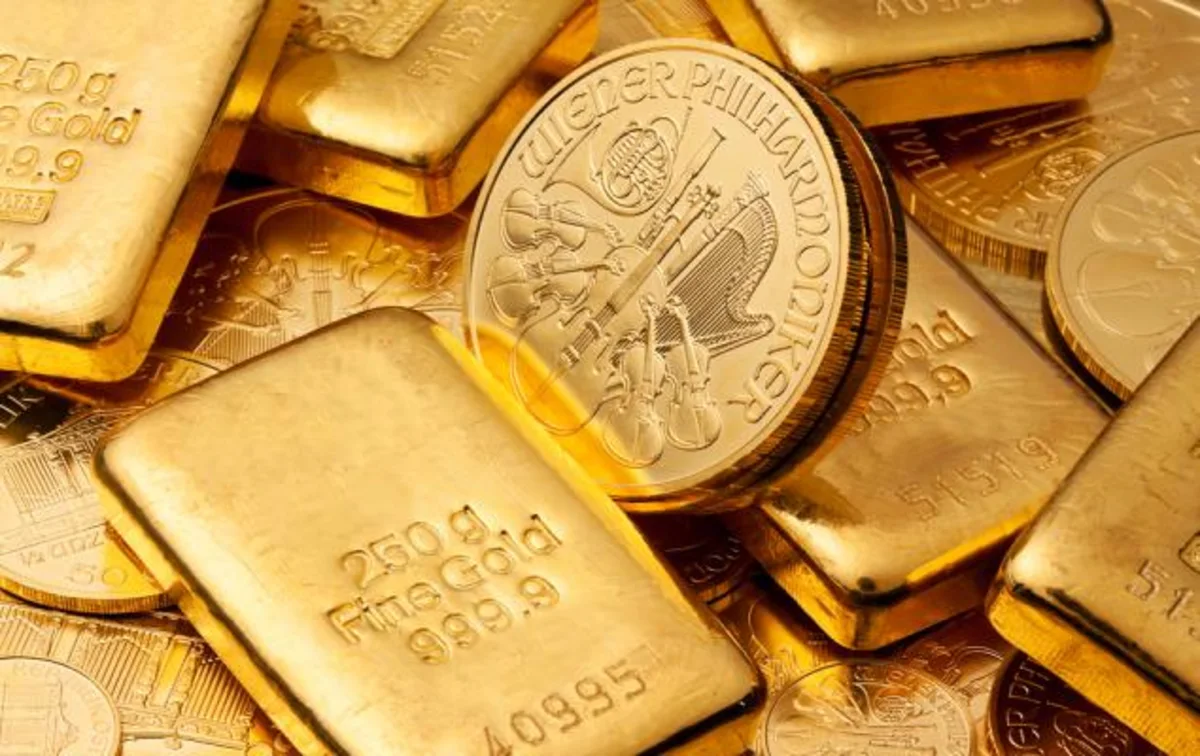
After falling on Wednesday in response to the Fed’s hawkish stance, gold prices recovered on Thursday as a U.S.-Iran interim agreement pushed oil prices lower, easing inflation concerns and improving sentiment toward the precious metal. Per TradingView, gold prices rose about 0.2% in the latest trading session and 1.34% over the past five sessions. While the metal is still down about 1.4% so far this year, it has climbed roughly 25.6% over the past 12 months. The U.S. benchmark West Texas Intermediate (WTI) crude, currently trading around the level of $75.4 per barrel, has fallen about 12.56% over the past five days and 36.77% over the past month. As expectations build around the Strait of Hormuz reopening, oil prices may face further downside, potentially providing additional support for gold. Additionally, an increasing number of central banks are looking to expand their safe-haven reserves amid heightened geopolitical tensions, as per the World Gold Council’s (WGC) annual Central Bank Gold Reserves survey quoted on CNBC. Also, with investors rotating out of tech and AI-related trades, gold may offer a useful diversification tool for portfolios. Central Bank Demand Remains a Key Support for Gold Central bank demand is set to remain a key pillar supporting gold’s long-term outlook. Steady buying by major economies can anchor gold prices, helping limit downside even during sharp pullbacks. As per the World Gold Council’s survey, central banks continue to regard gold as a crucial hedge against inflation, geopolitical risk and currency fluctuations, even amid recent price volatility during the Iran conflict. The survey also added that, on average, the central banks have added about 1,000 tonnes annually over the past four years, double the prior decade’s pace. Nearly 90% of the central banks expect global gold reserves to rise over the next year, while 45% plan to increase their own holdings. An increasing number of central banks are opting to store gold bullion domestically rather than overseas. Analysts cited in the abovementioned CNBC article note that rising geopolitical tensions are prompting a reassessment of reserve management strategies. Per the article, the invasion of Ukraine by Russia, along with the freezing of about $300 billion in Russian foreign assets, has raised concerns about the accessibility of overseas-held reserves during times of political conflict. Building Portfolio Exposure to Gold With ETFs The prospect of a hawkish Fed and interest rates remaining higher for longer remains a key headwind for non-yielding assets such as gold. While the Fed’s policy stance may cloud the near-term outlook, the long-term investment case for the precious metal remains intact. In fact, the recent pullback could present an attractive entry point for investors seeking strategic exposure. The precious metal continues to serve as an important portfolio diversifier and hedge for investors across different investment themes, especially during periods of elevated market volatility and economic uncertainty. Although the yellow metal has declined about 6.67% over the past month, investors may view such weakness as an opportunity rather than a setback. Rather than reacting to short-term price fluctuations, investors can consider gradually building exposure through gold ETFs using a disciplined buy-the-dip approach. This approach enables investors to gradually build positions while taking advantage of attractive entry points during market pullbacks. In the current market backdrop, a long-term passive approach stands out as a strategy that can help investors remain resilient amid short-term market volatility, with gold emerging as an attractive portfolio allocation, offering both diversification benefits and potential downside risk protection. Gold ETFs to Watch for Long-Term Exposure Below, we have highlighted a few funds in which investors can increase their allocation to gain greater exposure to gold. Investors can consider SPDR Gold Shares GLD, iShares Gold Trust IAU, SPDR Gold MiniShares Trust GLDM and iShares Gold Trust Micro IAUM to increase their exposure to the yellow metal. With a one-month average trading volume of 7.65 million shares, GLD is the most liquid option. GLD has gathered an asset base of $141.71 billion, the largest among the other options. Regarding annual fees, GLDM and IAUM are the cheapest options, charging 0.10% and 0.09%, respectively, which makes them more suitable for long-term investing. Gold Miner ETFs Worth a Closer Look These ETFs focus on gold miners, usually magnifying gold’s gains and losses. They provide access to the gold mining industry, not the commodity’s price. Investors can consider VanEck Gold Miners ETF GDX, Sprott Gold Miners ETF SGDM and Sprott Junior Gold Miners ETF SGDJ. With a one-month average trading volume of 24.87 million shares, GDX is the most liquid option. GDX has also gathered an asset base of $26.57 billion, the largest among the other options. Regarding annual fees, SGDM is the cheapest option, charging 0.46%. Want the latest recommendations from Zacks Investment Research? Today, you can download 7 Best Stocks for the Next 30 Days. Click to get this free report SPDR Gold Shares (GLD): ETF Research Reports iShares Gold Trust (IAU): ETF Research Reports VanEck Gold Miners ETF (GDX): ETF Research Reports Sprott Gold Miners ETF (SGDM): ETF Research Reports Sprott Junior Gold Miners ETF (SGDJ): ETF Research Reports SPDR Gold MiniShares Trust (GLDM): ETF Research Reports This article originally published on Zacks Investment Research (zacks.com). Zacks Investment Research
Source link


In the last trading session, Wall Street sank as major indexes tumbled following the Federal Reserve's decision to hold interest rates steady amid sticky inflation....
Read moreDetails