
























Ethereum ETF update coverage is no longer only about inflows and outflows. The bigger question is whether staking ETFs can turn ETH▲$1,761.17 from a passive spot exposure product into a yield-bearing institutional asset.
That matters because Ethereum has had a difficult 2026. ETH is trading near $1,767 as of July 6, 2026, far below the bullish expectations that surrounded the first U.S. spot Ethereum ETFs in 2024. ETF demand has been uneven, technical momentum has weakened, and major banks have already cooled their Ether forecasts. Citi recently cut its 12-month Ether target from $3,175 to $2,240, citing negative ETF flows, weaker investor demand, limited regulatory momentum, and broader risk-off conditions.
That is exactly why staking ETFs matter. If traditional investors can access ETH price exposure and staking yield through regulated exchange-traded products, Ethereum ETFs may finally get the catalyst they were missing.
Read more: Ethereum Market Update: ETF Outflows Continue as ETH Fights to Hold the $2,000 Psychological Level
Contents
- 1.Ethereum ETF Update: Where Things Stand Now
- 2.Why Staking Could Change the Ethereum ETF Market
- 3.Why Staking ETFs Could Matter More Than Spot ETF Approval Did
- 4.What Could Make Staking ETFs ETH’s Biggest Catalyst?
- 5.Staking ETFs vs Direct ETH Staking
- 6.Main Risks for Ethereum Staking ETFs
- 7.ETH Price Outlook: What Staking ETFs Need to Prove
- 8.Final Thoughts on the Ethereum ETF Update
- 9.FAQ
Ethereum ETF Update: Where Things Stand Now
The current Ethereum ETF update is mixed. Spot Ethereum ETFs are live, but they have not created the same powerful demand cycle that Bitcoin ETFs created after launch. When U.S. spot Ether ETFs began trading in July 2024, the market expected institutional access to become a major tailwind. The launch was important, but the first generation of products had a major limitation: they generally offered ETH price exposure without staking rewards.
That made spot Ethereum ETFs less compelling than direct ETH ownership for investors who understood staking. Holding ETH directly can generate staking rewards. Holding a non-staking ETF only tracks the asset, minus fees.
The situation is now changing. SEC filings show that Ethereum staking products are becoming part of the U.S. ETF market structure. Grayscale’s March 2026 filing for the Grayscale Ethereum Staking Mini ETF showed the trust holding more than 861,000 ETH and reporting $8.375 million in Ether staking reward income for the quarter ended March 31, 2026.
BlackRock-related filings also show how large asset managers are structuring staked ETH products. The iShares Staked Ethereum Trust ETF was organized in November 2025, with BlackRock Fund Advisors listed as trustee, while the prospectus explains that the trust can pay a staking fee and retain the remainder of gross staking consideration.
In short, the Ethereum ETF update has moved from a simple question — “Are ETH ETFs gaining flows?” — to a better question: “Can staking make ETH ETFs structurally more attractive?”
Why Staking Could Change the Ethereum ETF Market
Staking is Ethereum’s core economic advantage over Bitcoin in ETF form. Bitcoin ETFs offer clean exposure to BTC▲$62,630.00, but Bitcoin itself does not generate native yield. Ethereum is different because ETH secures a proof-of-stake network.
Ethereum.org currently shows roughly 40.3 million ETH staked, equal to about 32% of supply, with a current APR around 2.6%. ETH.STORE and Compass staking yield data also place the current Ethereum staking reward rate around the high-2% to low-3% range, depending on methodology and date.
That may not sound explosive. A 2.5%–3% staking yield will not save ETH if the asset is falling 30%. But for institutional investors comparing crypto products, the difference matters. A staking ETF can offer three things at once:
- Regulated ETH exposure.
- Native blockchain rewards.
- Operational simplicity without running validators or managing private keys.
That combination could make staking ETFs the most important Ethereum ETF update of 2026.
The Bull Case: Staking ETFs Could Bring Institutions Back to ETH
The strongest bullish case is simple: staking ETFs turn ETH into a more productive asset.
Traditional institutions understand yield. They understand dividends, coupons, carry, and total return. ETH staking rewards are not the same thing as bond interest or equity dividends, but they make ETH easier to explain inside a portfolio model.
For a pension fund, wealth manager, or registered investment adviser, “regulated ETH exposure with a possible staking component” is much easier to defend than “buy ETH because it might go up.” That shift could improve institutional demand.
This is where the Ethereum ETF update becomes important for price action. ETH does not need staking ETFs to create a huge yield. It needs them to change the investor narrative. If ETF investors begin to see ETH as a yield-bearing crypto infrastructure asset, the market may start assigning Ethereum a different valuation multiple.
In a bullish scenario, staking ETFs could support ETH in three ways:
| Catalyst | Why It Matters for ETH |
|---|---|
| Higher ETF demand | Yield may make Ethereum ETFs more attractive than passive spot exposure |
| Lower circulating liquidity | ETF-held and staked ETH can reduce available market supply |
| Stronger institutional narrative | ETH becomes easier to frame as productive crypto infrastructure |
| Better long-term retention | Investors may hold longer if staking rewards offset part of the fee drag |
This does not mean staking ETFs will automatically push ETH higher. But it does mean Ethereum may finally have a catalyst that Bitcoin does not have.
The Bear Case: Staking ETFs May Not Be Enough
The bearish argument is also strong. The latest Ethereum ETF update cannot ignore the obvious problem: ETH has not been acting like an asset with strong demand.
Citi’s downgrade reflected that reality. The bank lowered its Ether target and pointed to negative ETF flows, weak institutional demand, and a lack of strong regulatory momentum. That is not a minor warning. It suggests that investors are not yet treating ETH ETFs as a must-own product.
ETF flows also remain choppy. Farside tracks Ethereum ETF flows in real time, and recent data show that small positive days can follow extended outflow periods. For example, Farside reported a $29 million net Ethereum ETF inflow on July 2, 2026, led mostly by BlackRock’s ETHA, but that does not yet prove a durable demand reversal.
There is also a fee problem. Staking ETFs do not pass 100% of gross staking rewards to investors. BlackRock’s iShares Staked Ethereum Trust ETF filing says the aggregate staking fee equals 18% of gross staking consideration, meaning the trust keeps the remainder for shareholders after that staking-fee layer.
Related: Bitcoin and Ethereum in Crisis: Can Solana Become the Main Global Payments Network in 2026?
That still may be attractive, but the math matters. If ETH staking yields roughly 2.6%–3.0% and an ETF takes a portion of staking rewards plus management fees, investors may receive a modest net benefit rather than a game-changing income stream.
The bear case is blunt: staking ETFs improve the product, but they do not solve weak ETH demand by themselves.
Why Staking ETFs Could Matter More Than Spot ETF Approval Did
Spot ETF approval was a legitimacy event. Staking ETF adoption would be a utility event.
That distinction matters. The first spot Ethereum ETFs proved that Wall Street could access ETH through regulated products. However, they did not fully capture what makes Ethereum different. Ethereum is not only a scarce digital asset. It is the native asset of a settlement network, a staking system, and a large smart contract economy.
A staking ETF gets closer to that full investment case. It tells investors that ETH is not just something to hold. It is something that can participate in network security and potentially earn rewards.
That is why the Ethereum ETF update is more important now than it was at launch. In 2024, the market was asking whether institutions could buy ETH. In 2026, the market is asking whether institutions have a reason to hold it.
Staking ETFs may provide that reason.
What Could Make Staking ETFs ETH’s Biggest Catalyst?

For staking ETFs to become ETH’s biggest catalyst, several things need to happen at the same time.
First, ETF flows need to stabilize. A few inflow days are not enough. Ethereum ETFs need sustained demand across multiple issuers, especially from large funds such as BlackRock, Fidelity, and Grayscale.
Second, staking ETF reward mechanics need to become clear. Investors need to know how much gross staking reward is generated, how much is taken in fees, how much is retained by the fund, and how that affects NAV. Confusing mechanics would limit adoption.
Third, ETH price action needs to stop undermining the yield story. A 3% staking reward means little if ETH remains in a broad downtrend. For staking ETFs to matter, ETH likely needs to reclaim key technical levels and show that ETF investors are buying weakness rather than exiting it.
Fourth, Ethereum network usage needs to improve. Staking yield helps, but ETH’s deeper value still depends on Ethereum’s role in stablecoins, tokenized assets, DeFi, Layer-2 settlement, and smart contract activity. If Ethereum’s fee economy remains weak, staking ETFs alone will not be enough.
Staking ETFs vs Direct ETH Staking
Staking ETFs are not a perfect replacement for direct ETH staking. They are a different product for a different investor.
| Factor | Staking ETF | Direct ETH Staking |
|---|---|---|
| Custody | Handled by ETF structure and custodians | Investor controls wallet or uses staking provider |
| Access | Brokerage account | Crypto wallet or exchange |
| Yield | Net of ETF and staking-related fees | Depends on validator/provider costs |
| Liquidity | Tradable like an ETF during market hours | Depends on unstaking and platform rules |
| Tax/reporting | Traditional brokerage framework | Crypto-specific reporting complexity |
| Control | Lower | Higher |
For retail crypto-native investors, direct staking may still be better. For institutions, advisers, and brokerage-based investors, staking ETFs may be easier to buy, hold, explain, and report.
That is the real catalyst. Staking ETFs do not need to be technically superior to direct staking. They only need to be institutionally convenient.
Main Risks for Ethereum Staking ETFs
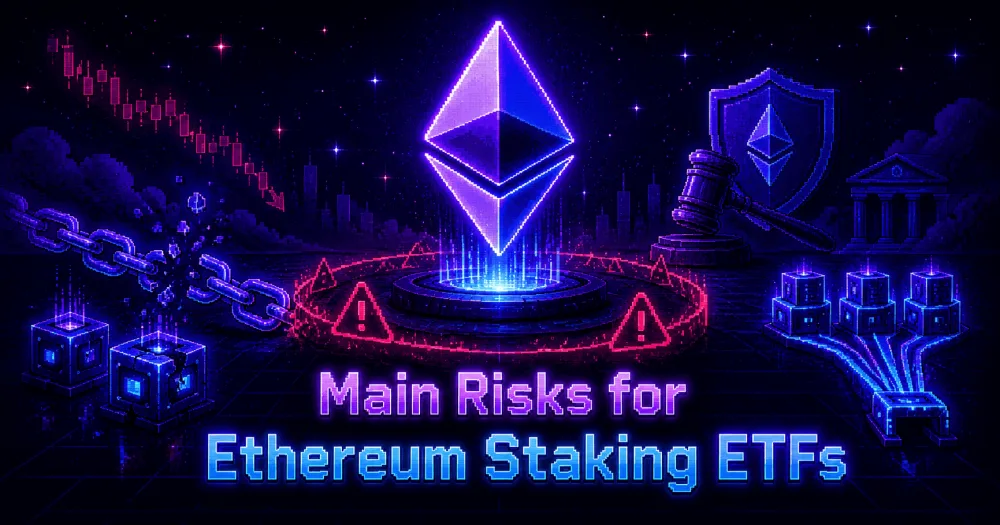
The Ethereum ETF update would be incomplete without the risks.
The first risk is slashing. Ethereum validators can lose a portion of staked ETH for serious operational failures or malicious behavior. Professional staking providers reduce this risk, but they do not erase it.
The second risk is liquidity. Staked ETH is not identical to liquid ETH. ETF issuers must manage creation and redemption activity while also handling staking, unstaking, and validator operations.
The third risk is fee drag. If staking rewards are modest and fees consume a meaningful share, the investor benefit may be smaller than headlines suggest.
The fourth risk is centralization. If large ETF issuers stake massive amounts of ETH through a narrow group of providers, Ethereum’s validator ecosystem could become more concentrated.
The fifth risk is regulatory change. The SEC has become more open to crypto products, but “novel” ETF structures remain under scrutiny, especially when products become more complex or include unusual yield mechanics.
These risks do not kill the staking ETF thesis. They simply mean that staking ETFs are not free yield. The market will punish sloppy structures.
Related: Best Crypto Staking Platforms 2026: A Tested U.S. Review of Rewards, Fees, Security, and Risks
ETH Price Outlook: What Staking ETFs Need to Prove
The current ETH price near $1,767, as of writing, shows that the market is not pricing in a clean bullish breakout yet. The Ethereum ETF update is promising, but ETH still needs confirmation.
The first bullish signal would be steady ETF inflows after a weak period. The second would be ETH reclaiming lost technical levels and holding them. The third would be staking ETF assets growing without creating visible liquidity or operational problems.
If those three things happen, staking ETFs could become ETH’s biggest catalyst in the second half of 2026.
If they do not, staking ETFs may become another overhyped narrative: useful, real, but not powerful enough to reverse weak demand.
Final Thoughts on the Ethereum ETF Update
The latest Ethereum ETF update is not simply bullish or bearish. It is conditional.
Staking ETFs could become ETH’s biggest catalyst because they solve a real product problem. They give traditional investors access to ETH plus a native staking component, without requiring wallets, validator infrastructure, or direct crypto custody.
That is meaningful. It makes ETH easier to explain as a productive crypto asset rather than a pure speculation vehicle.
However, staking ETFs are not magic. They will not matter if ETF flows remain weak, ETH price action keeps deteriorating, fees eat too much of the yield, or investors decide that a 2.5%–3% staking reward does not justify the volatility.
The most realistic conclusion is this: staking ETFs are the best Ethereum catalyst on the table, but they still need ETF inflows and stronger ETH price action to prove they can move the market.
FAQ
What is the latest Ethereum ETF update?
The latest Ethereum ETF update is that staking has become the key focus. Spot Ethereum ETFs already exist, but staking ETFs could make ETH products more attractive by adding exposure to native Ethereum staking rewards.
Could staking ETFs push ETH higher?
Yes, staking ETFs could push ETH higher if they attract sustained institutional inflows, reduce liquid ETH supply, and improve Ethereum’s investment narrative. However, they need strong demand to matter.
What is the current ETH price?
ETH is trading near $1,767 as of July 6, 2026, after a weak first half of the year and renewed concerns about ETF outflows and institutional demand.
How much yield can Ethereum staking generate?
Ethereum staking currently generates roughly 2.6%–3.0% annually, depending on the data source and measurement method. Net ETF investor returns may be lower after staking-related fees and fund expenses.
Are Ethereum staking ETFs risky?
Yes. Ethereum staking ETFs carry ETH price risk, staking operational risk, slashing risk, fee drag, liquidity risk, and regulatory risk. They may still be attractive, but they are not risk-free yield.
Source: Original Article