






















Key Insights:
- Three proposed Solana upgrades aim to reduce the Solana crypto supply.
- New staking and fee changes could lower selling pressure over time.
- Solana also moved ahead of Internet Computer in transaction speed
Solana crypto protocol updates are gaining attention. The three proposed network changes aim to reduce new token supply, increase staking, and burn more SOL through transaction fees. If approved, the proposals could improve the network’s long-term supply picture while supporting future price growth.
Solana Crypto Updates Focus on Supply And Staking
Solana protocol updates have become a major talking point after three proposed Solana Improvement Documents were shared with the community. Each proposal targets a different part of the network, but all are intended to improve the way SOL supply is managed over time.
Data shared by DeFi Dev Corp. showed that about 60,000 SOL are created every day. At the same time, only around 650 SOL is burned. That gap has kept the new supply growing much faster than tokens are removed from circulation.
The first proposal, called SIMD-550, would accelerate the network’s inflation-reduction plan. Solana is already moving toward a long-term inflation rate of 1.5 percent. Under this proposal, that process would happen faster, meaning fewer new SOL tokens would enter the market in the coming years.
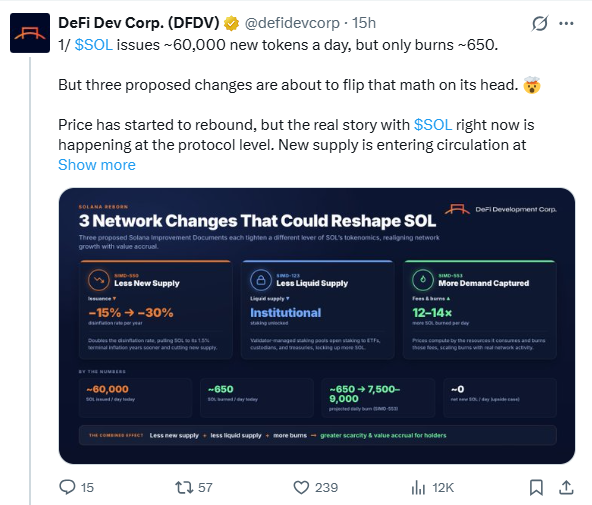
Another proposal, known as SIMD-123, is aimed at large investors. It would allow validator-managed staking pools that could be used by exchange-traded funds, custodians, and company treasuries. More staking means more SOL remains locked rather than available for trading.
The third proposal is called SIMD-553. It would change how transaction fees are charged by using the amount of computing resources each transaction utilizes. Those fees would then be burned. Based on current network activity, daily burns could rise from around 650 Solana crypto to between 7,500 and 9,000.
Lower Supply Could Support Solana Crypto Price Over Time
Each proposal works differently, but the goal is the same. One reduces the number of new tokens created. Another locks more coins in staking. The third increases the number of tokens removed from circulation through fee burns.
If all three proposals are approved, the amount of new SOL reaching the market could fall sharply. At the same time, more coins could remain locked, leaving fewer available for sale, and boosting the SOL price. Higher fee burns would also reduce supply every day if network activity stays strong.
DeFi Dev Corp. said the combined effect could bring net new SOL issuance close to zero. During periods of heavy network use, the amount burned could even become greater than the amount created.
That does not mean the price will rise immediately. Market conditions, investor demand, and overall trading activity will still play an important role. Even so, many traders will be watching these proposals because they change the way the SOL supply could grow in the future.
Network Growth Adds to Investor Interest
The proposed changes come as Solana crypto continues to post strong network numbers. Crypto news platform BSCN pointed to new data from Chainspect showing Solana processing about 1,707 transactions per second. That placed it ahead of Internet Computer, which recorded 978 transactions per second. BNB Chain ranked third on the same list.

Strong network speed alone does not decide price, but it shows that the blockchain continues to handle a high level of activity. If that activity continues to grow and more transaction fees are burned, the supply picture could strengthen over time.
The three proposals are still under discussion, so nothing has changed yet. Even so, they have started an important conversation about the future of SOL. Investors will now be watching to see whether the proposals move forward and how they could affect the coin in the months ahead.
Source: Original Article