








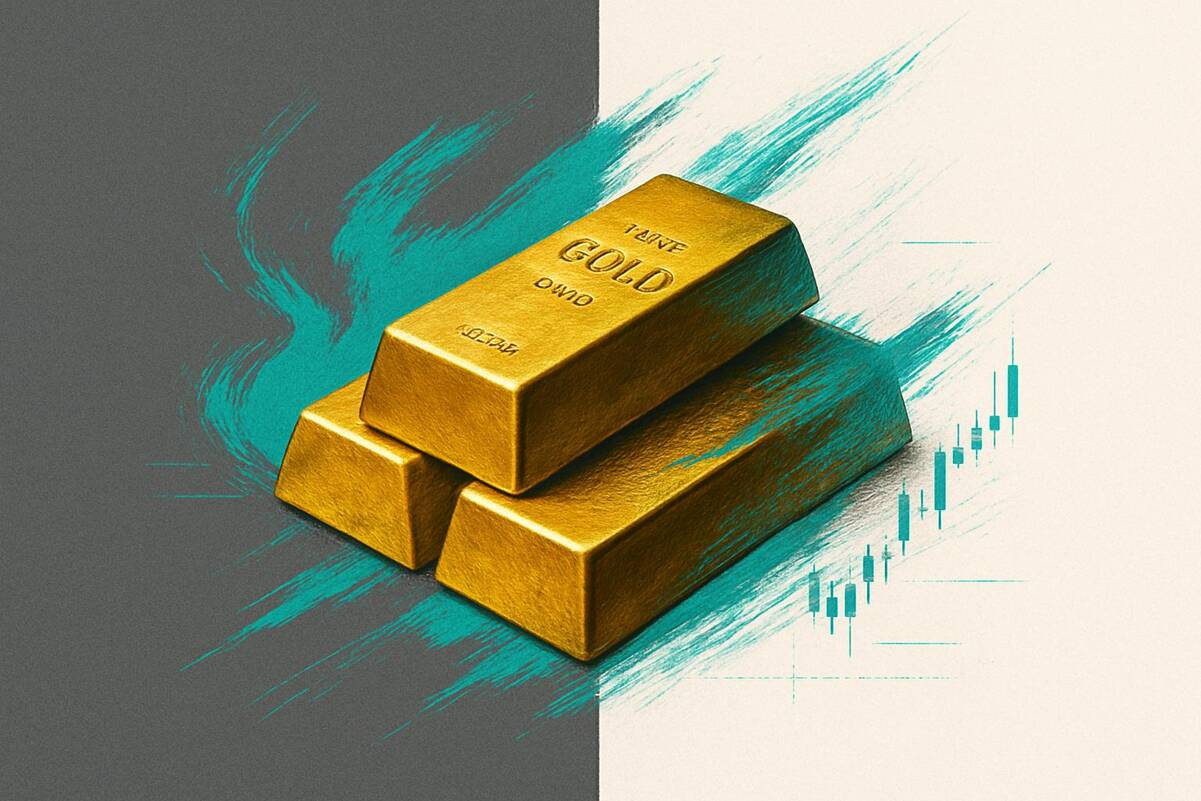
Overall, both inflation indicators remain above the official Federal Reserve’s (Fed) target of 2.0%. This uncomfortable reality has forced market participants to reconsider their monetary policy expectations. Many concluded that interest rate cuts are off the table for the foreseeable future and even started to factor in the possibility of further monetary tightening. As a result, gold (XAUUSD) dropped sharply on the day the May inflation report came out, dropping by 3.57% and touching a critical 4,100 mark.
Gold Reaction
It seems counterintuitive that gold would sell off in the face of climbing inflation. After all, gold is supposed to act as an inflation hedge, is it not? The reality is more complicated. While the narrative that gold is an inflation hedge is valid, it is true only in the long term. In the short term, gold behaves more like a currency proxy and a zero-coupon bond.
Here’s a quick schematic explanation.
High inflation (hot CPI) ➡️ Hawkish Fed (tighter monetary policy/higher interest rates)️ ➡️ Capital flows into USD ➡️️ Stronger Dollar ➡️️ Less affordable gold + higher opportunity cost of holding non-yielding metals ➡️ Gold is sold and price drops
The immediate reaction of a hot CPI print is that investors begin to expect higher interest rates. Therefore, the yields on U.S. government bonds (which, incidentally, compete with gold for safe-haven capital) rise. When nominal yields rise above near-term inflation expectations, real yields turn positive.
Subsequently, when a trader can get a virtually guaranteed, low-free real return in the U.S. debt market, holding a non-yielding asset like physical gold becomes costly and unwise. In other words, the opportunity cost of holding gold goes up. Thus, capital shifts out of metals markets and into bond markets. Additionally, hawkish repricing of the Fed usually pushes the U.S. Dollar Index (DXY) up—in other words, the greenback appreciates vis-à-vis other currencies. A stronger dollar automatically makes bullion less affordable for holders of other currencies, exerting downward pressure on gold and compounding the sell-off.
Source: Original Article