








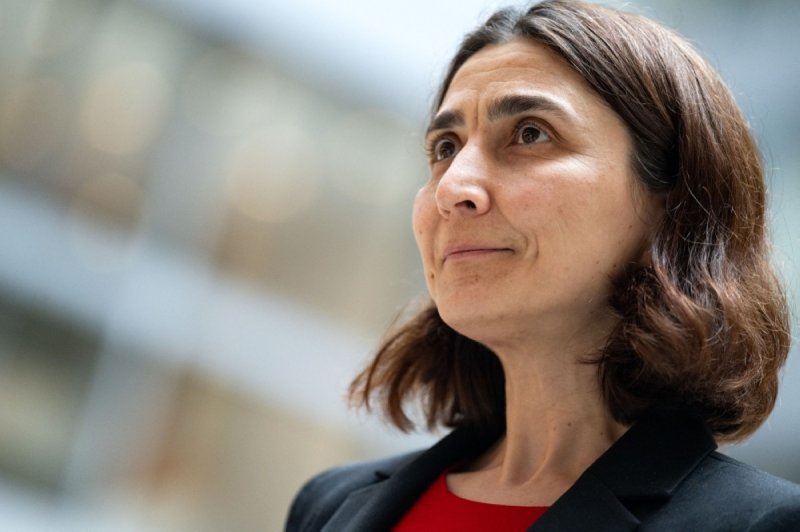
The global economy remains resilient despite the economic impact of the war in the Middle East, although global growth is slowing and prospects differ significantly across regions, according to Deniz Igan, Chief of the IMF Research Department’s World Economic Studies Division.
Speaking in an interview with CCTV, Igan said the IMF is projecting global economic growth of 3% this year, describing it as a slowdown largely driven by the conflict in the Middle East, News.Az reports.
“The 3% we’re projecting this year is marking a slowdown that’s primarily driven by the war in the Middle East,” Igan said.
She noted that the global economic outlook is becoming increasingly divergent, as the negative effects of the conflict are being offset in some regions by strong momentum from the global technology cycle.
“The other word I would say is that it’s a divergent outlook. Why? We have on the one hand the war that’s shaping the outlook, but we have an opposing force coming from the global technology cycle that is actually pushing activity up, and the impact of these two opposing forces varying widely across countries,” she said.
According to Igan, the balance between these competing forces differs from one country to another, resulting in varying regional growth prospects.
“So, it’s divergent when you look into different regions,” she added.
Despite the challenges posed by the conflict, Igan stressed that the global economy has proved more resilient than initially anticipated.
“Perhaps the last word, I would say, is it’s still resilient in the sense that when we think about the impact of the war on the economy, we were expecting to see potentially even more,” she said.
Source: Original Article