












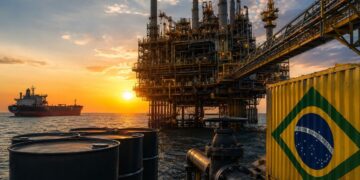







The heads of the International Energy Agency (IEA), International Monetary Fund (IMF), World Bank Group and World Trade Organization (WTO) have warned that the economic shock from the Middle East war could linger, even as fuel and fertilizer prices have eased and efforts continue to reopen the Strait of Hormuz.
The four institutions said their chiefs met on 7 July as part of a high-level coordination group set up in April to respond to the energy, trade and economic impact of the war in the Middle East.
“The global economy has been broadly resilient to the shock from the war in the Middle East, even as some economies have experienced a slowdown in growth and an uptick in inflation,” they said in a joint statement issued on 8 July.
The statement said the impact remained “highly uneven,” affecting energy supplies, food security, commodities and economic activity across countries and regions, while raising concerns about growth and price stability.
The institutions called for further progress toward resolving the conflict and reopening the Strait of Hormuz, one of the world’s most important energy and trade chokepoints.
“Fuel and fertilizer prices dropped since we last met in June. However, uncertainty remains high, and the impacts of the war could linger,” they said. “Energy markets and transit of goods are still facing strains.”
The Strait of Hormuz links the Persian Gulf with the Gulf of Oman and the Arabian Sea. It is the main export route for oil and natural gas produced by Saudi Arabia, the UAE, Kuwait, Qatar, Iraq, Bahrain and Iran.
The IEA has said the disruption to oil and gas flows through the strait and attacks on energy infrastructure across the region have had major implications for energy security, affordability and the world economy.
The agency has described the conflict as the largest supply disruption in the history of the global oil market. It said around 20% of the world’s LNG supply moved through the Strait of Hormuz in 2025. It also said about 80% of oil and oil products transiting the strait in 2025 was headed to Asia.
The WTO’s Strait of Hormuz Trade Tracker shows why the joint warning matters. The tracker said shipping through the strait had entered a “cautious restart phase” after the US and Iran signed a memorandum of understanding to end the war on 17 June. But it added that the agreement had not restored confidence across the shipping market.
According to the WTO tracker, crude oil flows have restarted only in a limited way, while LNG and fertilizer-related shipments remain largely at a standstill. Inbound agricultural shipments into the Persian Gulf have improved modestly, but the recovery remains partial and fragile.
That uneven recovery is key to the warning from the four global institutions. They urged governments and the international community to remain vigilant, uphold freedom of navigation in the strait and globally, support economic recovery, protect jobs and livelihoods, and strengthen energy and food security.
They also called for stronger port infrastructure, trade facilitation and broader resilience to future shocks.
The latest statement marks a shift from immediate crisis language to damage control. In April, the institutions had warned that the Middle East war had triggered one of the largest supply shortages in global energy market history, with energy importers and low-income countries particularly exposed.
By late May, they said the global economy was showing resilience, but vulnerable countries were still facing higher fuel and fertilizer prices, uncertainty and risks to jobs and livelihoods.
The World Bank’s June Global Economic Prospects report put numbers around that stress. It forecast global growth slowing to 2.5% in 2026 from 2.9% in 2025, the weakest pace since the covid pandemic. The bank said the Middle East conflict was weighing on growth through higher energy prices, steeper inflation and increased borrowing costs.
The report also said the closure of the Strait of Hormuz had severely disrupted energy markets, with Brent crude projected to average $94 a barrel in 2026 if the worst disruptions abated in July. It warned that more severe energy disruption and financial stress could push global growth down to 1.3% this year and inflation up to 4.4%.
India is directly exposed to the disruption, though the government has said crude supply remains secure. The petroleum ministry said in March that India consumes about 5.5 million barrels of crude oil a day and now imports crude from around 40 countries. It said about 70% of crude imports were coming through routes outside the Strait of Hormuz, up from about 55% earlier.
India is more exposed on natural gas and liquefied petroleum gas (LPG) than on crude oil. Natural gas is used by power plants, city gas networks, fertilizer units and industries, while liquefied natural gas, or LNG, is natural gas cooled into liquid form so it can be shipped by sea. LPG is a separate fuel made mainly of propane and butane, and is widely used for household cooking cylinders.
The petroleum ministry said India’s total natural gas consumption was about 189 MMSCMD, of which 47.4 MMSCMD had been affected because of force majeure conditions. It also said India imports about 60% of its LPG consumption and around 90% of those imports come through the Strait of Hormuz.
India imposed emergency gas supply controls in March after LNG shipments through the strait were disrupted, and withdrew those curbs on 4 July after LNG supply from the Middle East resumed.
Energy markets have absorbed part of the shock through emergency reserves, rerouted shipments and weaker demand. Reuters reported this week that the world had absorbed the loss of more than a billion barrels of oil supply since the Iran war began, helped by alternative export routes, reduced Asian buying and large stock releases. But it also warned that depleted reserves leave the market more exposed to future price spikes.
Source: Original Article