














Nearly three dozen countries pledged to pick up the pace on energy efficiency improvements last week, during an International Energy Agency (IEA) conference in Montreal where much of the top-line messaging was about energy security through oil and gas exports—and Canada as a preferred supplier.
The action plan from the two-day event, the 11th in an annual series, talked about scaling up energy efficiency efforts “to build longer-term economic competitiveness and resilience at the national and global level [and] improve people’s lives by reducing energy bills, increasing energy security, and advancing clean energy transitions.”
Panel sessions focused on energy efficiency’s breakaway potential as the “first fuel”, with two Canadian cabinet ministers citing the long-understood truth that the cheapest unit of energy is the one you never have to produce. Business and finance panels described investments that are already producing results, with one senior executive telling The Energy Mix that Europe has already reduced its energy consumption by 30%—and could eliminate another 70% of the remaining demand by 2050.
But with time running out on a global commitment at the COP28 climate summit to double the pace of annual energy efficiency improvements by 2030, the IEA’s Montreal Action Plan captured a split-screen focus that juxtaposed longer-term energy efficiency gains with a more immediate concern for energy security, focused predominantly on oil and gas.
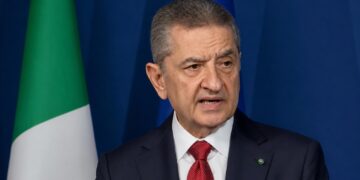
During a “fireside chat” session alongside Canadian Finance Minister François-Philippe Champagne, IEA Executive Director Fatih Birol emphasized the role he sees for Canada as a long-term exporter of fossil fuels.
“The world will need oil and gas for years to come,” he told media after the session, and “the most important thing Canada has today, which makes Canada a very important partner for many countries, is trust and predictability. Countries know around the world that if I have a long-term commitment in terms of energy partnership with Canada, it will not be used as a political weapon against my country. It’s a big advantage.”
“Countries are looking beyond just efficiency. They’re talking about resiliency,” Champagne added, just days before Canada and Alberta jointly committed to a predominantly taxpayer-funded west coast pipeline. “If your national security depends on an energy partner as the world energy architecture is being redesigned, those are very profound words.”
‘Historic Action’
The published action plan emphasized the role of global energy crises past and present as catalysts for countries to embrace energy efficiency.
“This year, the conflict in the Middle East caused a near halt in shipping traffic through the Strait of Hormuz, leading to the largest supply disruption in the history of the global oil market,” it stated. “This has affected global markets for crude oil and refined products, [liquefied natural gas], and other key commodities, and created severe disruptions in energy supply in many countries. We recognize this crisis demands historic action by governments and that energy efficiency is central to this response.”
At the same time, “we acknowledge the role energy efficiency can play in protecting people in the short, medium, and long term,” the 35 signatories declared. “In response to the current crisis, IEA countries coordinated the largest ever release of emergency oil stocks and many countries are implementing demand-side policies,” with the IEA recommending a menu of efficiency measures spanning transport, cooking fuels, oil consumption in industry, and energy affordability for consumers.
“While the immediate focus is on managing today’s disruptions, the Paris Agreement goals and the global path to net-zero emissions remain the overarching frame,” the action plan added. Meeting the COP28 commitment to double global energy efficiency progress by 2030 serves both energy security and decarbonization.”
The plan stressed that vulnerable households and small businesses are hit hardest by price shocks and uncertainty. It cited three areas in need of particular attention: building heating, cooling, and appliances; electrification of heating, industrial processes, and vehicles; and boosting “flexibility, waste heat recovery, and efficient technology deployment” to counter surging power demand from AI data centres.
Signatories also committed to mobilize private investment to speed up energy efficiency deployment.
Extra Effort to Make Efficiency ‘Visible’
Jérôme Bilodeau, the IEA’s head of analysis for energy efficiency and inclusive transitions, acknowledged a point that came up repeatedly in sessions and hallway conversations at Montreal’s Palais de Congrès—that energy efficiency has trouble attracting attention and generating excitement.
“It’s true that efficiency is not always easy to get excited about compared to a new power plant or a new facility,” he said in an interview. “For years and decades, we’ve said efficiency is the ‘first fuel’, but you do have to make an extra effort to make it visible.”
At the same time, he told The Mix, “efficiency has never had more profile than it does now, perhaps at the same level as the 1970s,” when a first round of oil shocks brought on by the Organization of the Petroleum Exporting Countries (OPEC) triggered price and supply shocks across much of the world.
The current oil crisis is the third this decade, after the COVID-19 pandemic and Russia’s invasion of Ukraine in 2022, and “we’ve seen more than 100 governments respond to the crisis with demand-side responses,” Bilodeau said. “They see the value in terms of energy security, energy sovereignty, and emission reductions. So in the short term, energy efficiency is clearly in the news.”
After that, with the energy transition driving electrification and adoption of renewable energy, “efficiency plays a key role in shrinking the problem. You don’t have to find as much [new energy supply] if you’re more efficient in integrating those technologies.”
In the short term, “conservation measures were not enough to replace all the oil and gas flowing through the Strait of Hormuz,” he added. But “IEA member countries are seeing this happening often and thinking about how they can shield or insulate themselves, because there will be another crisis. Efficiency is naturally a good place to reduce your long-term imports, increase local job creation, and shrink the challenge of electrification, so countries are very much seized with not only reacting in the short term, but responding in the long term.”
Asked about the split-screen tone of the conference, Bilodeau responded that “the energy system is complex. It’s supply and demand. The conference of course focuses heavily on efficiency,” but “if you look at our conversations around the world, the world is rethinking its suppliers on the supply side and looking to Canada as a trusted partner. It’s looking at rethinking its energy policies and strategies, and how fast we are going.”
Source: Original Article