















Fiscal concerns, sovereign debt and central bank demand continue to underpin prices
Shifting monetary policies and a resurgent U.S. dollar are reshaping the precious metals market. With higher borrowing costs pressuring near-term sentiment, major institutions are revising their outlooks despite gold’s sustained structural value.
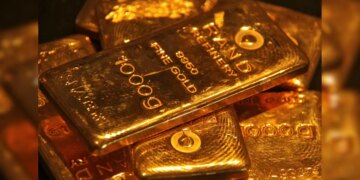
Gold price forecasts have been revised lower by HSBC as changing expectations for U.S. monetary policy and a stronger dollar weigh on the precious metal’s outlook. As reported by Reuters, the bank said it reduced its average gold price projections for 2026 and 2027, citing a more hawkish outlook for the U.S. Federal Reserve and the impact of higher interest-rate expectations on investor demand.
While prices have faced pressure following recent market shifts, several structural factors—including ongoing fiscal concerns, broader economic uncertainty and persistent sovereign debt risks—continue to provide a foundational floor for the metal’s long-term value.
HSBC has cut its average gold price forecast for 2026 to $4,560 per ounce from its previous estimate of $4,864 per ounce. The bank also reduced its 2027 average forecast to $4,925 per ounce from $5,000 per ounce.
Despite these downward revisions, the bank maintains an elevated view of the metal’s trajectory. HSBC projects that prices could trade within a range of $3,800 to $4,700 per ounce during the remainder of 2026. Looking further ahead, the bank expects gold to end 2026 at approximately $4,750 per ounce, with a year-end forecast of $5,025 per ounce for 2027.
Stronger dollar and Fed outlook pressure gold
Spot gold has faced significant headwinds, trading near $4,100 per ounce recently—a decline of more than 20 percent from the record high of $5,594.82 per ounce reached on January 29.
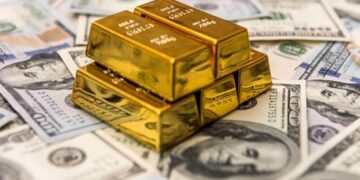
HSBC attributes this decline primarily to changing perceptions of U.S. monetary policy. As the bank noted, “Changing perceptions of U.S. monetary policy and the impact this had on the dollar are among the central reasons behind further gold liquidation and price declines.” A stronger dollar typically increases the cost of gold for holders of other currencies, while a higher-rate environment diminishes the appeal of non-yielding assets.
Central bank demand and geopolitical drivers
While central bank purchases, which were a primary engine for gold’s record-breaking rally, have moderated, HSBC emphasizes that long-term reserve diversification strategies remain a supportive pillar. Although the market has retracted from its peak, the bank suggests that downside risks may be capped as investors have largely priced in the current interest-rate environment.
Geopolitical developments, particularly in the Middle East, remain a critical market driver. While the conflict continues to introduce volatility—at times even acting as a bearish catalyst due to its impact on oil prices and inflation expectations—HSBC indicates that declines specifically linked to isolated regional escalations are unlikely to be sustained in the long term.
In conclusion, the outlook for gold remains a delicate balancing act. While near-term price action is being dictated by the strength of the dollar and Fed policy, the precious metal’s role as a hedge against fiscal deficits and sovereign debt remains intact. As the market moves through the second half of 2026, the interplay between these structural supports and cyclical pressures will likely continue to define gold’s path forward.
Source: Original Article