

















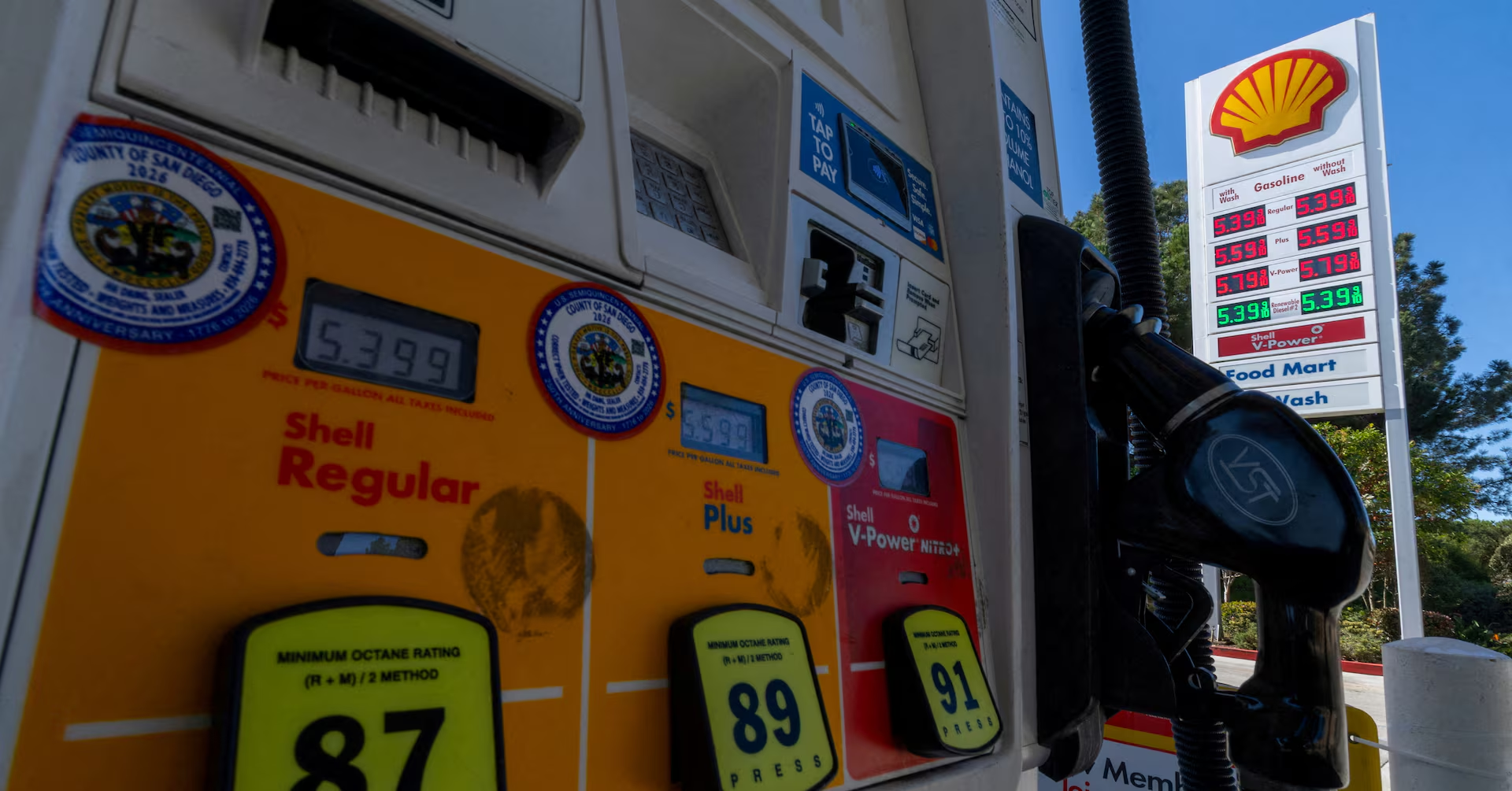
- AAA data showed average US gasoline prices rose 6 cents this week to $3.88 a gallon Friday
- Refinery outages in Russia and the United States are squeezing fuel supplies
- EIA data showed US petroleum products exports hit a weekly record 8.7 million bpd
Disruptions in the global refining system and robust U.S. fuel exports further tightened supplies, and average pump prices rose 6 cents this week to $3.88 a gallon on Friday, AAA data showed. It was the biggest weekly increase since mid-May.
Sign up here.
Trump recently accused oil companies of price gouging.
“Gasoline prices have rallied alongside the massive move higher in crude oil after several tankers in the Strait of Hormuz were attacked,” Alex Hodes, director of energy market strategy at brokerage StoneX, said.
TIGHTENING SUPPLY
Russian output of gasoline, diesel, jet fuel and fuel oil has been decimated with many months of downtime ahead, said Tom Kloza, chief energy adviser at Gulf Oil.
U.S. gasoline inventories fell by 1.9 million barrels last week to 212.1 million barrels, the Energy Information Administration said on Wednesday, leaving stockpiles nearly 10 million barrels below the five-year average.
Gasoline stocks are running below seasonal norms across all U.S. regions, but the shortfall is especially pronounced on the Gulf Coast, said Denton Cinquegrana, chief oil analyst at Dow Jones Energy.
Inventories in the U.S. Gulf Coast, which produces the vast majority of the nation’s supply of refined products, fell to 76.4 million barrels last week, below the five-year average of 82.3 million barrels.
Moreover, the loss of Middle Eastern and Russian barrels from the global market has allowed refiners in the U.S. to reap stronger margins as the swing suppliers of fuel.
U.S. petroleum products exports hit a weekly record of 8.7 million bpd in the week to July 3, EIA data showed.
“The U.S. Gulf of Mexico may see consistent gasoline exports of 1-million b/d and there are bets among Houston traders as to whether 2-million b/d will be achieved for distillate departures,” Kloza wrote to clients on Thursday.
The U.S. summer driving season from June through early September typically boosts gasoline consumption, while production of more expensive summer-blend fuel raises refining costs, boosting pump prices.
“It seems prices will mostly drift up and down here in the short-term,” Cinquegrana said.
Reporting by Nicole Jao in New York; Additional reporting by Shariq Khan; Editing Liz Hampton and David Gregorio
Our Standards: The Thomson Reuters Trust Principles., opens new tab
Source: Original Article