










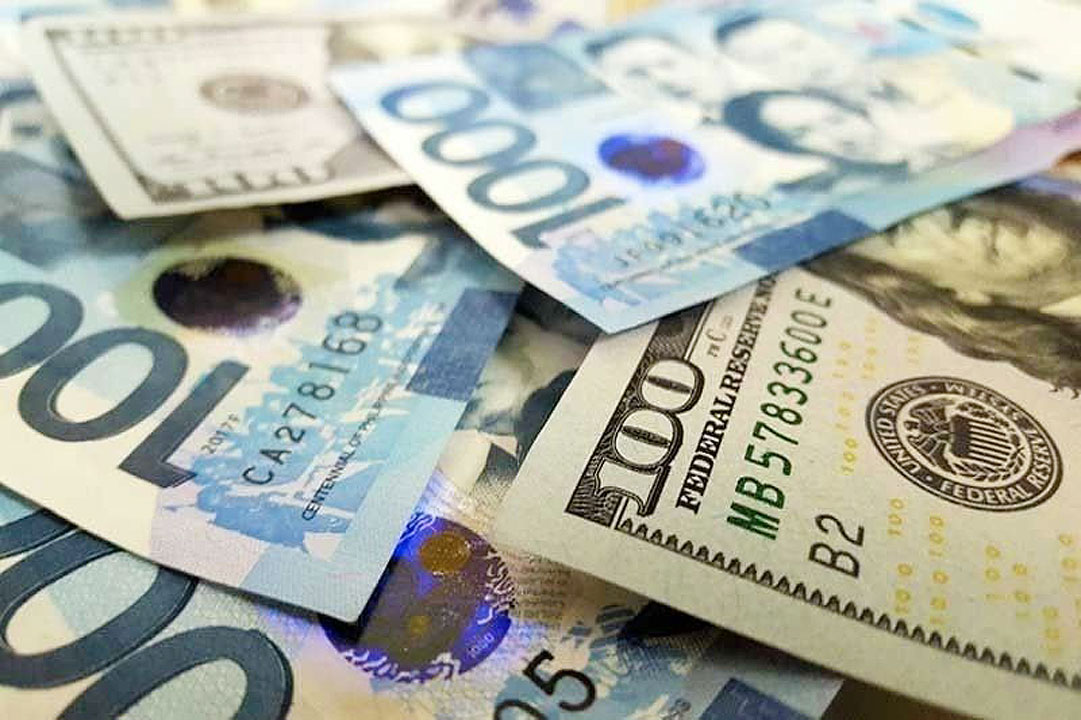

THE PESO may rise against the dollar this week following weak US labor data and as the market continues to monitor developments in the Middle East.
On Friday, the currency declined by 8.5 centavos to close at P60.90 versus the greenback from P60.815 on Thursday, Bankers Association of the Philippines (BAP) data showed.
Still, week on week, the local unit climbed by 34 centavos from P61.24 on July 31.
The peso weakened on Friday amid renewed uncertainty over a peace deal between the United States and Iran, as well as weak Philippine gross domestic product (GDP) growth data, a trader said by phone.
The Philippine economy grew by 2.3% in the second quarter, slowing from 5.4% in the same quarter last year and 2.8% in the first quarter. For the first semester, GDP growth averaged 2.6%.
The increase in global crude oil prices on Friday also weighed on the peso, Rizal Commercial Banking Corp. Chief Economist Michael L. Ricafort said in a Viber message.
For this week, the trader said the US nonfarm payroll reading may dictate dollar action ahead of the release of other key economic reports.
The trader sees the peso moving between P60.50 and P61.20 against the dollar, while Mr. Ricafort expects it to range from P60.60 to P61.10.
The dollar fell against major currencies including the yen and euro on Friday after US employment unexpectedly declined in July, fueling concerns about the economy’s strength and undermining the case for the US Federal Reserve to raise interest rates, Reuters reported.
The US economy lost 23,000 jobs in July, the Labor department said, compared with economists’ expectations for an increase of 80,000 jobs, according to a Reuters poll. The US unemployment rate fell to 4.1% as the labor participation rate fell to a near a five-and-a-half-year low of 61.4%.
The dollar’s decline reflected the market’s waning expectations for a Fed hike. Markets now put a 56% chance that the Fed will hold rates steady in September, up from 45% a day earlier, according to the CME’s FedWatch tool.
The dollar index, which measures the greenback against a basket of currencies including the yen and the euro, fell 0.44% to 99.50. — A.M.C. Sy with Reuters
Source: Original Article