

















Editorials
Samsung and SK hynix shares fell despite record chip profits, exposing how single-stock leveraged ETFs are amplifying volatility across Korea’s market.
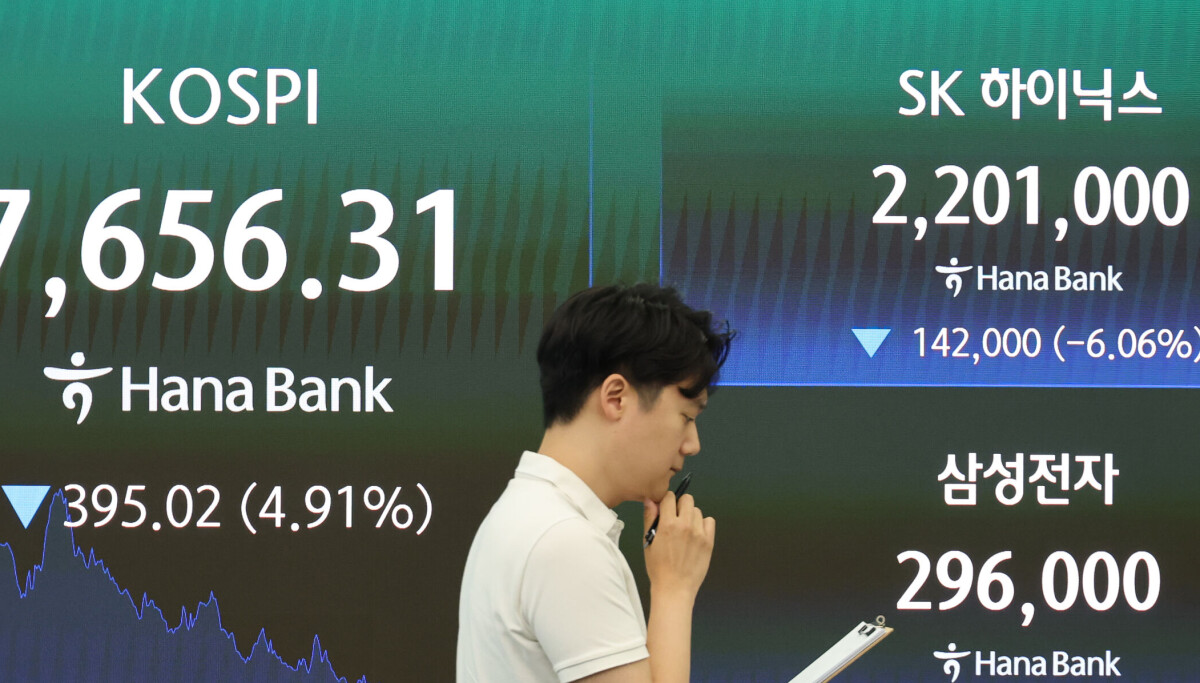
Samsung Electronics posted operating profit of nearly 90 trillion won ($58 billion) in the second quarter, surpassing even the quarterly earnings of Nvidia, the world’s most valuable listed company. Yet despite the record performance, shares of Samsung Electronics and SK hynix plunged 9 to 10 percent during trading Tuesday. As semiconductor stocks tumbled together, the Kospi swung sharply enough to trigger both sidecars and circuit breakers. It was already the sixth circuit breaker activated this year.
The scale of the volatility cannot be explained simply as profit-taking. After a steep rally, some correction was inevitable, particularly when Samsung Electronics and SK hynix together account for more than half of the Kospi’s market capitalization. The deeper problem is that excessive money has poured into single-stock leveraged exchange-traded funds (ETF) launched at the end of May, creating a dangerous double concentration of risk.
These products are designed to deliver returns up to twice the daily movement of an individual stock. Trading has become so overheated that leveraged ETFs now account for roughly one-quarter of total ETF turnover. That has amplified not only swings in semiconductor shares but also volatility across the broader Kospi. In effect, the tail is wagging the dog.
Warnings have come from both domestic and international observers. The Wall Street Journal likened Korea’s increasingly volatile stock market to a casino following the arrival of leveraged ETFs. It also cautioned that, as foreign investors retreat, the market risks turning into a real-life version of “Squid Game” (2021), with participants pushed into increasingly extreme conditions. The Bank of Korea has likewise warned that growing investment in single-stock leveraged ETFs could further intensify market concentration.
Financial regulators have also expressed concern. Financial Supervisory Service Governor Lee Chan-jin even remarked that he regretted not blocking the introduction of leveraged ETFs “even if it meant lying down in front of them.” The benefits originally cited by supporters, including attracting Korean retail investors back from overseas markets and helping stabilize the exchange rate, have been limited. Instead, the products have mainly contributed to greater market instability.
The presidential office and financial authorities should take these concerns seriously. Allowing speculation to continue unchecked will deepen market disruption, accelerate the departure of foreign investors and ultimately inflict the greatest damage on individual investors. Supervising highly speculative financial products is a fundamental responsibility of government. Regulators should move quickly to introduce effective measures to rein in leveraged ETFs before Korea’s stock market comes to resemble a gambling floor rather than a venue for productive investment.
This article was originally written in Korean and translated by a bilingual reporter with the help of generative AI tools. It was then edited by a native English-speaking editor. All AI-assisted translations are reviewed and refined by our newsroom.
Source: Original Article