






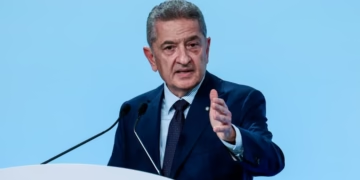














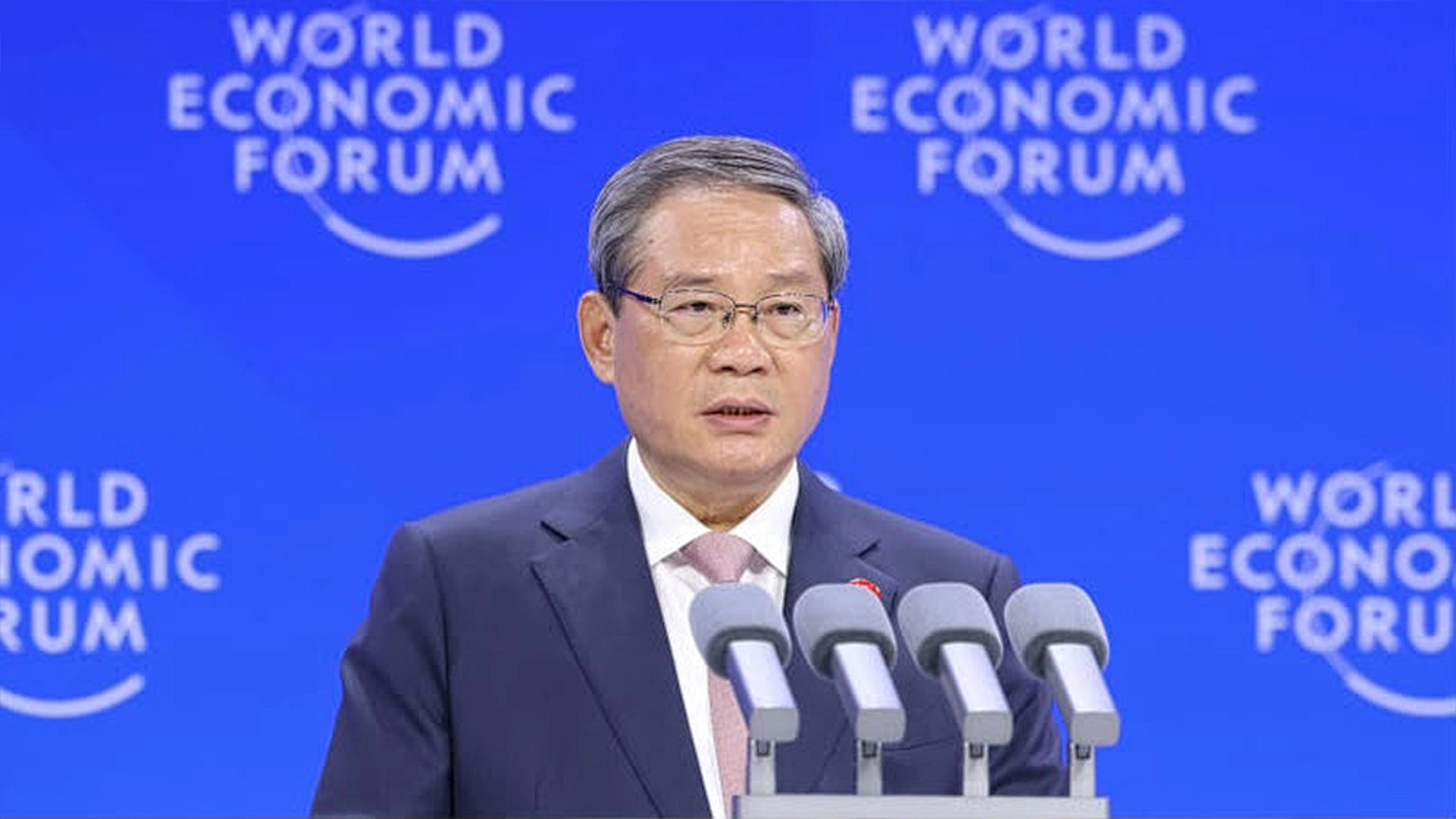
AT the opening of the three-day World Economic Forum’s Annual Meeting of the New Champions last Wednesday in Dalian, North-East China, the Premier of the State Council, People’s Republic of China, Li Qiang, reiterated China’s 15th Five-Year Plan and its inherent growth opportunities for partners across the world.
His presentation captured vividly, how the 75-year roadmap has stabilized the current and future trajectory of the country’s economy amidst global economic uncertainties
For a country that had experienced the worse of poverty in not too distance past, China’s economic model or blueprint has continued to dominate debate.
In fact, the economic reforms of the Communist Party of China (CPC), which has not only transformed local economy and lifted millions of citizens out of poverty but majorly repositioned the country as a global economic power, has remained a shock to most countries.
For the South-South countries, China has been a beacon hope and inspiration for emulative leadership, patriotism and accountability as pillars for accelerated developmental.
The five-year periodic plans of the CPC simply connotes an economic blueprint, which its tenacious implementation has transformed the country across sectors including infrastructure, technological innovations, science and technology, Artificial Intelligence (AI), industrialization, tourism, arts and craft.
The Premier in his presentation, highlighted how economic stability, innovation, dynamism and integration, defined a comprehensive outlook of China’s sustainable economy and extended China’s invitation to entrepreneurs in the spirit of shared prosperity for humanity.
Speaking on the theme of the meeting – ‘Innovating at Scale’, (translation of promising technologies such as AI, biotech and clean energy into widespread economic value, quality jobs and real-world industrial progress), Li described it as a critical factor in the current economic issues, especially as it focused on moving beyond the pilot stage to making innovations accessible, impactful and globally scalable.
For him, the possibility of innovating at scale lies in the commitment of world leaders to tear down walls of individualism and build bridges of friendship, generate fresh ideas through exchange and mutual learning and grow together by enabling one another’s success.
The vision of building ‘a community with a shared future for mankind’ proposed in 2013 by President Xi Jinping has been a cornerstone of the country’s foreign policy, evolving into several global initiatives such as the Belt and Road Initiative, Global Development Initiative and Global Security Initiative.
The objective is to promote multilateralism and international cooperation as against dominant hegemonic idea.
Li in his speech, narrated how the country’s ability to stabilize its economy through innovative approaches and integration (a state-driven assimilation effort designed to consolidate a single national identity by aligning the country’s 55 recognized ethnic minorities with the dominant Han culture and allegiance to the Chinese Communist Party), has made China a hub for rapidly emerging technologies, products and business models.
Beyond science and technology, China’s opening has uncovered the immense tourism potentials, such as cuisine, historical and natural sites, performing arts and sports.
With these products, Li said the country’s RMB 140 trillion ($20.6 trillion) economy is stable despite the shocks of global energy shortages and severe supply-chain disruptions of the last few months.
“Flows of people, goods, information and capital are highly vibrant. Over 550 million express deliveries are handled per day, more than the total of all other countries combined. These are all vivid footnotes to the surging vitality of China’s economy, and true reflections of the dynamism of the Chinese market, embodying the rich diversity and high growth potential of China’s domestic demand”, he said.
The Premier equally disclosed how extension of zero-tariff policies to 63 countries of the world, including Nigeria, has positioned China as the world’s second-largest import market for 17 consecutive years.
“In the first five months of this year, imports rose by 20.5 per cent year on year, significantly outpacing export growth”, Li said.
The expanded zero-tariff policy for 53 African countries, including Nigeria aimed at boosting agricultural and industrial exports. Waiving fees on key products, opened the Chinese consumer market and will achieve a greater goal of countering the rising protectionism in the Global North.
For African nations, including Nigeria, the impacts of the initiative cannot be overemphasised. Beyond eliminating duties, it has helped Nigeria and the broader African economy by equalizing tariff treatment and encourages regional manufacturing collaborations and value-addition supply chains within Africa.
While China’s economic and technological advancement remain shocking to many, Li explained that the feat was forged through relentless, painstaking effort, aware that there are no shortcuts in sci-tech research.
According to him, the country has maintained a persistent increase in sci-tech research investment over the years.
“During the 14th Five-Year Plan period from 2021 to 2025, our total research and development expenditure grew by an average of 10 per cent annually, making China the world’s second-largest Research and Development (R&D) spender”, he said.
While innovation is laudable, the Premier noted that its relevance lies in effective connection of science and technology with industry.
“After years of pursuing innovation-driven development, China has blazed a successful path whereby sci-tech innovation spearheads industrial innovation while industrial upgrade propels sci-tech evolution”, he said, adding that such innovations remained the core competitiveness of Chinese products, and not government subsidies as speculated.
“We have been increasing support in resources and factors of production, putting in place a diversified investment system with enterprises leading the way, government providing guidance and society participating, building a batch of major sci-tech research facilities and infrastructure, and training some seven million university graduates in science, engineering, agriculture and medicine every year.
“Of the world’s top 100 innovation clusters, 24 are in China, ranking first in the world for three consecutive years. Professional, differentiated and specialized industrial clusters spread across the country.
“Moreover, we have deepened reforms of systems and institutions, introducing a series of new policies and new measures in intellectual property rights protection, risk sharing and innovation incentives”, Li said.
Rather than promote the narrative of the so-called ‘China Shock 2.0’, which tend to frame China’s technological and industrial advancement as a shock to the global economy, Li urged enterprises across the world to take advantage of ‘China Opportunity 2.0’, which represents comprehensive innovation-driven empowerment and high-return investment prospects.
He said: “For global development, ‘China Opportunity 2.0’ means broader access to advanced technologies and more widely shared development benefits. This enables more countries, particularly developing countries, to access affordable new technologies and new products, which has enhanced their development capacity and can help address many difficulties holding back global development.”
According to him, innovation-driven development remains key to China’s long-term economic resilience and steady growth, which have been underpinned by a stable environment and continuous innovation earned through years of strengthening its capabilities and relentless hard work.
“Throughout China’s development, innovation has played an irreplaceable and pivotal role. In the broader global economy, it stands as a vital pathway to counter downward pressure and reignite growth momentum.”
Yet, Li feared that global innovation activities have taken a worrisome dimension at the risk of losing control and creating ethical lapses.
Therefore, he advised that “innovation that truly transforms and benefits the world must always open to and embrace the world.
In this new landscape, only through stronger cooperation can we generate more breakthroughs, and only through stronger cooperation can we rise to the diverse risks and challenges before us.
“We should deepen connectivity and collaboration to build greater synergy for innovation.”
In the new phase of technological revolution and industrial transformation, he insisted that no individual country or company can succeed alone, adding that an interconnected global market enables more efficient flow and allocation of production factors, which significantly reduces innovation costs.
“An inclusive and collaborative innovation network allows ideas to interact and converge more freely, accelerating breakthroughs in frontier technologies.”
Li pledged China’s willingness to integrate more proactively into the global innovation and industrial chains, work with all sides to build an open world economy, jointly safeguard stable and smooth global industrial and supply chains, foster more innovation outcomes and strengthen the drivers of growth.
According to him, advanced technologies should serve as tools that benefit people across countries rather than sources of chaos that undermine peace and stability.
“No matter how the world changes, China’s door will only open wider. We will expand market access, fully enforce national treatment for foreign enterprises and keep fostering a world-class business environment”, he said.
In the face of heightened hostility across the world, Li called for better coordination between development and security and advocated a joint effort to improve global governance. With that, he assured that technological progress will reflect humanity’s common values and advances global peace and development.
The fact remains that China’s developmental strides showcase a rapid, civilization-wide transformation – an industrial powerhouse and a global leader in AI, green energy, and mega-infrastructure while maintaining deep cultural aesthetics, hospitable communities and an unprecedented commitment to ecological restoration.
At the heart of the country’s growth lies a resilient, welcoming populace, whose active participation and community-driven efforts have been crucial to the success of national sustainability and urban development initiatives.
Source: Original Article