





















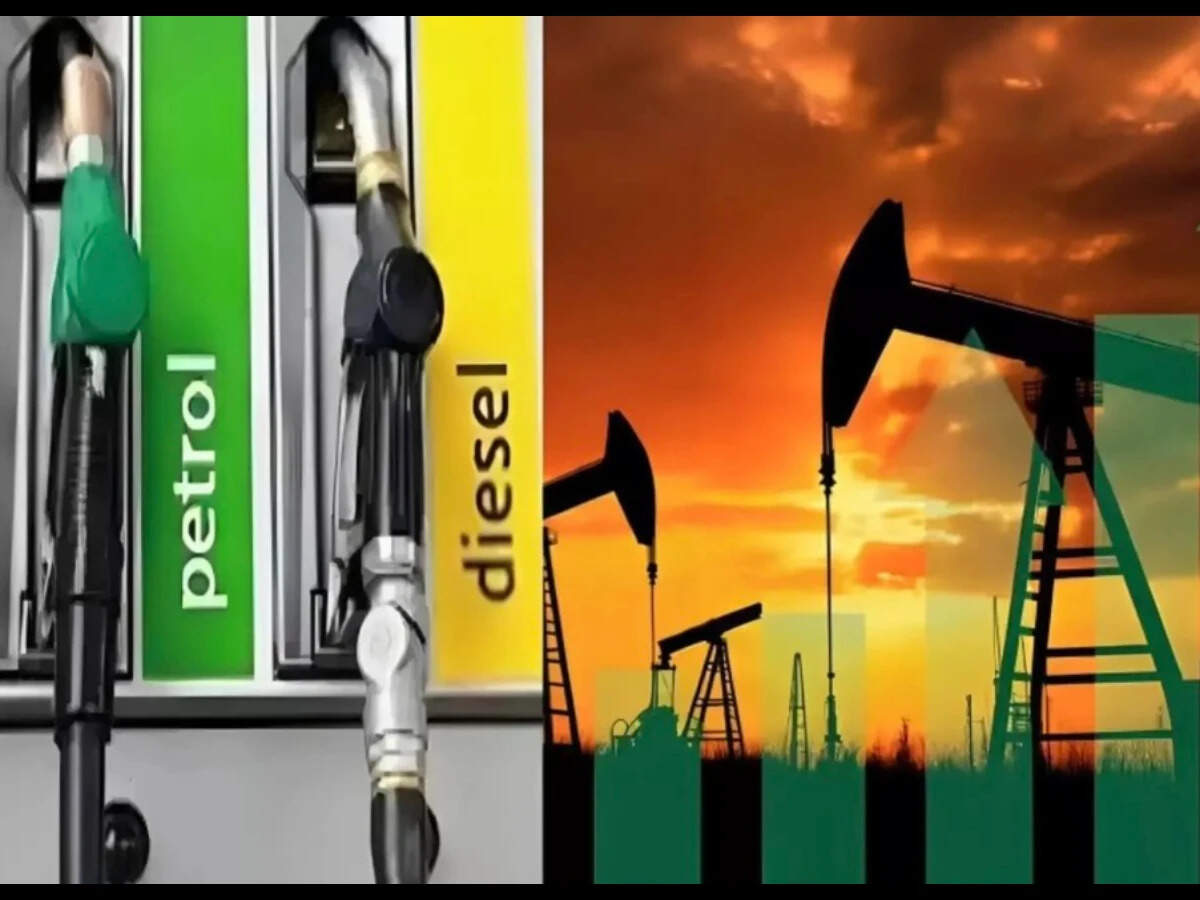
Following the ceasefire between the United States and Iran and the reopening of the Strait of Hormuz, international crude oil prices have fallen sharply to around $67–68 per barrel.
The decline has not surprised energy markets, which had already begun factoring in the easing of geopolitical risks. The more important question now is where oil prices will stabilise, assuming the conflict does not escalate again.
During the recent tensions in West Asia, many analysts warned that crude oil prices could soar to $150 per barrel or even higher, triggering a fresh wave of global inflation. In reality, prices never approached those levels. Even during the most intense phase of the crisis, crude generally traded between $95 and $120 per barrel, with an average close to $100 per barrel.
The exaggerated forecasts underestimated a fundamental reality of the oil market: prices are ultimately determined by the interaction of demand and supply. While geopolitical disruptions can create temporary spikes, they cannot permanently override market fundamentals.
Over the past few years, the global oil market has undergone a structural transformation. The long-held assumption that demand is largely fixed and supply is controlled by a handful of producers has become increasingly outdated. Today, oil prices are influenced by two powerful forces—demand destruction and supply expansion.
Oil Demand Is No Longer Price Inelastic
For decades, crude oil demand was considered relatively price inelastic. Even when prices rose sharply, countries continued to consume almost the same quantity of oil because viable alternatives were limited. As a result, oil-importing economies such as India, which imports nearly 88 percent of its crude oil and around 50 percent of its natural gas, had little choice but to absorb higher import bills.
That situation is changing.
When crude prices approach $100 per barrel, demand destruction begins to emerge. High fuel prices reduce consumers’ purchasing power—the classic real income effect—while simultaneously encouraging a substitution effect, with consumers and industries shifting to alternative energy sources.
The transition is already visible. Rising petrol and diesel prices accelerate the adoption of electric vehicles. Households increasingly replace LPG with electric induction cooktops. Industries facing expensive fossil fuels invest in renewable energy, electrification or more efficient technologies. Electricity generation is also steadily shifting towards solar, wind and nuclear power.
One important characteristic of demand destruction is that much of it becomes permanent. Once consumers and businesses adopt alternative technologies, they rarely return fully to previous levels of oil consumption, even if crude prices decline later. This makes repeated price spikes increasingly self-defeating for oil producers.
The Changing Dynamics of Supply
Supply-side dynamics have also evolved significantly.
The early months of the COVID-19 pandemic demonstrated how vulnerable oil producers are when demand collapses. Crude oil prices briefly turned negative because production could not be halted quickly enough while storage facilities filled up. Similar challenges have confronted producers facing sanctions or export restrictions, forcing them to sell crude at heavily discounted prices.
Many oil-exporting countries depend heavily on petroleum revenues to finance their national budgets. Consequently, they often continue exporting even when prices fall close to—or sometimes below—their production costs. Unlike manufacturing industries, shutting down oil production is technically difficult and economically expensive.
The influence of the Organization of the Petroleum Exporting Countries (OPEC) has also weakened over time. While OPEC continues to play an important role in managing global supplies, its ability to dictate prices has diminished as several countries have reduced their dependence on the cartel or exited altogether.
At the same time, non-OPEC producers—including the United States, Canada, Brazil and Guyana—have significantly expanded production, increasing competition in global markets.
Sanctions have further altered global trade patterns. Russian crude, for example, continues to reach major buyers such as India and China at discounted prices, while Venezuelan oil has also been sold below prevailing international benchmarks under varying geopolitical circumstances. These discounted supplies have added further downward pressure on global prices.
Higher oil prices have also encouraged fresh investments in production, particularly in the United States and other major producers. As new supplies enter the market, they offset a significant portion of any disruptions caused by geopolitical events.
Could Oil Fall to $50?
The combination of weakening demand growth and expanding global supply has fundamentally changed the oil market.
Demand destruction is estimated to have reduced global oil consumption by several million barrels per day, while higher prices have simultaneously stimulated additional production from multiple countries. Together, these forces have created a structural surplus that limits the ability of geopolitical events alone to sustain very high prices.
This explains why crude prices remained close to $100 per barrel even during periods of heightened military tensions and the temporary disruption of shipping through the Strait of Hormuz. Once the immediate geopolitical risk subsided and maritime traffic resumed, prices quickly fell back to around $70 per barrel.
If the current geopolitical calm persists, there is a reasonable possibility that crude prices could soften further. A trading range of $50–60 per barrel cannot be ruled out, particularly if global economic growth remains moderate and energy transition continues to reduce long-term oil demand.
Good News for India
For India, lower oil prices would provide significant macroeconomic benefits. A decline in crude prices would reduce the country’s import bill, improve the current account balance, ease inflationary pressures and create additional fiscal space for public investment. Lower energy costs would also support manufacturing competitiveness and household consumption.
While sustained low prices would undoubtedly pose challenges for many oil-exporting economies, they would be broadly favourable for large energy-importing countries such as India. More importantly, the changing economics of global energy suggests that the era of prolonged, extremely high oil prices may be giving way to a more competitive and structurally balanced market.
Whether crude actually touches $50 per barrel will depend on future geopolitical developments and global economic conditions, but the underlying market dynamics now make such a scenario considerably more plausible than many would have imagined just a few years ago.
(The author is National Co-convenor, Swadeshi Jagaran Manch and Former Professor, PGDAV College, University of Delhi)

Source: Original Article