
















Drivers headed into the Fourth of July weekend with national gas prices at their highest level for the holiday in four years. In California, where prices remain well above the national average, the state’s petroleum watchdog has flagged a separate problem — one that goes beyond the state’s shrinking refinery capacity and isolated fuel market.
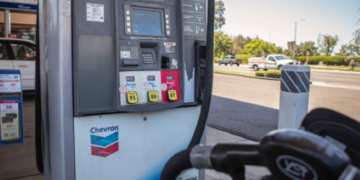
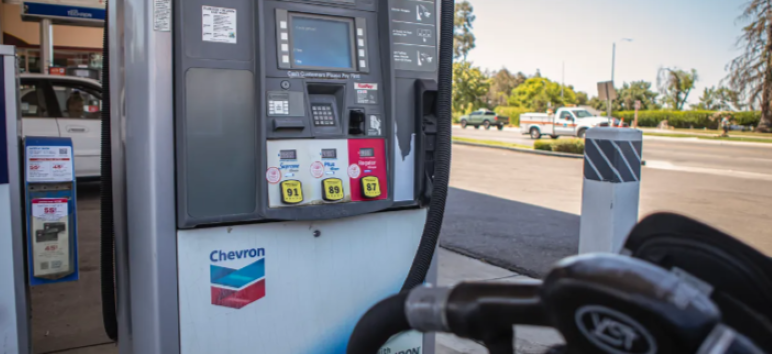
The last week of May was the Memorial Day holiday, when the Iran-war price spike was near its peak. Chevron stations in California charged an average of $6.34 a gallon that week — the highest of any brand tracked in the state, and 44 cents above the average unbranded station, those that sell gas without a major oil-company logo.
The finding came from California’s gasoline watchdog, a unit inside the state Energy Commission called the Division of Petroleum Market Oversight, which delivered a presentation to a state Senate committee on June 3.
The presentation showed branded stations charged more than unbranded ones in California – a bigger gap than in the rest of the country – and identified major brands’ grip on the retail market as a driver.
California can now see into its gasoline market as never before. But its laws may be fighting the wrong problem.
The state’s existing gas-price oversight laws, pushed by Gov. Gavin Newsom earlier in his term, centered on emergency price hikes, refinery outages and California-specific supply disruptions.
Newsom backed away from some of the most aggressive measures last year after two California refineries announced closures. Economists say the harder target is a retail market where prices can be shaped by algorithms, supplier contracts and the buying power of the biggest brands.
As another holiday weekend loomed and the worst of the Iran-war price spike appears to be subsiding, the debate over California gas prices has moved into court and the Legislature.
A federal class-action lawsuit filed last week in Sacramento accuses Kalibrate, a fuel-pricing software company, and several major gasoline retailers of using algorithms and competitor data to keep California pump prices artificially high, citing a state law that took effect this year barring algorithmic price coordination. Kalibrate has denied the allegations.
The lawsuit names several major retailers, including Marathon, which operates ARCO stations; 7-Eleven; WalMart, including Sam’s Club; Circle K and Albertson’s.
The complaint alleges that even small increases in California’s gas market can make huge differences, with every one cent increase costing drivers $134 million a year. It also cites research that using the software can increase prices by 6 cents per gallon, and up to 30 cents per gallon when many stations in an area are using the software.
The suit taps into a longstanding theory: Severin Borenstein, an energy economist at UC Berkeley, has pointed to what he calls a “mystery gasoline surcharge” — the part of California’s high prices left unexplained after taxes, environmental programs and production costs are accounted for — that shows up after gas leaves the refinery.
“The real question is, do they have evidence that the company or the gas stations are using the company to coordinate their activities?” Borenstein said of the suit. “That would be a major antitrust problem.”
On Monday, two Democratic state senators promoted new legislation that would let California’s attorney general investigate gas price gouging during wartime.
“This is not natural market forces at play,” said Senator Ben Allen, of El Segundo, a co-author of the bill. “That’s what we’re here to correct.”
New evidence points to retail market
Even if the Iran war explains much of the statewide spike, it doesn’t explain why some California stations charge far more than nearby competitors. At a June 3 hearing, Tai Milder, head of the state’s petroleum watchdog, told senators the spike had exposed a separate problem.
“This is a global supply shock, and so it’s affecting the whole country,” Milder told senators. “As prices go up, it’s revealing what we already know, which is we have a branded gasoline pricing problem.”
His division’s data showed that the highest-price stations it examined were all major brands, not unbranded or hypermart stations, even though all gasoline sold in California meets the same fuel standards.
Chevron also charged the highest premium over nearby competitors, the watchdog showed. Milder’s division has traced that gap to how the fuel is bought and sold.
California has an unusually high share of sales through contracts in which a refiner sells fuel directly to a branded retailer at a price the refiner sets, the division’s analysis found. Those contracts can lock branded operators into paying more than unbranded operators for the same fuel.
Jeremy Martin, director of fuels policy at the Union of Concerned Scientists, put it more simply: branded stations don’t get to shop around for the best price; they’re locked into buying from whichever refiner supplies their brand.
Chevron spokesperson Ross Allen said the company’s branded stations “compete in a highly competitive marketplace where consumers have many choices” and that most are independently owned, setting their own prices based on local competition and costs. He blamed California’s energy policies, not Chevron’s pricing, for the state’s high gasoline prices.
The Western States Petroleum Association, the state’s industry lobby, said California has fewer gas stations per capita than the rest of the country and fewer unbranded stations.
“Can you name any consumer good where the branded version does not sell at a premium to a generic alternative?” WSPA spokesman Jim Stanley said. “That’s true whether you’re talking about cereal, snack foods, jeans, you name it.”
The governor has made the wartime framing personal. Newsom singled out Chevron by name, accusing the company on social media of using its brand name to overcharge drivers amid wartime oil profits.
The tools state did not use
While California’s gasoline watchdog is finding weak points in the fuel market, the rest of the state’s price tools remain largely unfinished or unused.
After price spikes, Newsom called two special legislative sessions in 2022 and 2024 and pushed through new powers meant to prevent future shocks. The laws created the state’s petroleum watchdog, which has since found an unexplained gasoline premium of about 41 cents per gallon between 2015 and 2024, costing California drivers an estimated $59 billion.
But the laws also authorized more aggressive steps that have not taken effect: a possible penalty on excessive refinery margins, a requirement that refiners keep more gasoline in storage, and a rule requiring them to line up replacement fuel before shutting down for maintenance.
A key reason: two refineries have shut down over the past year. This spring, average gas prices climbed above $6 a gallon as the Iran-Israel war roiled oil markets, and the administration has been working closely with refineries to ensure supply.
The oil and gas sector, always a major lobbyist in California, spent $10.3 million lobbying Sacramento in the first three months of the year, according to California Secretary of State filings. The Western States Petroleum Association and Chevron made up the most of that spending total, respectively spending $4.3 million and $3.7 million.
The most aggressive of the special session tools — the penalty — would have capped the gap between what refineries paid for crude oil and what they charged wholesalers for gasoline. In August 2025, a majority of Energy Commission members voted to shelve the idea for five years, saying they could not conclude that the benefits to consumers clearly outweighed the costs.
That decision has drawn new criticism as refinery margins climb — from 49 cents per gallon in January to $1.24 per gallon in April, according to Energy Commission data cited by Consumer Watchdog. “The problem is we’ve sat on our hands and didn’t develop the tools — so they weren’t there when we needed them,” Consumer Watchdog President Jamie Court said. “That was a big mistake, and it cost consumers a lot of money.”
The Newsom administration argues the unfinished tools wouldn’t have shielded consumers from this year’s spike. In written responses to CalMatters, Energy Commission spokesperson Niki Woodard said no state-level policy could protect against a global oil shock the size of the Iran war, and that California’s price increases this year have tracked national trends.
The Energy Commission said it is actively advancing the resupply rule, but has not moved forward with the reserve requirement. Last year, Newsom pushed a major priority of the oil industry through the state Legislature: a measure aimed at boosting domestic oil production in Kern County.
California mulls different gasoline strategies
The spring spike has revived a more basic question: if California will still need gasoline for years, how does it keep a shrinking fuel system stable, competitive and affordable?
One answer is more supply. The Newsom administration is tracking import infrastructure proposals for signs they could boost supply, including a proposed Phillips 66-Kinder Morgan project called the Western Gateway pipeline, which would move refined gasoline from central U.S. refineries into California and Arizona.
Anthony Martinez, a spokesman for Newsom, called Western Gateway “a promising opportunity to bring additional gasoline supply into the state and bolster resilience.”
Other proposals look at the structure of the retail market. A bill by Sen. Henry Stern, SB 1245, could give California more authority to change its unique gasoline blend, a cleaner-burning formula that is difficult to produce out of state, to make it easier to bring in fuel from elsewhere.
Martin, of the Union of Concerned Scientists, said the blend made sense at its creation. He said its benefits are smaller now because federal fuel standards and cleaner cars have caught up, and its costs are higher because California has less refining capacity and depends more on imports.
The Western States Petroleum Association opposes the idea, saying refiners already spent heavily to produce the cleaner fuel California required, and should not now be punished for making those investments.
The bill, SB 493, authored by Allen and Senator Josh Becker of Menlo Park, would expand California’s price-gouging law by adding war to the list of emergencies that can trigger the state’s 10% cap on raising prices for gasoline and other essential goods, unless the increase is justified by higher costs.
Becker and Stern have not taken any contributions from WSPA or Chevron, according to campaign filings compiled by CalMatters’ Digital Democracy database. Allen received a donation from Chevron in 2015, and none from WSPA, the database shows.
The oil industry sees that as a return to an old fight. Zach Leary, a lobbyist with the Western States Petroleum Association, said California already debated price-gouging penalties during the 2023 special session, and that the Energy Commission decided the refinery-margin penalty could hurt supply, maintenance and consumers.
Becker rejected that comparison, saying SB 493 targets a wartime emergency, not the regulation of refinery margins.
But even Becker, who is proposing a new way to crack down on the industry, stopped short of calling for California to revisit the most powerful tool it has already set aside. Asked whether the Energy Commission should revisit its decision to delay the refinery-margin penalty, Becker called that “a separate process,” and “a separate decision,” one that is in the hands of the Newsom Administration.
Alejandro Lazo is a reporter with CalMatters.
Source: Original Article