





















There are 171 central banks in the world and, between them, their total international reserves have swelled by almost $2tn so far this year alone. The sums are huge, but so are the stakes – central banks use these reserves to make international payments, manage monetary policy and provide stability when markets are volatile.
As a result, they spend a lot of time thinking about what could go wrong and how to protect their capital. This means that the latest ‘reserve manager survey’ is more relevant for investors than it seems.
What managers are most worried about
Each year, the Official Monetary and Financial Institutions Forum (OMFIF), a think-tank, surveys central banks and public pension funds for their take on the global economy and how they are allocating their portfolios in response.
Read more from Investors’ Chronicle
It seems that reserve managers have largely given up on waiting for things to return to ‘normal’. Yara Aziz, senior economist at the think-tank, said that this year’s survey reveals “a world in which volatility is no longer a phase to get through, but a condition to be managed”.
Some of last year’s biggest risks have retreated. In 2025, tariffs and trade protection were cited as the biggest risk, but they have now receded significantly as a threat. But this isn’t because the global economy is any calmer, it’s because concerns about the conflict in the Middle East have risen to the top of the list.
The good news is that inflation fears, at least, are beginning to fade away. Less than a quarter of respondents see it as the largest long-term challenge, and 82 per cent expect it to remain between 2 and 4 per cent in major economies over the next couple of years. “Reserve managers now appear to view geopolitical fragmentation as the more persistent structural force, while inflation is becoming less acute, even if it has not fully disappeared,” the report said.
How central banks are investing
Unsurprisingly, capital preservation remains the leading objective, favoured by over two-thirds of respondents. Around a quarter prioritise liquidity, while only 5 per cent try to meet a target return. OMFIF analysts called this low share “particularly telling”, as it suggests that reserve managers “are not ignoring returns, but they remain secondary to safeguarding capital and ensuring that portfolios can be mobilised when needed”. Resilience is taking priority over performance.
The dollar still dominates portfolios and remains unmatched in the eyes of respondents for safety and liquidity.
But central banks are increasingly looking beyond the dollar as they seek to build resilience. The euro and the renminbi remain the leading alternatives, but don’t entirely solve the problem. The renminbi is constrained by market structure and geopolitical concerns, while the euro lacks a single safe asset comparable to US Treasuries. More than half of the reserve managers said that they would increase their holdings if the EU became a permanent issuer of large-scale common debt.
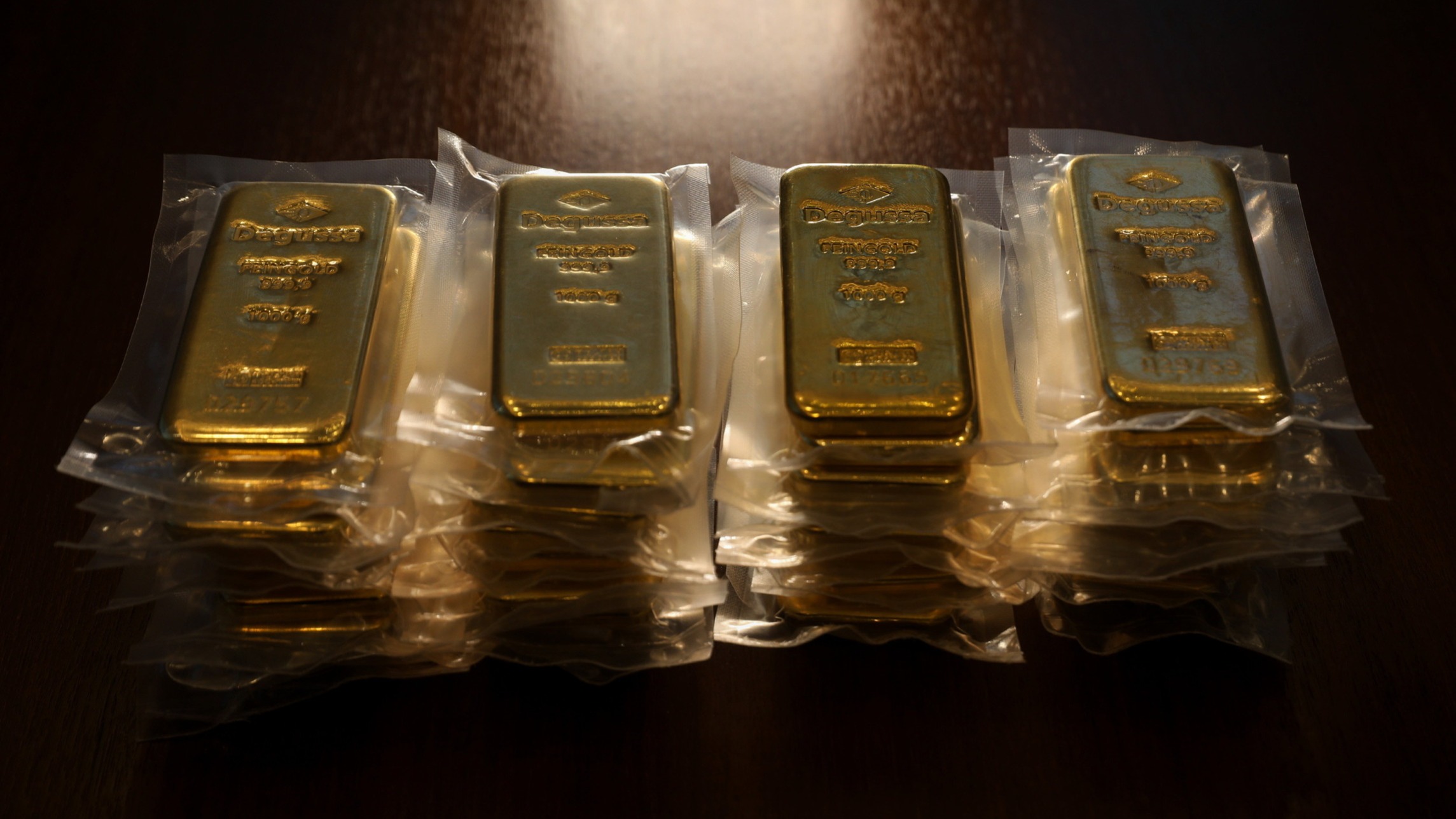
Gold has emerged as a major beneficiary – 82 per cent of central banks held some physical gold this year, up from 71 per cent in 2025. A net 30 per cent plan to increase their allocation over the next couple of years. The motivation is largely strategic – more than half of reserve managers see it as protection against geopolitical risks and disorder in the international monetary system.

Yet gold could also prove profitable. As the chart above shows, almost two-thirds of central bankers expect the price to settle between $5,000 and $6,000 an ounce (oz) by June 2027 – well above its current level of $4,000 an oz.
If central banks believe that prices are fundamentally heading upwards, further dips could look like a buying opportunity. Even if these forecasts prove too optimistic, sustained reserve manager demand could help cushion any dips in the gold price.
Source: Original Article