













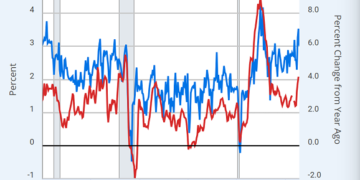








For decades, Iran has relied on the Strait of Hormuz as its most effective geopolitical weapon — a crucial energy chokepoint through which up to a third of the world’s oil is transported and about a fifth of its liquefied natural gas (LNG). Tehran’s immediate blockade of the transit route at the onset of the 28 February U.S./Israeli joint military operation against Iran prompted a cessation of maritime traffic through the chokepoint, catalysing a spike in oil prices of over 70%. The prospect of such a blockade continuing into the U.S.’s 3 November Mid-Term Elections was the decisive factor behind President Donald Trump’s willingness to forge a peace deal, at least in the short term. This is because there is a direct link between the oil price, the price of gasoline, U.S. economic growth, and the success of incumbent presidents and their parties in elections, as fully analysed in my latest book on the new global oil market order. Understandably, according to several senior energy security sources in London, Brussels, and Washington, exclusively spoken to by OilPrice.com over the past few days, moves are afoot to reshape the regional energy map to ensure that Iran’s Hormuz threat becomes increasingly ineffective in the coming years. So, what exactly is going on right now?
Trump is fully in favour of medium- and long-term methods to circumvent the effectively Iran-controlled Strait of Hormuz, particularly given the relative ineffectiveness of the short-term measures available once Tehran’s blockade was in place. The ‘Southern Highway’ corridor that hugged the coast of Oman and was actively backed by U.S. and Gulf allies proved slightly more effective at reducing market panic than it was at restoring the number of oil tankers in transit. During peak operations early in the blockade, the corridor allowed roughly a dozen vessels per weekend to transit, rising to around 119 ships by late June — still a long way off the historical 700 weekly transits normal for the waterway. Similarly taking the edge off market panic but still representing a fraction of what was required over the medium- and long-term to keep oil prices from spiralling, were the land-based routes for trucks carrying oil through Iraq and Syria. Iraq’s case is instructive, as it managed to move around 500 trucks on average a day into Syria at the height of the blockade, with each one carrying around 250 barrels of crude oil — totalling 125,000 barrels per day (bpd). That compared to the previous 3.3-3.4 million bpd it moved through the Strait of Hormuz before the blockade. More significant options were also used alongside these makeshift measures, with one being the capacity expansion of Saudi Arabia’s East-West Pipeline (1,200 km long, moving crude from eastern oil fields across the Arabian Peninsula to the Red Sea port of Yanbu) to 7 million bpd for a while. However, Yanbu’s marine terminal and domestic refining create a bottleneck, capping actual export throughput at around 4.5 million bpd. Another option was the UAE’s Habshan–Fujairah Pipeline (360 km long, linking Abu Dhabi’s fields directly to the port of Fujairah on the Gulf of Oman), which has seen capacity increase to its maximum level of 1.8 million bpd. Related: Dip in U.S. LNG Imports to EU Spells Trouble for Trade Deal
At the same time, further support came from increased oil supply from the U.S. and other countries, massive releases of barrels from the strategic petroleum reserves of International Energy Agency member countries, and a massive, multi-year oil supply surplus that acted as critical energy buffers to broader economic fallout when the blockade of the Strait of Hormuz hit. That said, going into the crisis, the U.S. oil industry was already pumping at absolute record highs, providing a vital supply baseline of 13.6 million bpd. Despite calls from Trump for this figure to be ramped up, big independent producers and majors are maintaining pre-war capital expenditure plans, with many having stated that they are already running close to full capacity. However, increased flows from countries Washington regards as being in its ‘Americas sphere of influence’ — notably Venezuela, Argentina, and Brazil — are intended to form part of the long-term workaround for the dominance of the Strait of Hormuz in world oil flows. Venezuela remains at the top of the U.S.’s list for resuscitation of its potentially huge oil sector, with Argentina and Brazil not far behind and already producing significant increases in barrels, as analysed in full recently by OilPrice.com. The Americas hemisphere already accounts for 32% of global crude production, and U.S. Assistant Secretary of State for Economic, Energy, and Business Affairs, Caleb Orr, highlighted recently that Ecuador and El Salvador are also among the governments Washington works with “hand in glove” on security. He added that security is the “table stakes” for any productive economic relationship and the foundation of the broad-based change in the Americas.
That said, this is only one part of the solution to the bypassing of the Strait of Hormuz puzzle currently being worked on by Washington and its allies, including those in the Middle East. The first phase of these efforts looks to bypass up to 50% of the normal 20–21 million bpd oil flow going through the Strait using existing overland corridors and fast-tracked construction. The UAE, for example, is already fast-tracking a second parallel pipeline to Fujairah, which should double its bypass capacity to over 3 million bpd, with completion brought forward to 2027. A similar U.S.-inspired idea is to enable Iraq to bypass the Strait by pumping more northern oil through the Kirkuk–Ceyhan pipeline to Turkey’s Mediterranean coast, with capacity here recently reactivated to handle 170,000-250,000 bpd. Progress has been halted by a failure to reach an agreement with Turkey, as also detailed recently by OilPrice.com, but given how geopolitically important it is to the U.S. and its allies, the impasse looks unlikely to persist too much longer, according to a senior source who works closely with the European Union’s (E.U.) energy security complex. Other pipelines running through Iraq and into Syria, Jordan, or Oman are also under discussion, the source adds.
Just last week, Iraq’s Foreign Minister, Fuad Hussein, met with Syrian President Ahmad Al-Sharaa in Damascus to advance plans for expanding cooperation on energy infrastructure, including the project to rehabilitate the 800-kilometre pipeline from Iraq’s Kirkuk to the Syrian port of Banias, which has a historical design capacity of 300,000 bpd. Last month, Iraqi Prime Minister Ali Al-Zaidi and U.S. Special Presidential Envoy Tom Barrack advanced a memorandum of understanding with U.S.-based investment firm TI Capital to fund and project-manage the pipeline’s reconstruction. In parallel with this, the U.S. and its allies are also fast-tracking the huge Basra-Haditha Pipeline, as detailed in my latest book on the new global oil market order. This US$5 billion, 700-km internal pipeline would run from the southern oil fields of Iraq up to Haditha and would have a capacity of 2.25-2.5 million bpd. When finished, it would allow Iraq to pump its enormous southern oil reserves directly to the north and into Europe or Syria, completely bypassing the Strait of Hormuz.
Perhaps the single-most strategically important component of the U.S.-led effort to reduce dependence on the Strait of Hormuz is the long-planned but now dynamically expedited India–Middle East–Europe Economic Corridor (IMEC). Originally launched at the 2023 G20 Summit but stalled by regional conflict, the project has been turbocharged by the Strait of Hormuz blockade, with planners now estimating that it could eventually divert around 60% of container traffic that currently risks transiting Hormuz. Its architecture is built around two integrated corridors: an eastern maritime leg linking India’s western ports to the Arabian Gulf, and a northern overland rail network running through Saudi Arabia and Jordan to Israel’s Port of Haifa, from where short?sea shipping connects directly to Europe. Crucially, the 2026 wartime redesign anchors the eastern maritime leg in Oman rather than the UAE, allowing ships from India to unload entirely outside the Strait of Hormuz before transferring cargo onto the Arabian Peninsula rail grid. Additional ‘IMEC Plus’ nodes through Egypt and Syria are under discussion to create a wider lattice of land?based alternatives, while new legal frameworks — including the India–EU free trade agreement and the U.S. Senate’s Eastern Mediterranean Gateway Act — have formally designated Greece as Europe’s entry hub, according to the E.U. source. This positions IMEC as a central pillar of the broader strategy to bypass Hormuz and permanently reduce Iran’s ability to weaponise the chokepoint.
These measures demonstrate that Washington and its allies are no longer relying on short?term crisis management but are instead building a permanent, multi?route architecture that makes any future blockade far less economically damaging. Iran will retain the ability to disrupt regional shipping, but its leverage over global oil flows is being structurally eroded with every kilometre of new pipeline, port expansion, and corridor redesign. The long?term objective is clear: ensure that the next Hormuz crisis does not become a global one.
By Simon Watkins for Oilprice.com
Source: Original Article