Moneywise and Yahoo Finance LLC may earn commission or revenue through links in the content below.
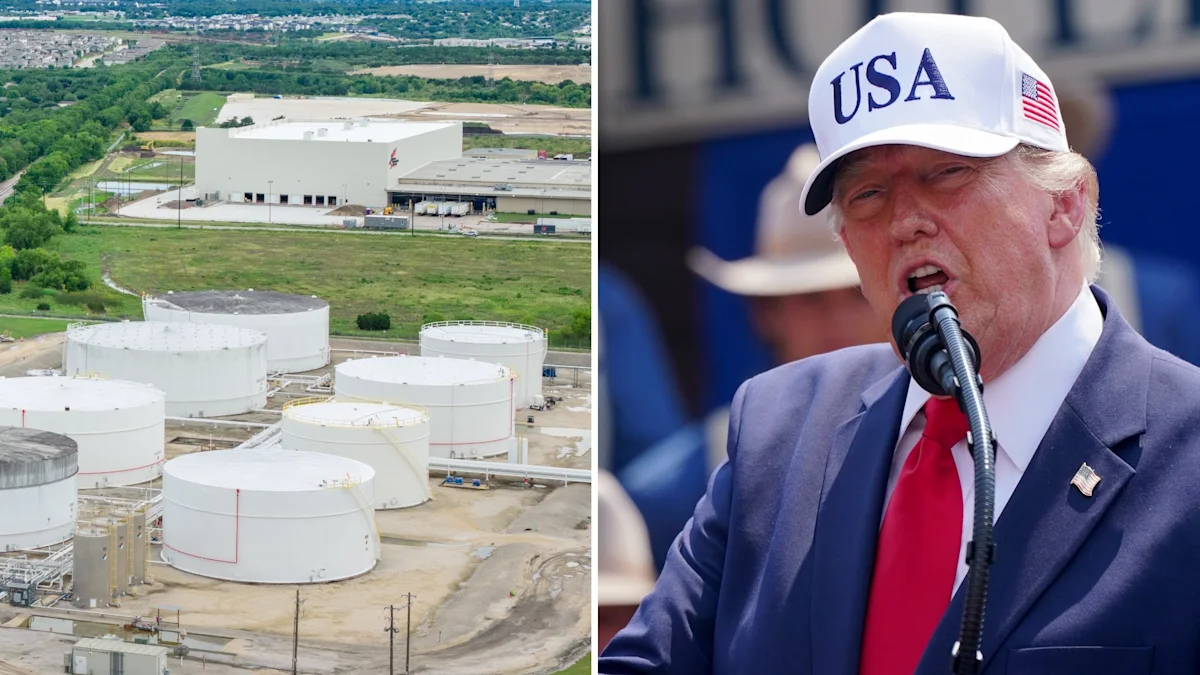
America’s emergency crude oil stockpile has fallen to its lowest level in more than four decades, raising fresh questions about the country’s ability to respond to future supply shocks.
According to new data from the U.S. Department of Energy, the Strategic Petroleum Reserve (1) (SPR) declined by another 5.5 million barrels to 325.7 million barrels — its lowest level since May 1983. The latest drawdown is part of a U.S. agreement to release 172 million barrels from the reserve to help offset global supply disruptions following the war in Iran and ease fuel prices.
Top Picks
The decline extends beyond the emergency reserve itself. Since the fighting began, total U.S. crude inventories — including both commercial stockpiles and the SPR — have dropped by 111.4 million barrels to 743.3 million barrels, the lowest level since 1984, according to Reuters (2).
Established after the 1970s oil embargo, the SPR is the world’s largest emergency supply of crude oil (3). The reserve is currently at less than half capacity after years of drawdowns. At the time of writing, gas was $3.82 per gallon, according to AAA (4).
This marks the largest coordinated release from the SPR since the Biden administration’s record 180 million-barrel emergency drawdown in 2022 (5). Unlike that effort, the current 172 million-barrel release is structured largely as exchange loans that require the oil to be returned with additional barrels as interest.
“32 member nations of the International Energy Agency unanimously agreed … to lower energy prices with a coordinated release of 400 million barrels of oil and refined products from their respective reserves,” Energy.gov wrote in a press release (6) from March. “Rest assured, America’s energy security is as strong as ever.”
But, a recent Government Accountability Office report (7) adds another layer of concern. Beyond the declining inventory, the independent watchdog warned that parts of the SPR’s aging infrastructure, such as leaky brine pumps, require continued investment. So, it’s not just about replenishing the SPR’s reserves after depleting the stockpile further — it’s also about finding the time and money to keep the lights on afterwards.
Simply put, investments in the SPR just haven’t kept pace over the years.
For investors, there’s a lesson in consistency here, and a reminder that geopolitical events can ripple through financial markets with little warning.
Rather than trying to predict the next oil shock, it might be a good time to focus on building diversified portfolios that can weather periods of heightened uncertainty — in the energy sector or otherwise.
Hedge your portfolio
As the U.S. looks to pump life back into the global energy market, now may be the ideal moment for investors to shore up the defensive side of their own portfolios.
During periods of economic uncertainty, gold is often viewed as a “safe haven” asset because it historically acts as a counterbalance to market volatility.
It’s a good defensive investment because it does the following:
Diversifies your investments: Gold often performs independently of traditional financial assets such as stocks and bonds, helping offset broader market turbulence.
Acts as a hedge against inflation: It helps preserve purchasing power when fiat currency values fluctuate.
Provides tangible security: Unlike paper assets dependent on debt or corporate earnings, physical gold offers intrinsic, long-term value.
While you can’t control how quickly the Strategic Petroleum Reserve drains liquid gold, you can control how insulated your own retirement savings are from the ripple effects with real gold. One of the most effective ways to do so — while capturing significant tax advantages — is through a self-directed Gold IRA with Goldco.
Goldco specializes in helping investors transition to self-directed Gold IRAs backed by physical, tangible precious metals. They also have a guaranteed buyback program and will repurchase your metals should circumstances change.
Generate passive income through rental real estate
While gold provides a defensive investment for your capital, truly resilient portfolios often include assets that actively generate income.
Real estate is one of the more effective ways to do this. It can serve as a powerful inflation hedge because rents and property values generally rise alongside the cost of living, while simultaneously providing the steady cash flow that institutional investors rely on.
And it’s easier now than ever to start investing in real estate with mogul.
Rental properties have long been a proven source of steady, passive income for high-net-worth investors, often accounting for nearly 25% of a typical family office portfolio. Historically, the heavy capital requirements and the time needed to manage properties kept most individual investors on the sidelines.
That’s where mogul changes the game. This real estate investment platform offers fractional ownership in blue-chip rental properties, giving you monthly rental income, real-time appreciation and tax benefits—without the need for a hefty down payment or 3 a.m. tenant calls.
Founded by former Goldman Sachs real estate investors, the mogul team handpicks the top 1% of single-family rental homes nationwide for you. You can invest in institutional-quality offerings for a fraction of the cost. Each property undergoes a rigorous vetting process that requires a minimum 12% return, even in downside scenarios. Across the board, the platform features an average annual IRR of 18.8%, with cash-on-cash yields averaging between 10% to 12% annually. Offerings often sell out in under three hours, with investments typically ranging between $15,000 and $40,000 per property.
Getting started is a straightforward process. Once you sign up for an account, you can browse available properties and, after verifying your information, begin investing in just a few clicks.
Add multifamily real estate debt to the mix
While fractional platforms allow you to start building your real estate footprint incrementally, those looking to deploy larger amounts of capital into institutional-grade assets have another option.
Accredited investors can now tap into multifamily real estate through platforms such as Lightstone DIRECT, which provides access to single-asset multifamily and industrial deals.
Lightstone DIRECT lets individual investors tap into Lightstone’s institutional approach, one of the largest privately held real estate investment firms in the U.S., with $12 billion in assets under management.
The platform eliminates middlemen and the extra layers of fees that can add up in traditional real estate investing, usually known as “fee stacking.” This streamlined approach provides more direct access to institutional-quality deals.
Over nearly four decades, Lightstone has delivered strong risk-adjusted performance — including a 27.6% historical net IRR and a 2.54x historical net equity multiple on realized investments since 2004.
Each opportunity requires a $100,000 minimum and undergoes a rigorous review by Lightstone’s principals, including founder David Lichtenstein.
Lightstone also invests at least 20% of its own capital in every deal — roughly four times the industry average. With skin in the game, the firm ensures its interests are directly aligned with those of its investors.’
But while real estate is a cornerstone of many diversification strategies, investors can go one step further by investing in a broader range of alternative assets to reduce their reliance on any single market.
Make big-picture investments
While alternative assets carry their own unique risks, they provide exposure to markets that have historically behaved differently than stocks and bonds. This helps to smooth out performance when equities are volatile, especially as they rely on cultural capital rather than financial metrics to determine value.
The asset in question is, of course, art.
While traditional investments are tethered to economic indicators like interest rates and GDP, blue-chip art derives its value from cultural significance (8), scarcity, and historical provenance. Because these “prestige” drivers are largely detached from corporate performance, fine art often acts as a shock absorber when the broader market gets choppy.
In a world where equities, gold, and crypto all seem to be trading near all-time highs simultaneously, the ultra-wealthy have long carved out a slice of their portfolios for this non-correlated asset.
It’s a strategy that once required a private gallery budget, but it’s becoming increasingly accessible. Since 2019, more than 70,000 investors have joined Masterworks to secure fractional ownership of iconic works by Banksy, Basquiat, and Picasso.
To date, they have sold 28 artworks, distributing over $67 million back to investors, with realized returns typically ranging from 14–17% annualized.*
If you’re ready to add a non-correlated layer to your portfolio, you can skip the waitlist here.
*Past performance is not indicative of future returns. Investing involves risk. See important Regulation A disclosures atMasterworks.com/cd.
You May Also Like
Join 250,000+ readers and get Moneywise’s best stories and exclusive interviews first — clear insights curated and delivered weekly. Subscribe now.
Article Sources
We rely only on vetted sources and credible third-party reporting. For details, see ourethics and guidelines.
U.S. Energy Information Administration (1); Reuters (2), (5); U.S. Department of Energy (3), (6); AAA (4); U.S. Government Accountability Office (7); Artdex (8)
This article provides information only and should not be construed as advice. It is provided without warranty of any kind.
Key PointsCentral bank buying is a key long-term driver of gold demand.It's also a key supporting argument for buying the precious metal.Any significant price weakness...