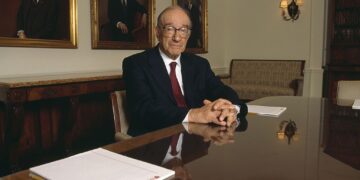


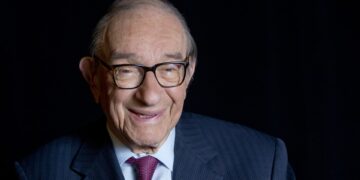













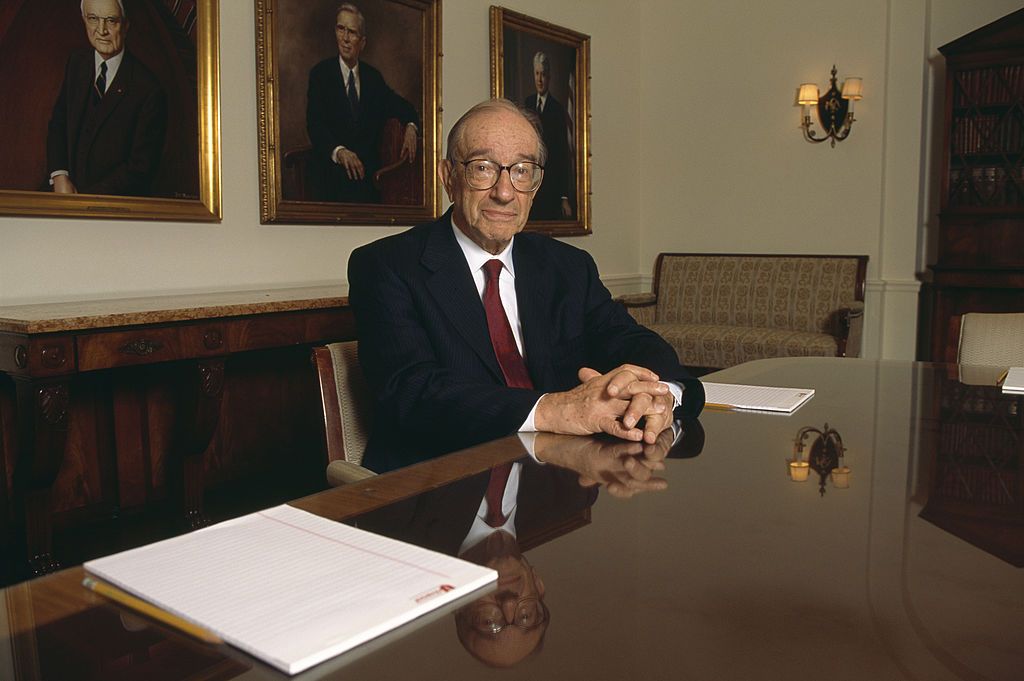
The main equity indexes were mixed on Monday, as market participants continued to monitor negotiations between the U.S. and Iran and the status of the Strait of Hormuz. Investors, traders and speculators also observed the passing of Alan Greenspan, who led the Federal Reserve for almost 20 years and was among the most important central bankers of our time.At the closing bell, the blue-chip Dow Jones Industrial Average was up 0.3% to 51,712, but the S&P 500 was down 0.4% to 7,472, and the tech-heavy Nasdaq Composite had shed 1.3% at 26,166.Communication services stocks were the worst-performing group, with the sector weighed down by recent addition SpaceX (SPCX, -16.4%) posting a third straight daily decline less than two weeks after the biggest IPO ever.
From just $107.88 $24.99 for Kiplinger Personal Finance
Become a smarter, better informed investor. Subscribe from just $107.88 $24.99, plus get up to 4 Special Issues
CLICK FOR FREE ISSUE
Sign up for Kiplinger’s Free Newsletters
Profit and prosper with the best of expert advice on investing, taxes, retirement, personal finance and more – straight to your e-mail.
Profit and prosper with the best of expert advice – straight to your e-mail.
The front-month West Texas Intermediate crude oil futures contract fell by 2.0% to $74.35 per barrel. WTI has retraced about 86% of its surge to $119.48 on March 9, the intraday peak amid war in the Middle East.The 2-year Treasury yield ticked up/down to 4.232% from 4.179% on Thursday, with the market-based barometer of short-term interest rates hitting another 52-week high on Monday.Following its two-day meeting last week, the Fed held the federal funds rate steady at 3.50% to 3.75%. You can catch up on news and developments around the FOMC meeting at our June Fed meeting blog.Alan Greenspan, the ‘Maestro’ of the modern FedWhether you deem the development positive or negative, and even if it’s just the way things have always been in your experience, it’s fair to say Alan Greenspan is the template for the modern celebrity Fed chair.Greenspan, who led the world’s most important central bank from 1987 until 2006, died on Monday at 100 years old.Nominated by Ronald Reagan to succeed Paul Volcker, a historical figure in his own right, he led the central bank under a total of four presidents, including Reagan, George H.W. Bush, Bill Clinton and George W. Bush.After assuming leadership of the Fed on August 11, 1987, Greenspan guided Washington, D.C., and Wall Street out of Black Monday that October and into an economic boom that lasted, almost uninterrupted, through the 1990s.”Since becoming a central banker,” he testified to Congress in September 1987, “I have learned to mumble with great incoherence. If I seem unduly clear to you, you must have misunderstood what I said.”Looking for more timely stock market news to help gauge the health of your portfolio? Sign up for Closing Bell, our free newsletter that’s delivered straight to your inbox at the close of each trading day.Later, in December 1996, he wondered, “But how do we know when irrational exuberance has unduly escalated asset values, which then become subject to unexpected and prolonged contractions,” as the dot-com era unfolded.Greenspan, Treasury Secretary Robert Rubin and Treasury Deputy Secretary Larry Summers famously formed what Time magazine called the “committee to save the world” in February 1999.Bob Woodward of The Washington Post titled his 2000 biography “Maestro: Greenspan’s Fed and the American Boom.” That was well before his retirement from the central bank in 2006.It also preceded the Global Financial Crisis/Great Recession of 2007-09, a series of events that earned Greenspan another nickname, “Mr. Bubble,” bestowed when he no longer held any real power.MU sees strong demandMicron Technology (MU, +6.8%) extended its 2026 rally on Monday as markets prepared for the tech stock to report fiscal third-quarter results after the closing bell on Wednesday.MU is up nearly 300% so far this year, the semiconductor stock rising along with demand for the memory and storage hardware essential to the still-accelerating artificial intelligence (AI) infrastructure buildout.Indeed, Susquehanna analyst Mehdi Hosseini is on the lookout for cracks in Micron’s big gross and operating margin numbers: “While the durability of GM above 80% remains a central question,” he writes “we believe the more important issue is whether OM can sustain a 70%-75% range over a multi-quarter — or even multi-year — period.”Hosseini’s model shows normalization for margins beginning in fiscal 2028. “Nonetheless,” the analyst concludes, “with annualized EPS potentially reaching $160 in FY27, we continue to see meaningful upside to the stock relative to our $1,750 price target.”What will FDX deliver on Tuesday?FedEx (FDX, +1.2%) hasn’t put up year-to-date gains quite like MU’s, but it is among the top 10% of S&P 500 stocks so far in 2026 with a total return of greater than 40%. That performance through Monday was supported by recently raised guidance, as well as the completion of much of its corporate restructuring.”While the market will naturally look for forward commentary,” Stifel analyst J. Bruce Chan writes in a preview of FedEx’s post-closing-bell turn on the earnings calendar this Tuesday, “we believe this print will be centered around: whether FedEx can deliver against its updated FY26 framework.”Chan, who reiterated his Buy rating and his $442 12-month target price for the industrial stock, will focus on the core Federal Express (FEC) parcel business and whether strength from last quarter carried through a more normalized non-peak quarter.”Although the near-term print still includes several moving pieces,” he concludes, “the larger outlook has improved materially, especially with the parcel business showing evidence of better revenue quality, stronger yield management, improved network efficiency, and more disciplined cost execution.”Related content