

























TradingKey – Samsung Electronics shares plunged nearly 10% today, once again testing the key support level of 280,000 won.
During the Asian trading session on July 7, South Korea’s KOSPI index plummeted over 6% intraday, falling below the 8,000-point mark. Meanwhile, AI memory giant Samsung Electronics tanked nearly 10%, losing the 300,000 won threshold to trade temporarily at 287,000 won, once again testing the support level of 280,000 won (approximately $183) formed in June.
This morning, Samsung Electronics announced its Q2 earnings guidance. Looking at profit data alone, Samsung’s Q2 guidance was staggering for the market, though its revenue only met market expectations. According to the data, estimated profit reached 89.4 trillion won (approximately $58.4 billion), significantly beating the market expectation of 84.2 trillion won, and even exceeding the sum of Samsung’s profits over the past three years. Consolidated revenue was estimated at 171 trillion won, setting a new historical quarterly high, but fell short of the market expectation of 173.9 trillion won, amplifying potential bearish sentiment.
According to reports, employees in Samsung’s semiconductor division will receive astronomical performance bonuses of up to 600 million won (approximately $416,000) this year, while consumer electronics division employees ended up with bonuses of only about 6 million won (approximately $4,000). The bonus gap between the two is as high as 100 times, and this “unfair incentive distribution” is triggering employee protests and internal strife. It is reported that thousands of people will launch a protest at the Suwon headquarters on July 16, which directly poses valuation pressure and bearish sentiment on Samsung’s already volatile stock price.
It is worth noting that Samsung’s stock price did not just start falling today; it has been continuously correcting since peaking on June 19, with a cumulative decline of over 20% to date, driven by concerns over AI overcapacity and bubble risks. Recently, Meta ( META) was rumored to be planning to sell excess computing power, triggering market fears over whether tech giants’ investment in AI infrastructure has peaked. Meanwhile, Apple ( AAPL) raised prices for MacBooks and iPads to pass on memory costs, alerting the market to whether high hardware costs will stifle end-consumer demand, which directly battered the global semiconductor sector.
Over the past month, Samsung’s stock price has mainly fluctuated in a wide range between 280,000 and 370,000 won. From a technical perspective, once Samsung breaks below the 280,000 won support level, it is highly likely to slide down to fill the gap left by the rally in early May, heading toward the 230,000 won mark, which was the starting point of the rally that broke out this May.
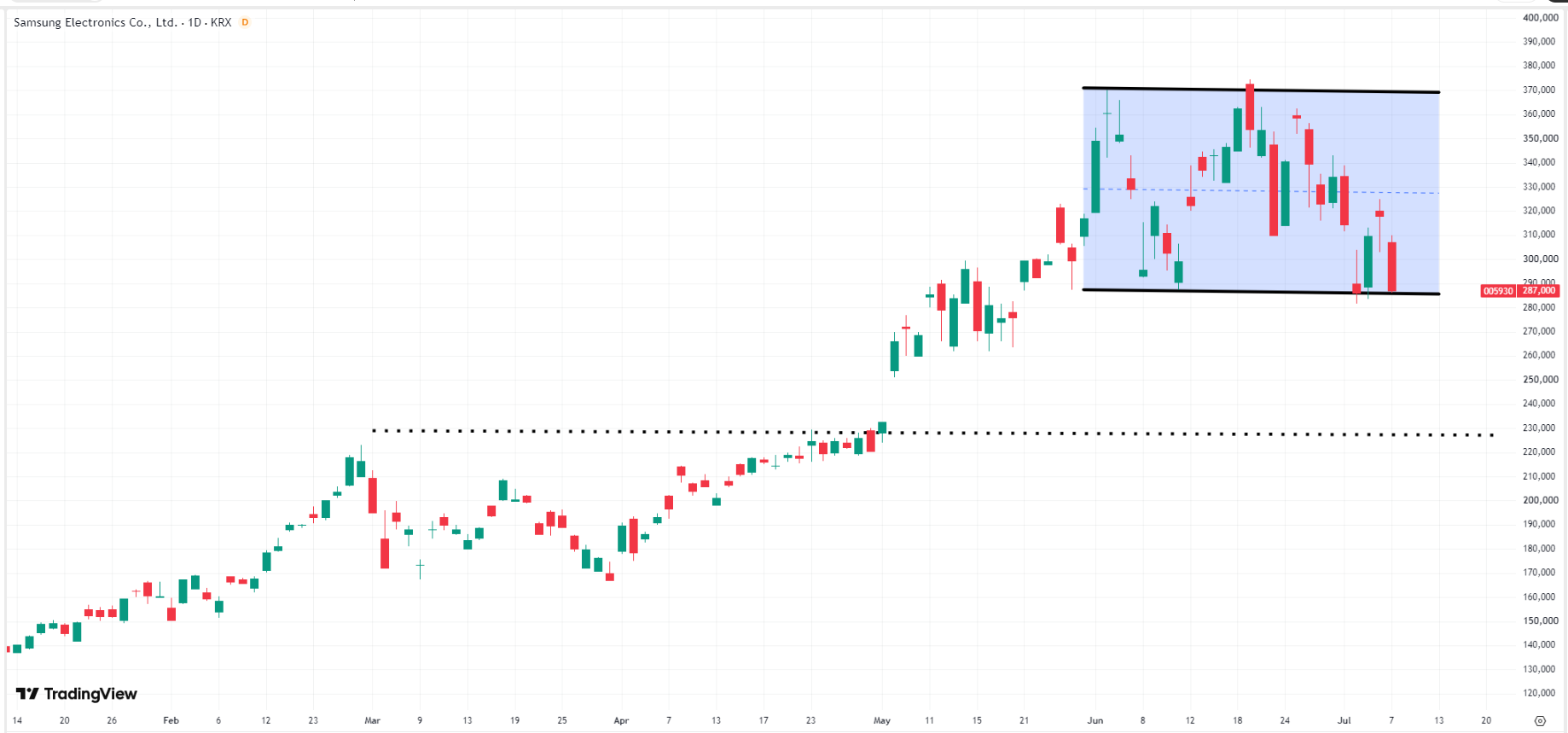 Samsung Electronics Stock Chart, Source: TradingView
From a news perspective, key focus should be placed on the progress of the Samsung Electronics employee protests in the middle of this month, as well as the official, complete earnings release on July 30. These two timeline points could directly trigger a shift in the stock price’s direction. However, the true deciding factor lies in whether global AI capacity is heading into a bubble.
Source: Original Article