
























Russian crude oil prices have fallen back to where they were before the Middle East war, with its flagship Urals averaging just $41.66 a barrel during the first three days of July. The drop wipes out the revenue boost Moscow received from the conflict and pressures a federal budget that assumes oil prices of about $59 a barrel.
Urals had averaged more than $59 a barrel every month since March and climbed to $60.92 in June after the U.S. and Iran reached an agreement to restore shipping through the Strait of Hormuz. Higher prices gave the Kremlin room to replenish its reserve fund for the first time in nearly a year and delay planned spending cuts. With Urals now back near $42 a barrel, that relief could be short-lived. Oil and gas account for roughly one-third of Russia’s federal budget revenues.
Reuters reported Monday that a European intelligence assessment warned the country’s banking sector is becoming increasingly vulnerable after years of war-driven lending, with rising bad loans and deteriorating asset quality risking a wider financial crisis.
According to the assessment, Russian banks have absorbed much of the financial burden of the war by extending subsidized loans to defense contractors, state-backed companies and households. The report estimates that roughly 10% of corporate loans are now considered doubtful, while some major lenders have retail non-performing loan ratios as high as 15%. It also cites more than 500,000 personal bankruptcies in 2025.
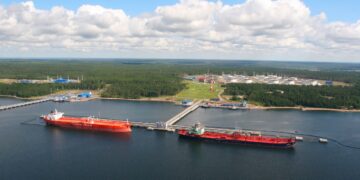
Ukraine also continues with campaigns targeting Russia’s energy infrastructure. Bloomberg reported Monday that drones were intercepted near the Baltic ports of Ust-Luga and Primorsk, two of Russia’s key crude export hubs. There were no reports of damage or disruptions to oil exports.
By Charles Kennedy for Oilprice.com
Source: Original Article