











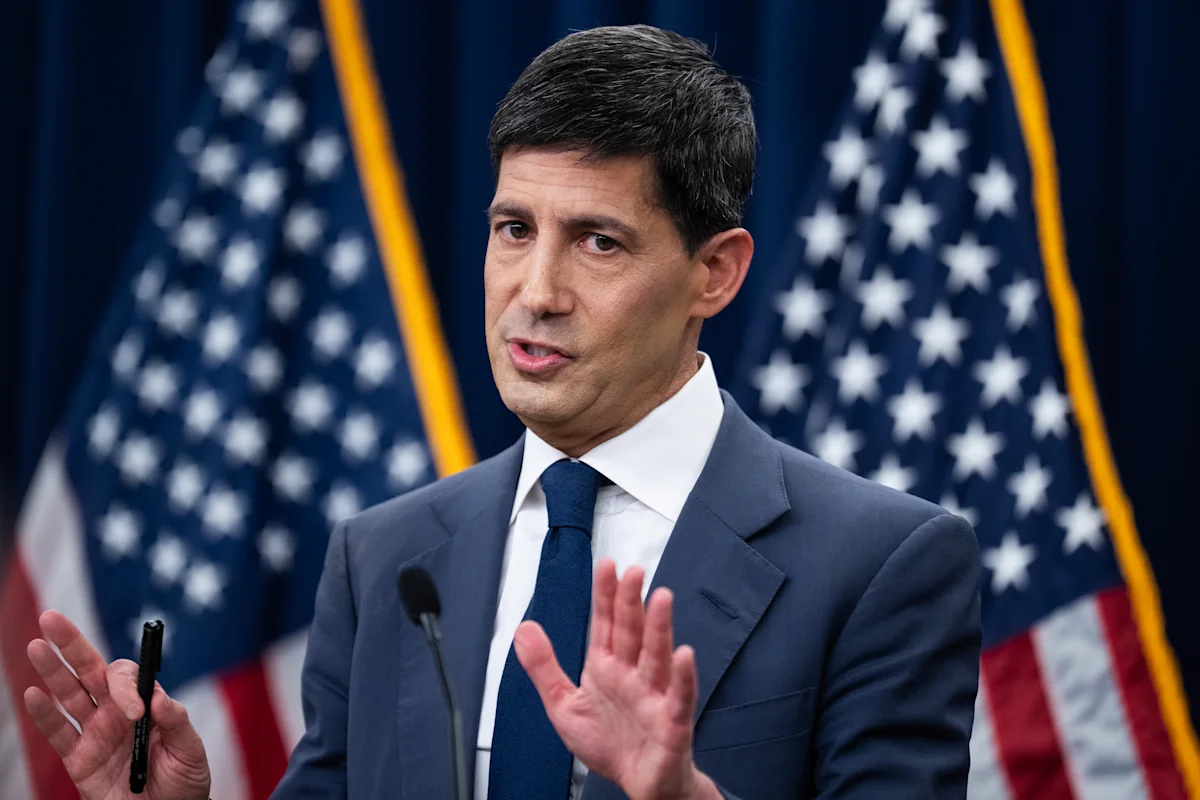
The Federal Reserve’s preferred inflation gauge showed prices heated up to the highest level in three years, likely keeping the central bank holding interest rates steady with an eye toward hiking if inflation doesn’t dissipate. The Personal Consumption Expenditures index rose 4.1% in May, in line with expectations, and up from 3.8% in April. Month over month, inflation rose to 0.4%, a tenth of a percentage point less than expectations and the same level as April. Excluding volatile energy and food prices, the way the Fed prefers to assess the inflation gauge, “core” PCE rose to 3.4%, in line with expectations and up from 3.3% in April. Month over month, core inflation rose to 0.3% vs. 0.2% in April. This marked the highest level since October 2023. Higher energy prices have pushed up overall inflation, but even excluding them, core inflation is also moving higher, signaling that the broadening of price pressures seen in April continued in May. “A pickup in core inflation was the most important part of today’s economic releases, adding to the likelihood that the Fed raises rates in the next 12 months,” said Bill Adams, chief US economist for Fifth Third Commercial Bank. “The Fed will be unhappy about inflation when they meet next in July, but likely will still hold rates steady. “They probably will want to wait to see if inflation improves as the shocks from tariffs and the war fade.” Read more: How jobs, inflation, and the Fed are all related Fed officials last week signaled that they’re looking to hold rates steady through this year but may be on the verge of hiking rates once. Fed Chairman Kevin Warsh made clear that the central bank wants to get back to 2% inflation. And while he personally did not offer any new insight on monetary policy, the outlook for the economy, or interest rates beyond the official statement, nine of his colleagues penciled in at least one rate hike this year. Six members see at least two hikes, while eight see holding rates steady. It’s possible the data is out of date. Now that President Trump has a deal with Iran, oil prices have plunged. If the Strait of Hormuz remains open, inflation could be in the topping stage but still remain elevated through the year. Fed officials expect inflation to remain elevated through the year before moving back down next year. Officials expect headline PCE will end the year at 3.6%; stripping out energy and food prices, officials project core PCE will end the year at 3.3%. A woman shops for groceries at a store in Arlington, Va., on June 10, 2026. (Li Rui/Xinhua via Getty Images) · Xinhua News Agency via Getty Images New York Federal Reserve president John Williams said in prepared remarks Thursday that he expects inflation to edge down in the coming quarters. Story Continues Energy prices and the goods impacted by higher energy prices should start to stabilize and come down later this year, Williams said, if the supply disruptions from the closure of the Strait of Hormuz are resolved relatively soon. Though he noted that the impact of the conflict in the Middle East continues to create “significant and unpredictable risks” for economies around the world. Williams also said the effect of tariffs has mostly played out, and any new tariffs won’t cause much upward pressure. As well, he noted, modest increases in market rents indicate that shelter inflation should continue to slow. Some analysts had similar reactions following the PCE release on Thursday. “Given the sharp 38.8% decline in West Texas Intermediate oil prices from its May apex, it is highly likely that inflation peaked in May, and one should expect a negative month-over-month print across the June inflation data,” said Joseph Brusuelas, chief economist at RSM. But Brusuelas said he doesn’t expect core inflation to retreat so easily, pointing to sticky service-sector inflation, a sustained increase in goods inflation caused by tariffs, current pricing pressures from the AI infrastructure build-out, and coming pricing pressures linked to defense spending. “All will contribute to a challenging core inflationary picture going forward,” Brusuelas said. “It is a difficult judgment call on whether rates should remain on hold or whether a hike in the federal funding policy rate is appropriate given current inflation dynamics.” Thomas Ryan, economist for Capital Economics, said he thinks core PCE likely peaked in May as tariff effects fade and the recent plunge in oil prices weighs on several categories, including airline fares. But he still expects core inflation to decline slowly from August onward. Ryan said that leaves the Fed with “little choice but to tighten policy amid strength in economic activity and the labor market.” He sees three rate hikes. Markets are betting there’s a 50% chance the Fed hikes rates by 25 basis points come September. Deutsche Bank expects the Fed to hike twice this year — in September and December — because inflation pressures look broad-based, driven by more than one-offs such as tariffs and energy. “Today’s data is a reminder that inflation remains well above target,” said Ellen Zentner, chief economic strategist for Morgan Stanley Wealth Management. Jennifer Schonberger is a veteran financial journalist covering markets, the economy, and investing. At Yahoo Finance, she covers the Federal Reserve, Congress, the White House, the Treasury, the SEC, the economy, cryptocurrencies, and the intersection of Washington policy with finance. Follow her on X @Jenniferisms and on Instagram. Click here for the latest economic news and indicators to help inform your investing decisions Read the latest financial and business news from Yahoo Finance
Source link


2026.06.26 2026.06.26 US Dollar Gets Powerful Boost From AI Boom. Forecast as of 26.06.2026Dmitri Demidenkohttps://www.litefinance.org/blog/authors/dmitri-demidenko/American exceptionalism is returning to the markets. The US economy is...
Read moreDetails