











(…)
Thank you for joining us.
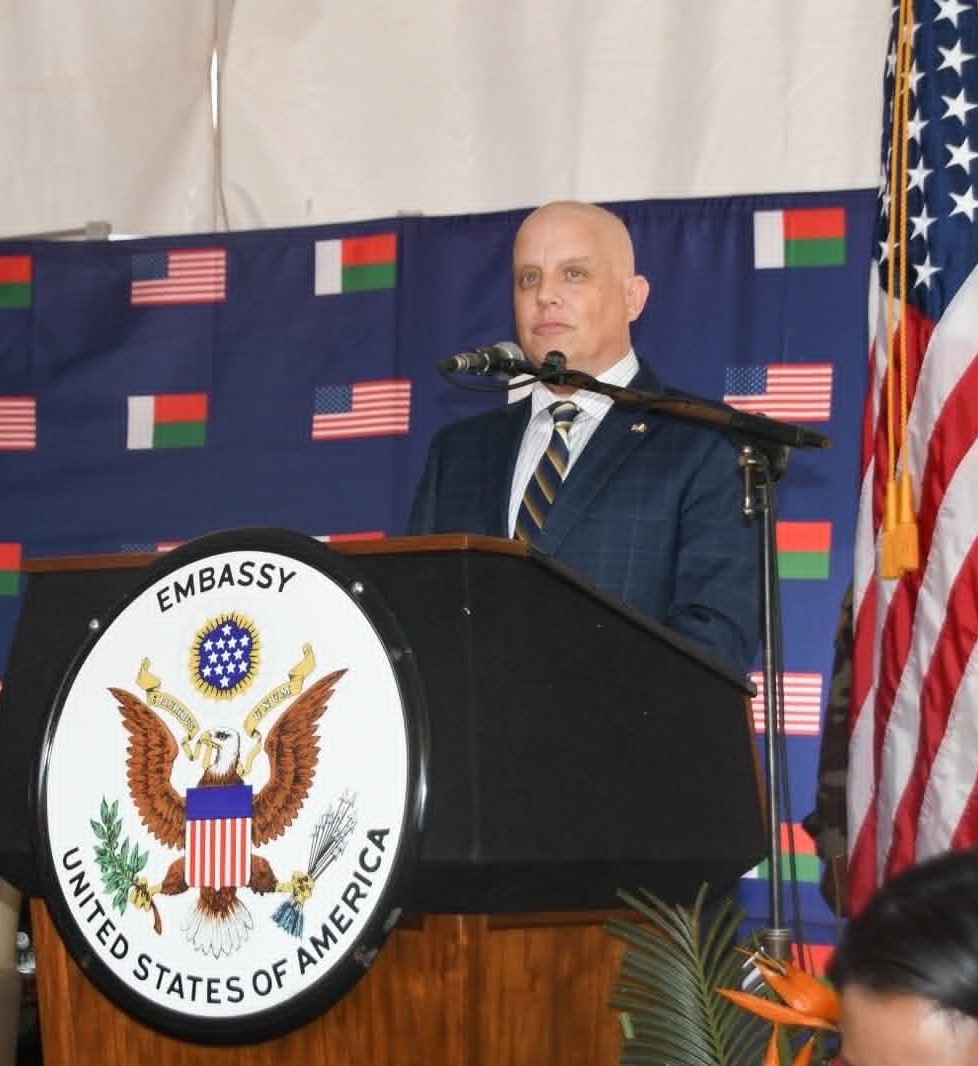
I am here today to demonstrate how U.S. foreign assistance under President Trump’s America First Global Health Strategy and our bilateral health MOU makes America safer and stronger while helping Madagascar build a more self-reliant health system.
Through our bilateral Global Health Memorandum of Understanding (MOU) signed in December 2025 with the Ministry of Public Health, our two governments outlined shared priorities and responsibilities, including a strong focus on infectious disease threats and Madagascar’s increasing ownership and co-investment in its own health system. The MOU outlines the structure and terms of U.S. support to Madagascar’s health sector from 2026 through 2030, with a total commitment of $134,305,000 from the U.S. government and $41,216,252 from the Government of Madagascar to work jointly to address malaria, maternal and child health, polio and global health security issues. Stronger health systems help prevent instability and reduce the risk that infectious diseases reach the United States, making both our countries safer. America First foreign assistance is clear and disciplined: It is a tool of strategic engagement, not global charity. Every U.S. taxpayer dollar must show measurable results, reduce long-term dependence on U.S. taxpayer resources, and support greater self-reliance in recipient countries. Support must be efficient and targeted, with zero tolerance for fraud, waste, or abuse.
This year, through the U.S.-funded Global Health Supply Chain Program – Procurement and Supply Management project, we are distributing:
-
- 989,250 long-lasting insecticide-treated nets, worth $2,000,000 to 63 districts and 1,661 Community Health Centers across Madagascar, with the third and final delivery of these nets having arrived in late June.
Through the U.S.-funded Momentum Country and Global Leadership (MCGL) project, we are funding:
-
- The full cost of Starlink internet connectivity equipment procurement, installation, and one-year subscription for 31 priority District and Regional Health Offices.
Through the U.S.-funded Strengthening Infectious Disease Detection Systems project, we are supplying:
-
- 908,523 pieces of critical medical equipment and a modernized digital surveillance system to the Ministry of Public Health.
These materials will strengthen health systems, improve response capabilities, and help those most in need of protection from mosquito-borne diseases — particularly malaria, which continues to claim the lives of children and women at an unacceptable rate. Deployed effectively, they will contribute to reducing maternal and newborn mortality in rural and hard-to-reach communities where the need is greatest. In these same underserved areas, Starlink connectivity will play a critical role in enabling the rapid transmission of health data and information to central levels, ensuring that decision-makers receive timely, actionable intelligence and can mount swift, coordinated responses to protect populations.
For Americans, this support delivers concrete benefits. Stronger health systems in Madagascar help detect and contain infectious diseases before they spread across borders, protecting American and Malagasy families. More stable, healthier countries can expand trade and economic cooperation with the United States. Our goal is not permanent support; it is temporary, targeted assistance that helps Madagascar save lives while achieving greater self-reliance and independence from foreign assistance.
To the health workers and community health agents here that will use the products we’re delivering today: your dedication and skills save lives. Your work exemplifies the kind of local ownership that will enable Madagascar to reduce dependence on foreign assistance and manage the country’s health challenges.
This targeted support delivers results today while helping Madagascar build toward a future where it can sustain and expand those health gains independently, ensuring that today’s U.S. support leads to Madagascar’s self-sufficiency.
Thank you, Misaotra.
Source: Original Article