



















Ether (ETH +1.03%), the native token of the Ethereum blockchain and the world’s second-largest cryptocurrency, has declined more than 40% this year. Many investors sold their Ether as inflation, fears of interest rate hikes, and other macro headwinds rattled the market. Some investors also likely sold their Ether to invest in big IPOs like SpaceX (SPCX 3.44%).
However, Ethereum will undergo its next big upgrade, Glamsterdam, in the second half of 2026. Let’s see what that update means for Ether, and if it’s smart to buy the token before it happens.
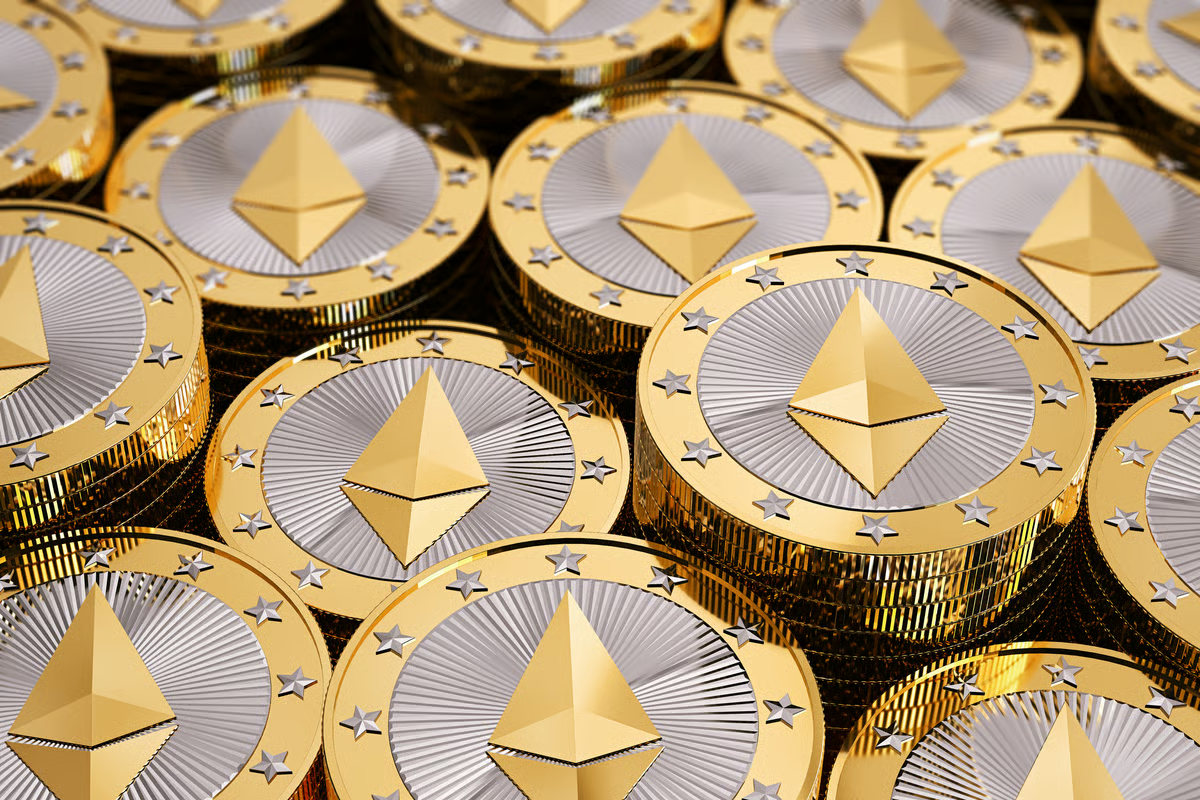
Image source: Getty Images.
A brief history of Ethereum’s big upgrades
Ethereum’s last major upgrade was The Merge, which occurred in 2022. That upgrade fully transformed Ethereum from a proof-of-work (PoW) blockchain to a proof-of-stake (PoS) one, which reduced its energy usage by over 99%.
As a PoS token, Ether could no longer be mined like Bitcoin, which was still a PoW token. However, it could be staked (locked up to earn yields) and used in smart contracts to develop decentralized apps and other crypto assets. Today, it serves more than 232,000 active developers, making it the largest developer-oriented blockchain by a wide margin.
Today’s Change(1.03%) $17.26Current Price$1700.58Key Data PointsMarket Cap$205BDay’s Range$1679.19 – $1715.1052wk Range$1512.07 – $4946.05Volume9.1B
In 2024, Ethereum launched its Dencun upgrade, which reduced network congestion and gas fees while improving the scalability of its Layer-2 rollups (which bundle transactions and process them off-chain at higher speeds than the Layer-1 blockchain).
In 2025, it launched the Pectra and Fusaka upgrades, which improved the flexibility of its staking features and the scalability of its Layer-2 rollups, respectively. All of these upgrades widened its moat against smaller PoS blockchains like Solana (SOL +0.46%).
Will the Glamsterdam upgrade move the needle?
The Glamsterdam upgrade will further improve Ethereum’s speed and security while reducing gas fees. By adding Block-Level Access Lists (BALs), Ethereum can process blocks of transactions in parallel rather than in a slower single-file line.
The new Enshrined Proposer-Builder Separation (ePBS) feature will eliminate third-party software and middlemen (relays) used to validate transactions, thereby improving the network’s security. It will also better organize its data to reduce its base transaction fees.
Those updates will reinforce Ethereum’s position as the leading developer-oriented blockchain, but Ether’s price probably won’t bounce back until the macro environment improves. As long as investors are worried about potential rate hikes and other economic turmoil, the crypto market will remain chilly. However, Ether and Bitcoin — the market’s “blue chip” cryptocurrencies — will likely recover much faster than the smaller altcoins that lack their long-term catalysts.
Source link