




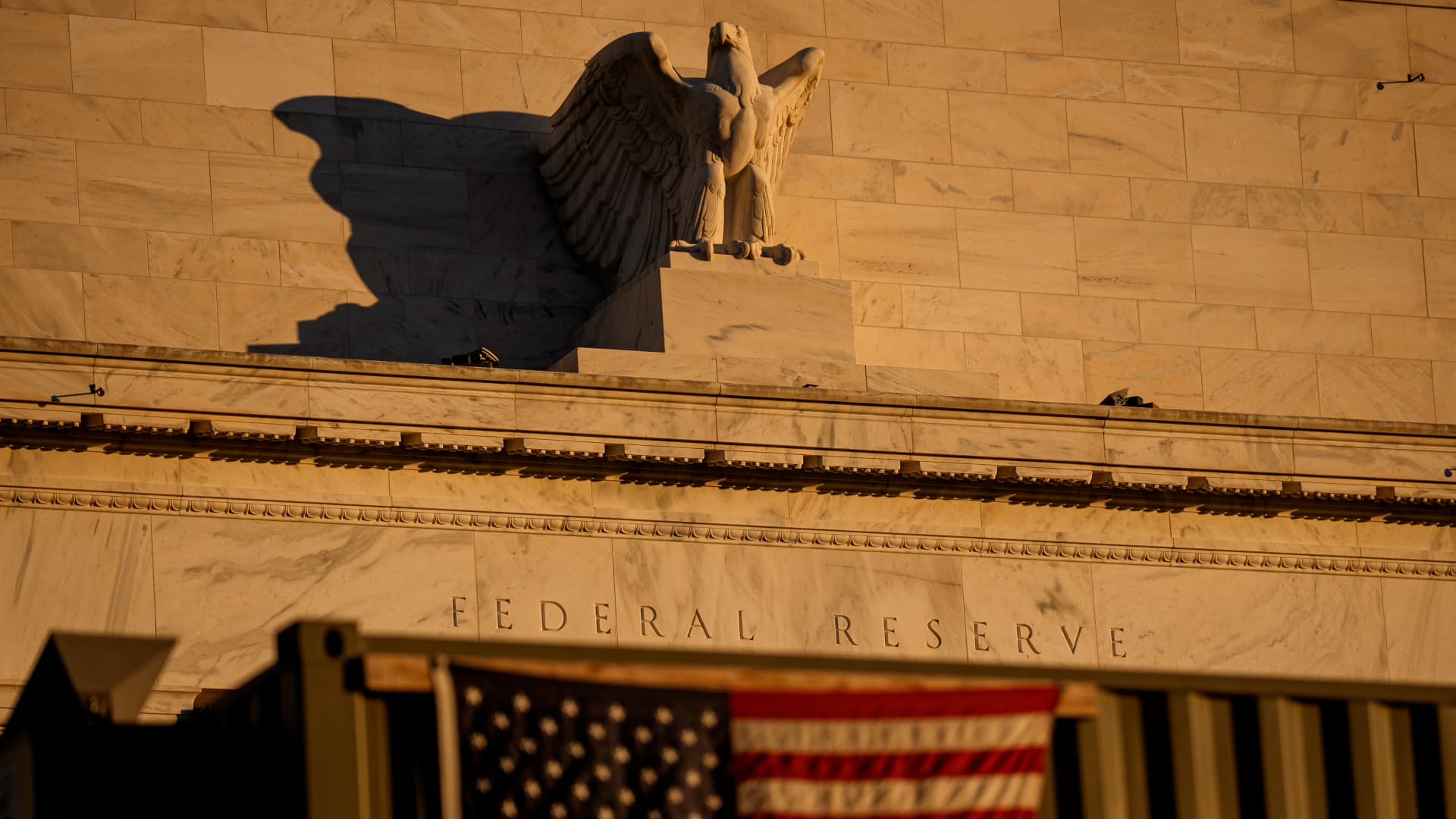
Renovation work continues on the Marriner S. Eccles Federal Reserve Board Building, the main offices of the Board of Governors of the Federal Reserve System on December 9, 2025 in Washington, DC.
Andrew Harnik | Getty Images
The Federal Reserve is still expected by futures traders and prediction markets to maintain the status quo at its July meeting, leaving interest rates unchanged once again. However, it’s going to be a close call.
The odds are rising Monday that the central bank makes a move to hike.
There’s now a 46.5% chance that the Fed hikes interest rates by a quarter point on July 29, according to CME’s FedWatch tool. That’s up from 34% on Sunday.
On prediction market platform Kalshi, traders now see a 36% chance of a hike, up from under 20% on Sunday and under 10% earlier this month.
The rise in odds comes after President Donald Trump announced he is reinstating the U.S. blockade of Iranian ports near the Strait of Hormuz, and imposing a 20% toll on all cargo through the passageway.
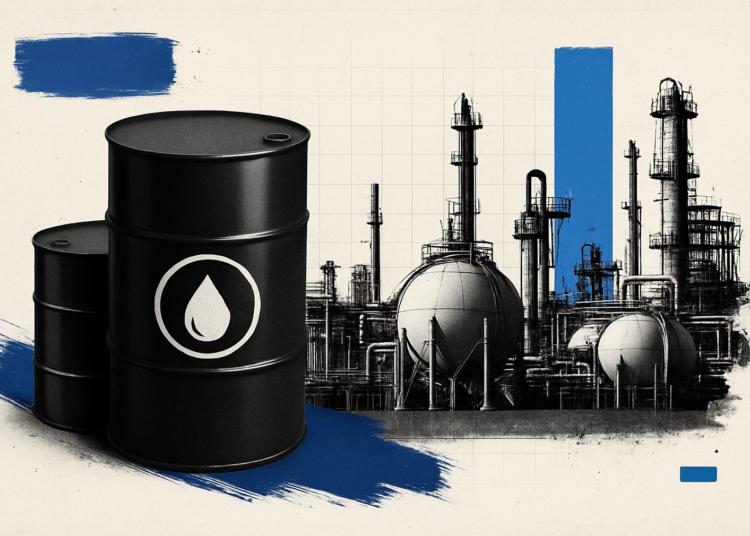
U.S. Oil prices rose in response on Tuesday, jumping more than 5% and crossing $75 per barrel.
Chances on Kalshi also jumped after Federal Reserve Governor Christopher Waller said the bank must not repeat the mistakes of 2021 and 2022, where he said the Fed waited too long to raise rates amid rising inflation. He added, though, that the bank shouldn’t overcorrect and raise rates too quickly.
Odds of a hike are rising even as June inflation was expected to have cooled a bit. Economists surveyed by Dow Jones expect that inflation rose 3.8% annually in June, which is down from the rate in May of 4.2%. The Consumer Price Index report for June will be delivered on Tuesday.
But the inflation outlook could become more complicated if oil prices march higher again as the conflict in the strait resumes. And a Barclays note on Monday made the case that inflation concerns are now beyond solely energy prices.

WTI Crude 5-day chart.
Barclays global chairman of research Ajay Rajadhyaksha said that the pass-through of higher prices from the oil shock still isn’t over, and that the lack of demand destruction from elevated energy prices has only exacerbated the inflation from it. He added that AI-induced price hikes are also deteriorating the inflation outlook.
All of this combines to create a situation for the Fed where it may have to turn increasingly hawkish, Rajadhyaksha wrote.
“A data-dependent framework means you respond to inflation prints, as well as forecasts,” he wrote. “And the prints, for the next few months, are not going to look good.”
The Federal Reserve will announce its next decision on interest rates on July 29.
Disclosure: CNBC and Kalshi have a commercial relationship that includes customer acquisition and a minority investment.
Source: Original Article