

















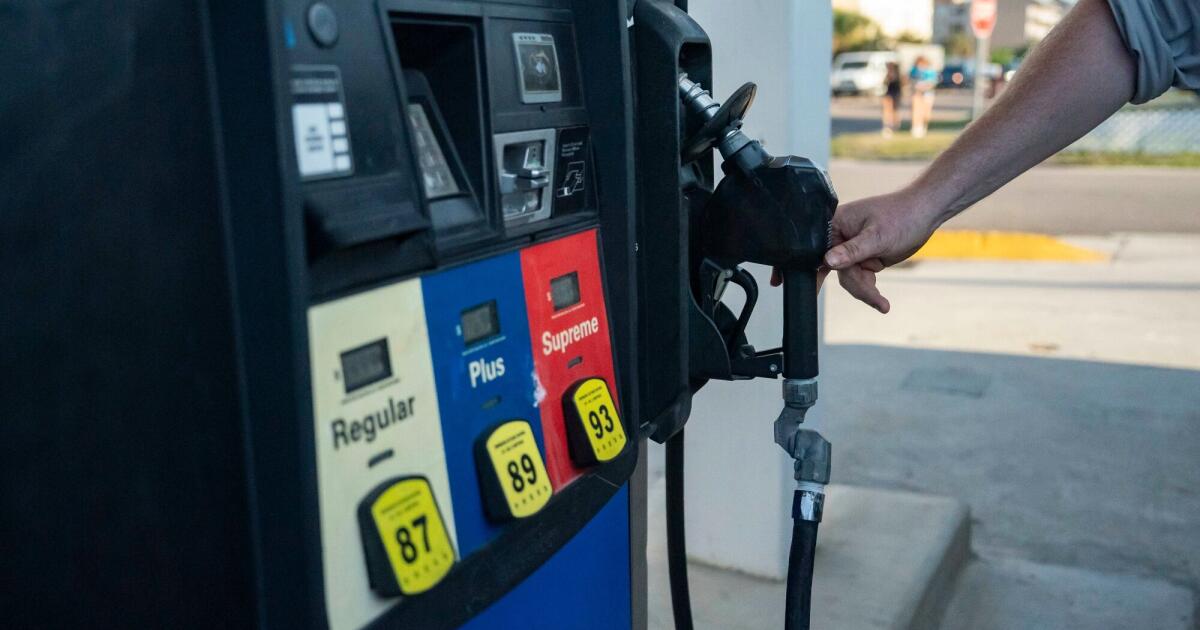
Prices for gasoline, diesel and jet fuel are rising again even as that for crude oil eases, a rare divergence that’s swelling costs for peak-season travelers and threatening to undermine President Trump’s pledge to quash inflation ahead of the midterm elections.
The gap between the cost of some refined products and raw crude is at a record in the U.S. and other regions even as global oil benchmarks have all but erased the spike driven by the Iran war. Some analysts warn that consumers need to brace for more pain at the pump as a Russian export ban stemming from the war with Ukraine and renewed fighting in the Middle East squeeze supplies.
“Refineries are already running at very high utilization rates,” said Jamie Torrance, who runs diesel and jet fuel trading at Trafigura Group, one of the largest global oil merchants. “Yet inventories are still drawing.”
For governments and central banks, fuel markets are a painful reminder of the inflationary fallout from Trump’s decision to go to war with Iran and failure to negotiate an end to Russia’s war with Ukraine as he’d promised.
The president has called for an investigation, but in the meantime companies including PepsiCo Inc. are blaming gasoline for slumping consumer demand and money managers at Vanguard Asset Management are buying insurance against stickier-than-expected U.S. inflation because of costlier fuel.
“President Trump and his energy team anticipated short-term market disruptions, communicated them openly to the American people, and implemented an aggressive plan to mitigate any impacts,” White House spokeswoman Taylor Rogers said in a statement. “Oil prices have dropped dramatically, and prices at the pump should follow.”
Hedge funds were positioning for the run-up to continue before the U.S. renewed attacks on Iran this week, with the most bullish bets on European gasoil since late March, data from ICE Futures Europe show. Expectations for soaring diesel prices emerged even while funds were the least bullish on Brent crude oil, the international benchmark, since December.
The market for oil and refined products is global, but with regional variability. Supply shocks in one corner of the world often lead to higher prices thousands of miles away.
The most significant recent shift has been in Russia, which banned diesel exports after months of Ukrainian attacks on its refineries caused domestic shortages. Russia is the world’s second-largest diesel exporter after the U.S., accounting for 11% of global shipments.
Traders say that countries that have relied on Russian supplies, such as Brazil and Turkey, have been in a bidding war for non-Russian supplies in recent days.
Fuels are “the much more concerning part of the picture at the moment,” said Isabelle Gilks, director of oils research at energy consulting firm Wood Mackenzie. “Russia is sort of the straw that could break the camel’s back.”
At the same time, a recent flare-up in fighting around the Strait of Hormuz as Trump declares a ceasefire over is threatening to exacerbate the problem. Flows of refined products through the strait, about 5 million barrels a day before Trump attacked Iran, have hovered near 1 million barrels a day recently, Citigroup Inc. analysts including Max Layton wrote in a note.
Stretched thin
The tightening in supply has emerged amid the peak of demand for the northern hemisphere’s traditional summer vacation season.
In the United States, regular unleaded gasoline cost an average of $3.88 a gallon as of July 10, according to the American Automobile Assn. — the third-highest price on record for this time of year. Diesel prices are the second-most expensive for this time of year on record. And while jet fuel costs have abated some, higher airfares remain persistent as airlines look to recoup costs from the early months of the war.
In Europe, scorching heat has threatened the ability of refineries to make fuel at full capacity. Limits to the efficiency of their cooling and condensation systems mean they have to cut output by as much as 15% during a heat wave.
Refiners have operated at maximum capacity in the U.S. for months straight, running the risk of mechanical breakdowns that could stifle production. Hurricane season in the southern U.S., which runs from June to November, is another risk for refinery shutdowns.
Those risks are looming at a time when inventories have been run down after four months of the war in Iran. In the U.S., stockpiles of distillates, primarily diesel, are just above all-time seasonal lows, declining at a time of year when they typically build. In Europe, there have been early signs that some governments are looking to rebuild strategic reserves — adding to demand in the market.
Some of the soaring prices for U.S. fuels also owe to record-high costs for credits for refiners to remain in compliance with the country’s renewable fuel standard.
The White House has touted moves aimed at easing the supply disruptions including temporarily suspending a century-old shipping mandate and waiving some gasoline blending requirements.
And earlier warnings about crises in the fuel market, such as predictions of severe jet fuel shortages, proved to be an overestimation, as refiners responded by boosting production. Now, traders and analysts say, supplies of jet fuel are relatively comfortable — so much so that it may make sense to blend some of it into diesel to boost supplies of that fuel.
China, a key supplier of fuel throughout Asia, authorized larger-scale exports of fuel this week for the first time since March.
Traders are watching closely to see if the recent flare-up in the war in the Middle East prompts China to slow exports, or whether elevated regional refining margins will drive further shipments from China and elsewhere in Asia over the coming weeks and months.
“China exporting additional refined products should alleviate some of the pressure, but we need this to sustain,” said the Trafigura trader Torrance. “Otherwise there will be price appreciation across diesel and gasoline to a level where demand eventually falls.”
Kubzansky, Chin and Farchy write for Bloomberg. Bloomberg writers Nicholas Lua, Rachel Graham, Grant Smith and Jeff Mason contributed to this report.
Source: Original Article