




















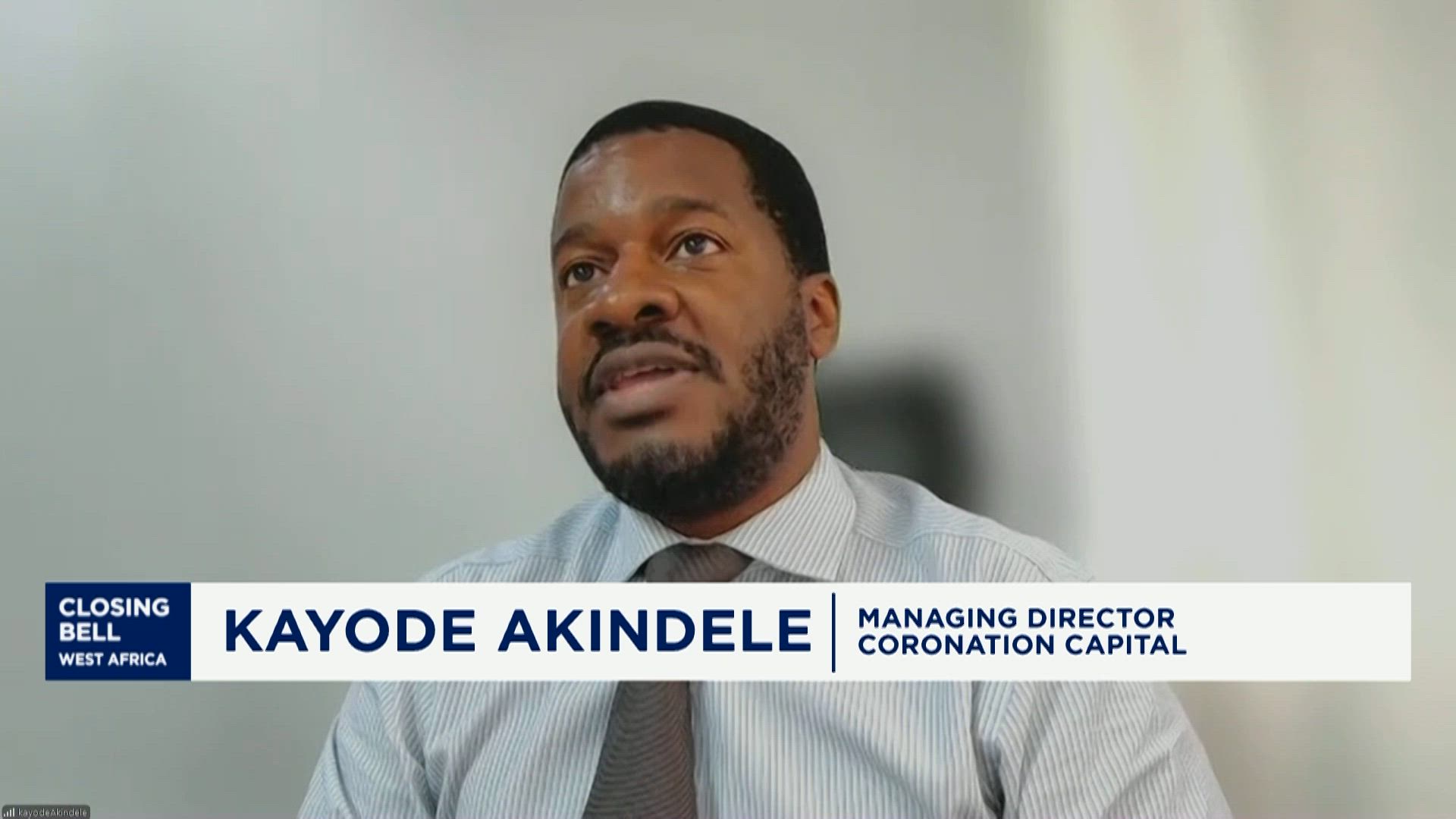
Nigeria’s equity market could be in line for a fresh wave of foreign capital after S&P Dow Jones Indices placed the country on a watchlist for possible reclassification from “standalone” to “frontier market” in its 2027 review, according to Kayode Akindele, managing director and CEO of Coalition Capital.
Speaking in a television interview, Akindele described the development as a clear positive for Nigerian assets, saying the move signals growing international recognition of reforms in the country’s capital markets, foreign-exchange framework and broader policy environment.
“It’s good news for Nigerian markets,” Akindele said, noting that inclusion in a frontier market index would likely trigger mandatory buying by passive funds that track benchmark indices. That, in turn, could improve liquidity, raise Nigeria’s profile among global institutional investors and reinforce the market’s recent rally.
The S&P Dow Jones decision comes as investors are already watching whether FTSE Russell will also move Nigeria into its frontier market universe, although that process has been complicated by concerns around the country’s T+1 settlement transition. Akindele said that if both global index providers ultimately include Nigeria, the country could see hundreds of millions of dollars in passive inflows alone.
By his estimate, S&P Dow Jones-related inclusion could attract roughly $150 million to $250 million in passive fund flows. If FTSE Russell follows through as well, he said, an additional $200 million to $300 million could enter the market. Beyond that, he argued, the symbolic importance of index inclusion may be just as significant as the initial cash injection because it puts Nigeria back on the radar of active managers across Europe, South Africa and the U.S.
“The passive funds have to come in once you’re in the index,” Akindele said. “And then it also puts Nigeria on a lot of institutional investor maps, so you see some more active investors who will come in on the back of that as well.”
Still, he cautioned that foreign buying would likely be concentrated rather than evenly spread across the Nigerian Exchange. In his view, investors are most likely to target large, liquid banking names and blue-chip corporates, rather than smaller or less-traded stocks. He also said some active funds may prefer to wait until after the next election cycle before increasing exposure.
The watchlist development lands at a time when Nigerian equities have already posted a powerful recovery. Akindele said the market is up more than 50% in the first half, but he argued that valuations may still have room to rise because the rebound is coming from a low base after years of underperformance following the 2008 market crash.
According to Akindele, recent gains have been supported by domestic reforms, improving macroeconomic stability and expectations for stronger growth. He pointed to World Bank forecasts of around 4% GDP growth and said foreign-exchange reforms have helped improve sentiment toward Nigerian assets. The next test, he added, will be whether listed companies can sustain earnings momentum, dividend payouts and operational growth through 2026, particularly major corporates such as MTN.
One of the key sticking points for international investors remains the T+1 settlement framework, which has become a focal point in Nigeria’s dialogue with index providers. Akindele argued that the issue is less about the settlement cycle itself and more about how well the market has communicated the underlying mechanics.
He said moving to T+1 does not automatically make Nigeria a pre-funding market, a concern sometimes raised by foreign investors. Instead, the real question is whether the “plumbing” behind the market infrastructure allows investors to settle both the securities leg and the accompanying foreign-exchange leg of a cross-border trade efficiently within the required timeframe.
Nigeria still operates on a delivery-versus-payment basis, he said, and what global institutions want is confidence that FX settlement can happen quickly enough to support the shorter cycle. Akindele noted that other markets, including Pakistan, have adopted T+1 without losing frontier market status, suggesting Nigeria’s challenge is primarily one of operational reassurance and investor confidence rather than a structural disqualifier.
Beyond index classification, Akindele said he sees signs of revival in Nigeria’s primary market. While headline-grabbing deals such as an eventual Dangote Refinery-related offering could energize sentiment, he emphasized that smaller listings have already begun to reappear after a period between roughly 2015 and 2021 when delistings dominated.
He said sustaining that momentum will require policymakers and exchange operators to make listing more attractive through better liquidity, improved market efficiency and potentially tax incentives. “We need to see more of these IPOs,” he said, adding that a healthier pipeline would broaden the market and deepen investor participation.
Akindele was also upbeat on the fintech sector, arguing that some of Nigeria’s largest startups are reaching a stage of maturity where public listings are becoming realistic. He said one major fintech could come to market within the next 12 to 18 months, potentially creating a strong positive signal for the broader exchange. He cited companies such as Flutterwave and Moniepoint as examples of firms that may now be large enough for an eventual IPO, although some are still weighing dual-listing options and other strategic considerations.
On the macro backdrop, Akindele said Nigeria’s economy appeared to have stabilized in 2025, helped by reform-driven policy clarity and firmer management from the central bank and fiscal authorities. He said the market’s relatively calm response to oil-price volatility linked to Middle East tensions earlier in the year suggested resilience had improved.
But he also flagged several risks heading into 2026. Inflation remains a key concern, particularly in a pre-election environment when public spending often rises. He said investors are watching whether inflation will continue on a downward path, whether fiscal revenue targets prove realistic and whether the government can avoid materially exceeding its borrowing plans.
Debt sustainability is another area under scrutiny. Akindele said the government has increased debt significantly, even as it argues that revenue is improving through tax and oil-sector reforms. In his view, authorities may face difficult choices if ambitious 2026 revenue assumptions are not met: either borrow more, which could unsettle markets, or reduce capital expenditure, which would risk undermining long-term growth and infrastructure development.
For now, the possible S&P Dow Jones reclassification is being read by market participants as a vote of confidence in the direction of travel. If Nigeria can continue to improve FX liquidity, maintain naira stability, contain inflation and demonstrate fiscal discipline, the country’s case for a return to frontier market status may strengthen significantly before the 2027 review.
For investors, the message from the watchlist decision is straightforward: Nigeria is moving back into the conversation.
Source: Original Article