




















NEWPORT BEACH Calif. — Farm income has never been easy to predict. Between shifting supply and demand conditions, unpredictable weather, and swings in agricultural commodity prices, farmers face a level of financial exposure that most other industries simply don’t.
That reality has pushed some producers to look beyond traditional risk management tools. Gold and silver, in particular, draw interest because they tend to respond differently to inflation, market stress, and geopolitical risk than agricultural commodities do. When crop prices fall sharply or input costs rise, precious metals don’t always move in the same direction, which is part of what makes them worth considering.
None of this suggests that precious metals should replace operating cash reserves or a well-structured crop marketing plan. Rather, farmers are exploring them as a portfolio diversification tool, one layer in a broader strategy to reduce exposure to the kind of price volatility that can compress margins in a difficult season. Understanding what gold and silver actually offer, and where their limits are, is where that evaluation has to start.
Why Precious Metals Appeal to Farmers Now
Farm income is unusually exposed to agricultural commodity price volatility, with supply and demand conditions shifting faster than most producers can adjust to. Gold and silver attract attention because they can behave differently from agricultural commodities during inflation, market stress, and geopolitical risk. That difference in behavior is what makes them worth evaluating as a diversification tool, even if they are not a replacement for operating cash or a structured crop marketing plan.
What Makes Farm Revenue So Hard to Stabilize
Farm businesses face risk from multiple directions at once, which is what sets them apart from most commercial enterprises. A retailer might deal with demand fluctuations, but a farmer contends with soft commodities exposed to weather, hard commodities tied to fuel and fertilizer input costs, currency shifts, and trade policy changes, often all within the same season. That combination of pressures makes stabilizing revenue genuinely difficult, and it’s worth understanding each layer before considering how precious metals might fit in.
Where Volatility Hits a Farm Business
The core problem is asymmetry. Revenue can collapse quickly when crop prices fall, but operating costs don’t fall with them. Fertilizer, fuel, seed, and equipment financing are largely fixed commitments, and that gap between falling income and sticky expenses creates cash flow pressure that compounds across a season.
Agricultural commodities are also subject to supply and demand dynamics that operate globally but are felt locally. A bumper harvest in South America can suppress prices for a farmer in another region who had no part in it, while domestic input costs remain unchanged.
Seasonal cash flow adds another layer of difficulty. Revenue often arrives at harvest, but expenses run year-round. Thin margins mean there is limited room to absorb a bad year without affecting the next planting cycle. This timing mismatch is why financial hedging strategies tend to prioritize both downside protection and liquidity, not just overall return, when applied in an agricultural context.
How Metals Behave Beside Crops and Livestock
Agricultural prices respond to a specific set of forces: rainfall deficits, harvest yields, feed cost fluctuations, and trade policy shifts. Gold and silver operate in a different environment, one shaped by inflation expectations, currency movements, and safe-haven demand during periods of financial stress. That fundamental difference in what drives each asset class is the starting point for understanding why they might work alongside each other in a portfolio.
This is where correlation becomes relevant. When two assets move together consistently, holding both offers little protection if one falls. When their relationship is low or unstable, owning the second can partially offset losses in the first. Peer-reviewed research has examined the relationship between precious metals and agricultural commodities, finding that the correlation shifts across different market conditions rather than remaining fixed, which is part of what makes gold and silver useful as an inflation hedge rather than a direct counterweight to crop prices.
It is also worth distinguishing between types of commodity exposure. The Bloomberg Commodity Index includes energy, metals, and agricultural commodities together, meaning broad commodity ETFs may not behave the way a farmer expects. Targeted precious metals holdings offer a different kind of portfolio diversification than simply buying into a broad index.
Ways Farmers Can Gain Precious Metals Exposure
How a farmer accesses precious metals matters just as much as which metal they choose. Each available method carries a different cost structure, liquidity profile, and level of complexity, so matching the vehicle to the farm’s operational needs is an important first step.
Physical Holdings, Funds, and Futures
Farm operators approaching precious metals for the first time typically have three realistic options: physical ownership, exchange-traded funds, or futures contracts.
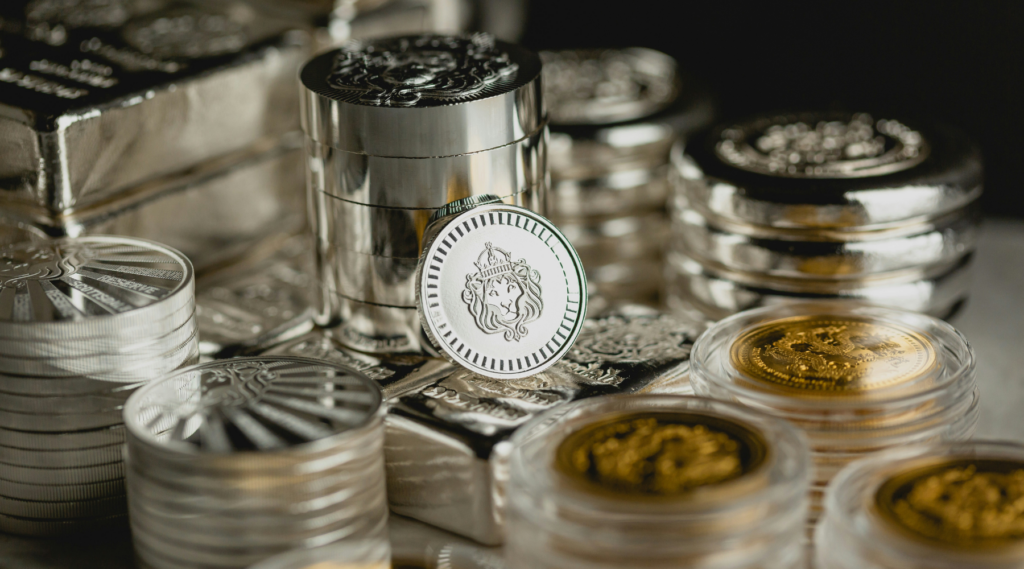
Physical gold and silver offer direct ownership with no counterparty involved. Coins and bars can be held independently or stored through a custodial service. For buyers who prefer tangible assets over paper exposure, Monex offers a wide selection of physical silver products, including coins and rounds, as one example of how farmers comparing direct ownership can weigh coin and bullion formats alongside storage, spreads, and liquidity. The trade-off is that physical metal involves storage costs, insurance considerations, and wider bid-ask spreads when buying or selling.
Commodity ETFs simplify access for farm operators who want price exposure without handling metal directly. A silver or gold ETF trades on an exchange like a stock, making it straightforward to buy or sell during market hours. Liquidity is generally higher than with physical holdings, and the administrative burden is lower. That said, ETFs still introduce tracking differences and management fees that reduce how closely the investment mirrors spot price movements.
Futures contracts allow more precise positioning on gold and silver prices and can be calibrated to specific time horizons, which appeals to operators with tactical financial hedging goals. However, the mechanics are more demanding. Margin requirements, contract rollovers, and the potential for significant losses make futures better suited to producers who already have experience with commodity markets.
The right choice depends on whether the primary goal is inflation hedge protection, long-term portfolio diversification, or a more active hedging approach tied to seasonal income patterns.
Where the Hedge Can Fall Short
Precious metals are not a guaranteed counterweight to farm income losses. Gold and silver experience their own bouts of price volatility, and over shorter periods, both can decline significantly at exactly the wrong time for a farm operation working through a difficult season.
The timing mismatch is a practical concern. A drop in commodity prices might not coincide with strength in precious metals, meaning the hedge reduces concentration risk in general terms without necessarily offsetting a specific income shortfall when it occurs.
Operational realities also limit how much exposure makes sense. Storage costs, transaction fees, and the bid-ask spread on physical metal all reduce effective returns. Farms with tight seasonal working-capital cycles may also find that funds held in precious metals are not liquid enough to cover input costs at planting. Portfolio diversification through metals works as a long-term structural layer, not a precise financial hedging instrument calibrated to seasonal cash flow needs.
What Should Farmers Consider Before Using Precious Metals?
Before allocating capital to precious metals, farmers should start by clarifying what they are trying to achieve. An inflation hedge serves a different purpose than portfolio diversification, and the right vehicle depends on which goal takes priority.
Cash-flow timing matters, too. Physical holdings offer ownership without counterparty risk, but they aren’t easily converted during planting season. Farmers with tight working-capital cycles may find that more liquid options, such as ETFs, align better with their operational needs and risk tolerance.
Finally, precious metals work best as one component within a broader financial hedging strategy rather than a standalone solution. Concentrating too heavily in any single asset, including gold or silver, introduces its own form of risk that a well-structured approach is designed to avoid.
A Measured Hedge, Not a Cure-All
Precious metals won’t eliminate the financial pressure that comes with commodity volatility, but they may help some farmers reduce concentration risk across a portfolio. Whether that makes sense depends on liquidity needs, risk tolerance, and how metals fit within a broader financial plan.
Portfolio diversification through gold or silver works best as a structural layer, not a seasonal fix. Farmers who approach it with realistic expectations and a clear goal are better positioned to use it effectively than those treating it as a catch-all solution.
-Monex
Source: Original Article