

















8th Jul 2026
Markets have been jumpy this summer. Oil prices jumped after drone strikes near the Strait of Hormuz, mining stocks have been sliding, and defence and gold have been quietly having a moment. If all that makes you want to hide your money under the mattress, we get it! But it’s actually a pretty good moment to talk about ETFs.
If you’re new to investing, an ETF (exchange-traded fund) is one of the easiest, lowest-stress ways to get started.
In this guide, we’ll explain what ETFs are, why they’re worth a look right now, and six of the best UK ETFs to watch in July 202, plus what to actually do next.

What Is an ETF? (Quick Refresher for Beginners)
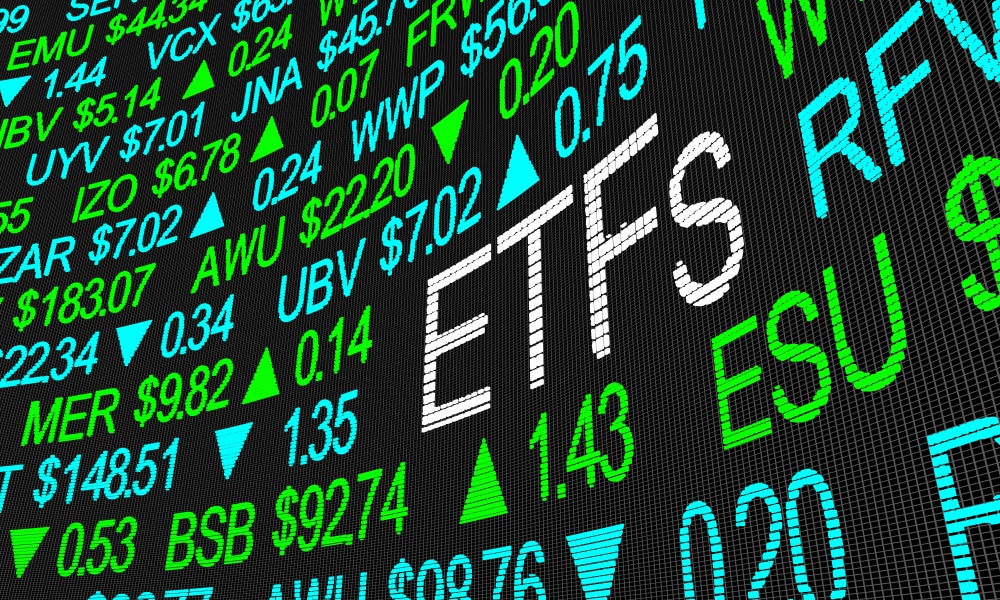
An ETF, or exchange-traded fund, is a single investment that holds a whole basket of other investments (shares, bonds, gold, you name it) all bundled together. You buy one “unit” of the ETF and instantly own a tiny slice of everything inside it.
It trades on the stock exchange just like an individual share, so you can buy and sell it easily through most investment platforms and ISAs.
The big appeal for beginners: instant diversification.
Instead of betting everything on one company, you spread your money across dozens, hundreds, or even thousands of them in one go. That’s the opposite of putting all your eggs in one basket, and it’s a much gentler way to dip your toe into investing.
THE ONLY ETF INVESTING STRATEGY YOU NEED IN 2026
Why ETFs Are Worth Watching Right Now
This week’s headlines are a good reminder of why diversification matters.
Drone strikes on shipping near the Strait of Hormuz pushed Brent crude up towards $74 a barrel, energy stocks like Shell jumped, and mining stocks fell as investors got jittery about the wider economic picture.
Meanwhile, rising defence spending commitments and demand for “safe haven” assets like gold have been driving money into those sectors too.
If you’d put all your savings into a single mining stock this week, you’d be feeling it. If you’d put it into a broad ETF instead, the ups and downs of any one sector matter a lot less. That’s not a guarantee against losses, ETFs can and do fall in value, but it does mean you’re not relying on one company or one story to work out.
6 Best UK ETFs to Watch in July 2026
So, what are the best UK ETFs to watch right now?
1. Vanguard FTSE All-World UCITS ETF (VWRL)
This is the single most popular ETF among UK investors, and for good reason.
It holds over 3,700 companies across developed and emerging markets worldwide, covering roughly 98% of the investable global stock market, for a low annual cost of 0.22%. It’s a genuine “one and done” option if you want broad global exposure without picking individual regions or sectors. The main risk: because it’s so heavily weighted towards the US, its performance leans on how American megacap tech companies are doing.
2. iShares Core MSCI World UCITS ETF (SWDA)
A close cousin of the All-World tracker, this ETF holds around 1,400 companies but sticks to developed markets only (so no emerging markets like China or India).
At a 0.20% annual cost, it’s a solid, low-fee core holding for beginners who want simplicity. Worth knowing, excluding emerging markets means you miss out on some faster-growing (but riskier) economies.
3. Vanguard S&P 500 UCITS ETF (VUSA)
For exposure specifically to America’s 500 biggest companies- think Apple, Microsoft, Amazon- this is one of the cheapest and most liquid options on the London Stock Exchange, with a rock-bottom 0.07% annual cost.
It’s relevant right now because US tech and AI-related shares continue to dominate market headlines. The risk is concentration: you’re betting heavily on one country and, within that, a handful of enormous tech firms.
4. iShares Physical Gold ETC (SGLN)
Technically an ETC (exchange-traded commodity) rather than an ETF, but it trades the same way and beginners often lump the two together.
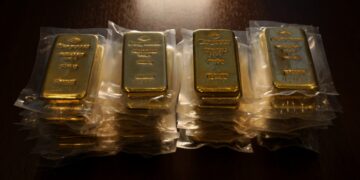
It tracks the price of physical gold, which tends to attract investors during periods of geopolitical tension- like the current Middle East volatility- as a perceived “safe haven.”
It pays no income and its price can be just as volatile as shares in the short term, so it’s best thought of as a small diversifier, not a core holding.
5. VanEck Defense UCITS ETF (DFNS)
The most widely traded defence-focused ETF for UK investors, giving exposure to US and European defence contractors. It’s had strong inflows this year as NATO members commit to higher defence spending.
It’s a good example of a “thematic” ETF– one built around a trend rather than the whole market- so it comes with more concentrated risk than a global tracker.
Worth watching, but perhaps not a first ETF for a total beginner.
6. iShares S&P 500 Energy Sector UCITS ETF (IUES)
Given the recent oil price spike and Shell’s upbeat trading update ahead of its 30 July earnings, an energy sector ETF is one way to get exposure to the sector’s momentum without betting the house on a single oil major.
It spreads your money across US energy companies rather than relying on Shell or BP alone. Energy is a notoriously cyclical sector, though, so expect bigger swings than a broad global tracker.
What to Do Next
- Decide how much you can afford to invest: only ever invest money you won’t need in the next five years, and start small if you’re unsure.
- Check your platform is ISA-eligible if you want to invest tax-efficiently, most of the ETFs above are available inside a stocks and shares ISA.
- Build around a core holding. A broad global tracker like VWRL or SWDA makes a sensible foundation; thematic ETFs (defence, gold, energy) are better as smaller “satellite” positions on top, not your whole portfolio.
- Consider drip-feeding in monthly rather than investing a lump sum all at once — this smooths out the impact of buying at the wrong moment.
- Review annually, not daily. Checking your investments every time there’s a scary headline is a recipe for stress (and bad decisions). Set a reminder to review every six to twelve months instead.
Start small, be patient, and let diversification do the heavy lifting; that’s investing made easy peasy.
Risk disclaimer: This article is for general information and educational purposes only and does not constitute regulated financial advice. The value of investments can go down as well as up, and you may get back less than you invested. Please do your own research or speak to a regulated financial adviser before making investment decisions.

Source: Original Article