


















00:00 Speaker A
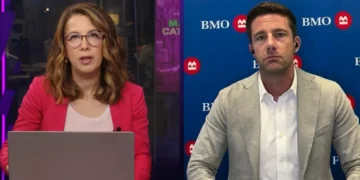
Mark, it’s good to see you. It’s been a little while, so thanks for being back with us. Um, so just sort of big picture, as you think about the interesting trajectory we’ve seen for the dollar and discussions around the dollar over the last year, you were writing in a recent note that currency from here is now sort of more dominated not by geopolitical headlines as it has been, but some of the other um idiosyncratic elements including Central Bank policy. But but how are you thinking about that sort of shift in focus?
00:46 Mark
Yeah, I think what’s important is, right, the, I would say classify this as the market regime has changed. I think one of the questions we got early in the year, right when the conflict started is if this conflict goes away, if we wave wave a magic wand, will we go back to the markets that we saw in like late 2025? And what you would kind of classify as a Goldilocks regime, where global growth was up, monetary policy was easing, the dollar was weak, and everyone was focused on dollar debasement trades, fiscal dominance trades and kind of like gold and silver and all these other asset classes were all the things that everyone was talking about. Our response to that was we are not going to go back to that world because fundamentally something was broken in and it’s not just a conflict that I ran, it’s that the US economy was doing quite well. It was coming in better than expectations. Data was coming in stronger than expected and the market was continuing to start to revise up its views on US growth story. So the thing that I had, uh, kind of focused on is number one, the Fed didn’t need to cut any more than they did. So the Fed would be on hold this year. Two, the dollar would basically revive on a positioning adjustment because the market was very short the dollar and it was kind of giving up on exceptionalism. Third thing is US equities were coming back. And then as a result of all these factors kind of coming together, US offers essentially export in oil, so the terms of trade boosted it and at the exact same time it still offers a better, a better yield opportunity when you adjust for volatility than 75% of all the other major currencies in the world, including emerging markets. So you add that all together and the story is still very compelling for the dollar, at least for the next couple of months ahead.
02:44 Speaker A
So, at this point then, um, what would be the risks that remain Mark in in that scenario or if they mostly receded into the background?
02:59 Mark
I think the main risk right now is where central banks are going. I think they’re a big part of this right now. I tend to be one of these people that look at lots of different drivers, the FX market. I don’t just focus directly on the central bank, uh but think about it more of an asset allocation framework and and FX being a a component of that. So, the interesting part is that as the world has changed the last couple of months, again, what we see is weaker growth and higher interest rates. Central banks are now constrained by the macro environment. Also, again, they’re pushing against what’s very dominant fiscal policy in every country in the world, as we’re starting to see globalization separating in different pieces of the world. We’re in a multipolar environment where you have the Americas, Europe, and Asia, and each country is basically fending for themselves. So we we don’t have coordination amongst um, you know, globalization anymore and what you’re starting to see is more spending on local dynamics. So that’s exacerbating the inflationary trends. So the main thing that’s going on here is Central banks are stepping back. They’re basically saying, we cannot tell you where we’re going to be in a year from now. Forward guidance is no longer valid. It’s no longer credible because they basically can’t forecast the global environment better than anyone else could, or where the world’s going to be in the next six months and the next 12 months. So what they’re trying to do is explain the reaction function. And what that does is it’s going to create more volatility. It’s going to create more data dependence, and I think that’s the piece you really need to hone in on because the risks, I think to a stronger dollar view is US data really starts to turn sideways in the second half of the year. Um, that’s what’s been propping it up, as I’ve mentioned, data’s coming in better than expected. It’s forcing economists to revise up their views, forcing the markets to change their positioning. And all those things have been favorable tailwinds for the dollar. I don’t see any of this changing in the next three to six months. I think the data’s going to remain strong. The market’s finally starting to catch up to this narrative. But that’s the big risk is for some reason, the data just kind of reverses course and you see data momentum flatline and turn negative over the next three to six months for the US.
05:27 Speaker A
Mark, I just wanted to hone in on a part of what you said because I’m not sure that um investors realize it. You know, we have seen the central bank here in the US, um under the leadership of Kevin Warsh, very new leadership of Kevin Warsh, um starting to to change the way it does things. And you were speaking about that. Not giving that forward guidance as much, not giving as much guidance generally, but saying, don’t watch us, watch the data. But um what you’re talking about is it not just happening in the US. It’s happening, you know, globally as well. And so the implications of that are are as you say, not just volatility here. I just want to just sort of emphasize that point that it’s not just happening here, that it is happening elsewhere as well.
06:21 Mark
I would say this is ultimately a new policy order for Central banks. That was that was the the the way we coined the note, uh the monthly that we published yesterday is that yes, this is I think we are leaving an environment of Central Bank communication and forward guidance that dominated uh since quantitative easing era. And I think again, we the playbook is a bit stale on, you know, what central banks are trying to communicate. Again, you try to keep rates low and suppress term premium and maybe try to have a an influence over the yield curve when inflation’s low. Well, inflation’s kind of the genie’s out of the bottle and again, central banks are dealing with um dual problems of, you know, they’re trying to manage growth on the downside and they’re also trying to manage inflation on the upside. So they are in an environment now that they just need to be more dynamic. Um and the credibility of trying to say, hey, this is where we think rates are going to be and try to control the yield curve with just a communication strategy is not working. Um so I think yes, you could see this from the ECB, the Bank of England, Bank of Canada, RBA, RBMZ, all the major central banks I think are all kind of moving this direction. And Lagarde even offered this somewhat subtly where she’s like, this isn’t an insurance cut, but we’re also again, we’re guiding um our decisions here based on the evolution of the data. Not just primarily on their forecast of the data, but how the data evolves relative to their forecast. Uh so yes, it’s becoming much more reactionary, um and as a result, you’re going to see more volatility in currencies and fixed income.
08:21 Speaker A
So, Mark, let me ask you this then. As um a strategist who’s watching this stuff closely, like, how do you change your how you do things day in and day out or have you changed it? Um, you know, what are you looking at differently? Um, what different data sets are you looking at or how are you looking at them differently? And then, you know, I guess we’re trying to take away some invest some lessons for everyday investors also from from what you’re doing.
08:55 Mark
I think the most important thing, right, is is this is what I find fascinating about FX. We tells people all the time, it’s it’s one of the markets that pulls everything together. You’re essentially looking at every asset class and then at the end of the day, some people just look at FX as a residual, but if you look at credit markets, equity markets, fixed income, commodities, FX is a piece of this. So if you think about global asset allocation, global managers, essentially they have to manage that FX risk. So the way that I that we approach it is again, we look at every we look at the world as a whole, we look at regimes. Um within those regimes, we’re trying to figure out what kind of state of the world are we in, and then within that world, what should the dollar do? You know, essentially at the end of the day you have have a view on the dollar, is the dollar going up? Is the dollar going down? And then you have a another view tied to that on volatility, is volatility going up or down. And then everything else in FX falls downstream from that. So, I don’t like to spend a lot of time looking at FX crosses if you have to kind of pick the right trend in the dollar. So the way that I would kind of, you know, frame this to a lot of people who want to think about FX as they manage risk in equities or other asset classes, is you have to understand the global environment you’re in. You have to understand the regime. And so understanding the state and the regime, I think ultimately allows you to understand the correlations. And then from there you can figure out where the dislocations are and kind of where you think you should be positioned relative to what you see as fundamental drivers. So again, the other things we look at, we look at data momentum, we look at data surprises, we look at economic revisions of data. So essentially we’re looking at all the things that relate to data in every country and things that we can measure across countries, and we run those through quantitative frameworks and different strategy models that we designed and kind of looking at the world, I think through factors is is quite important as well, rather than just kind of isolating a central bank and a forecast. Look at what you try to see is driving the market and have a view on those factors and those drivers.
11:21 Speaker A
Mark, great stuff. Thank you so much for joining us. Appreciate it.
Source: Original Article