





















Investors around the world have been taught one of the most fundamental principles of wealth creation: save consistently, invest for the long term, and diversify. Diversification has traditionally meant spreading investments across stocks, bonds, real estate, and other asset classes to reduce risk. Yet one important dimension of diversification is often overlooked—the geographic distribution of those investments. Many investors naturally concentrate their portfolios almost exclusively in their home country, a phenomenon economists call “home bias.” While there is nothing inherently wrong with favoring domestic investments, doing so without understanding the global economy can lead to overlooking opportunities that could enhance long-term wealth.
The modern global economy is more interconnected than ever. A technological breakthrough in South Korea can reshape semiconductor production worldwide. Monetary reforms in Ghana can ignite one of the world’s strongest-performing equity markets. Changes in corporate governance in Japan can attract billions of dollars in foreign capital.
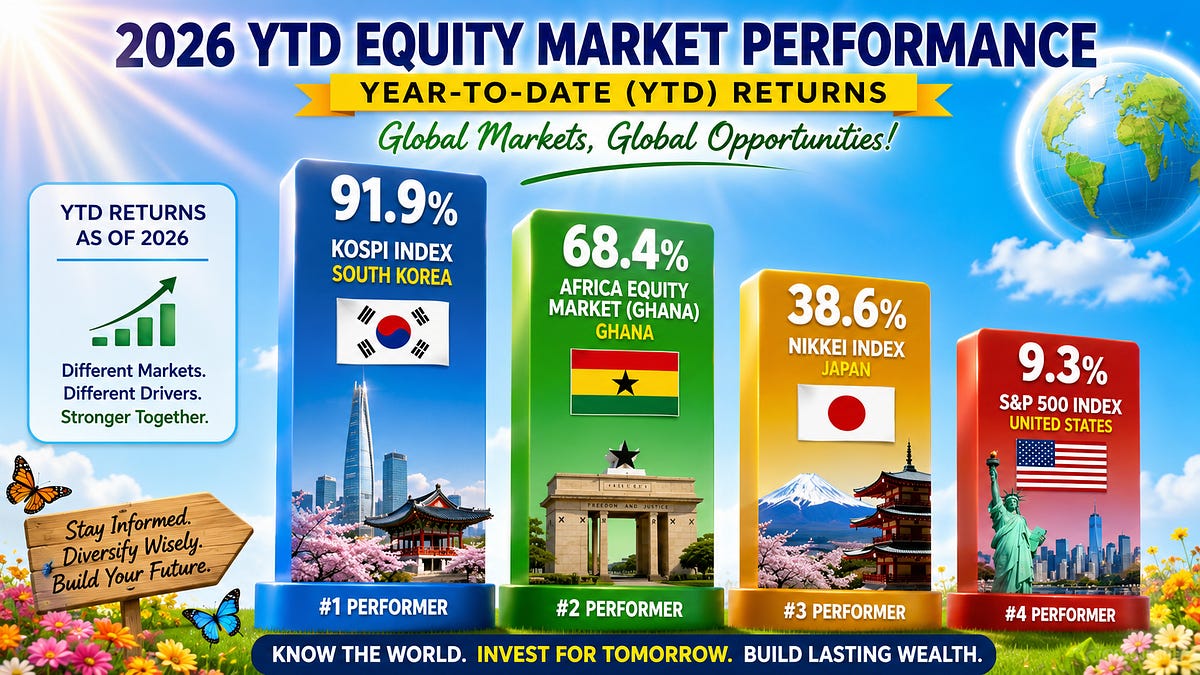
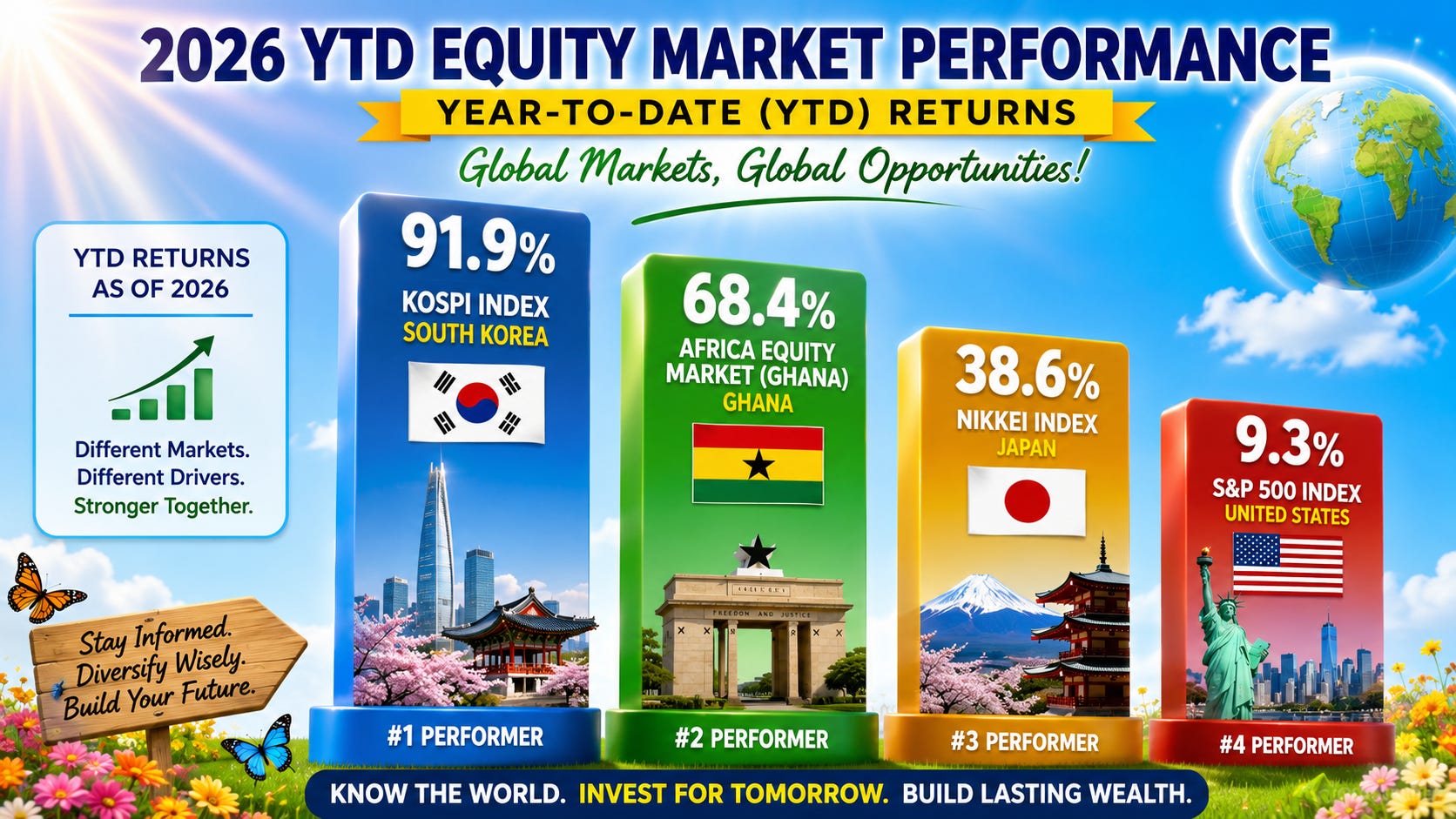
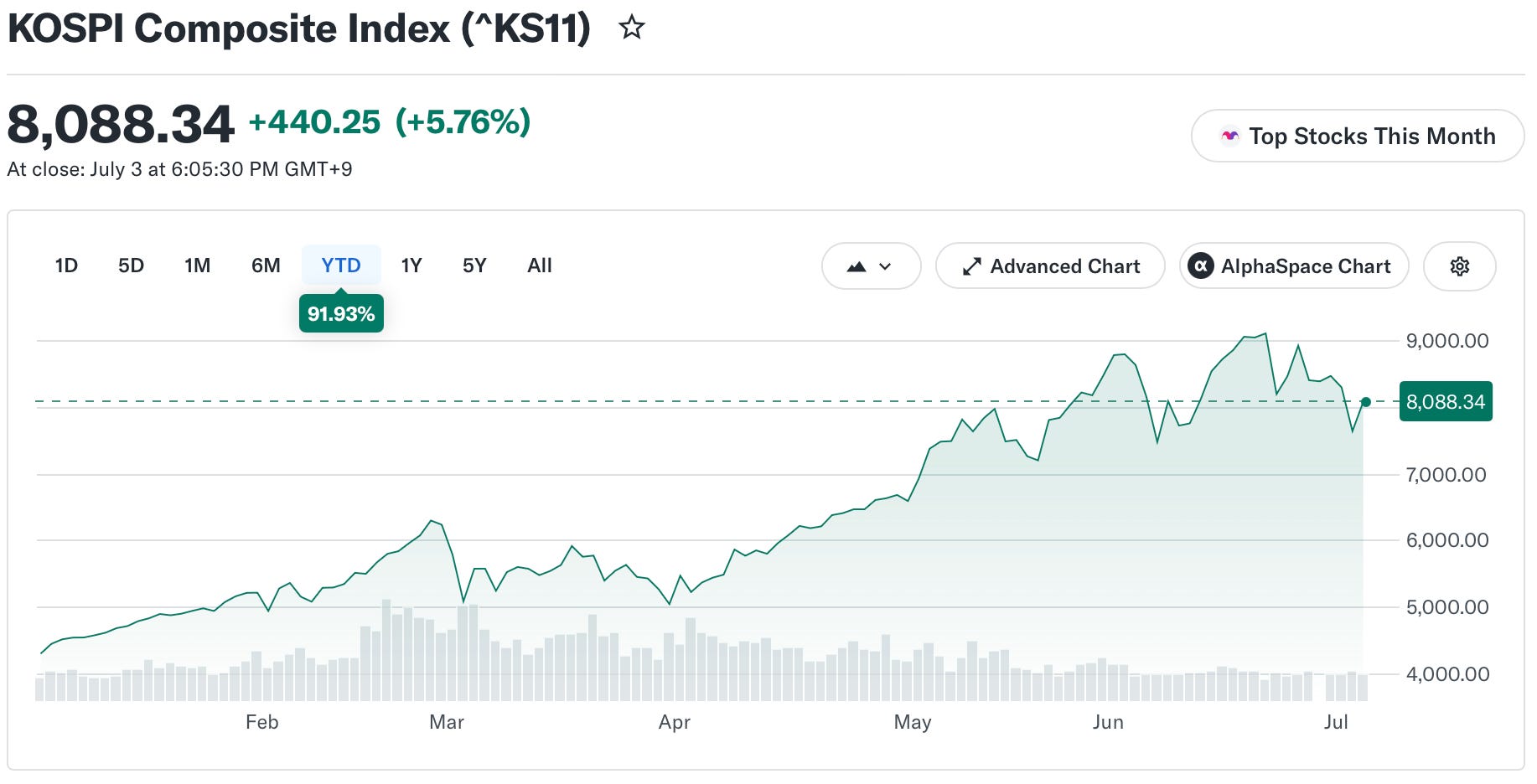
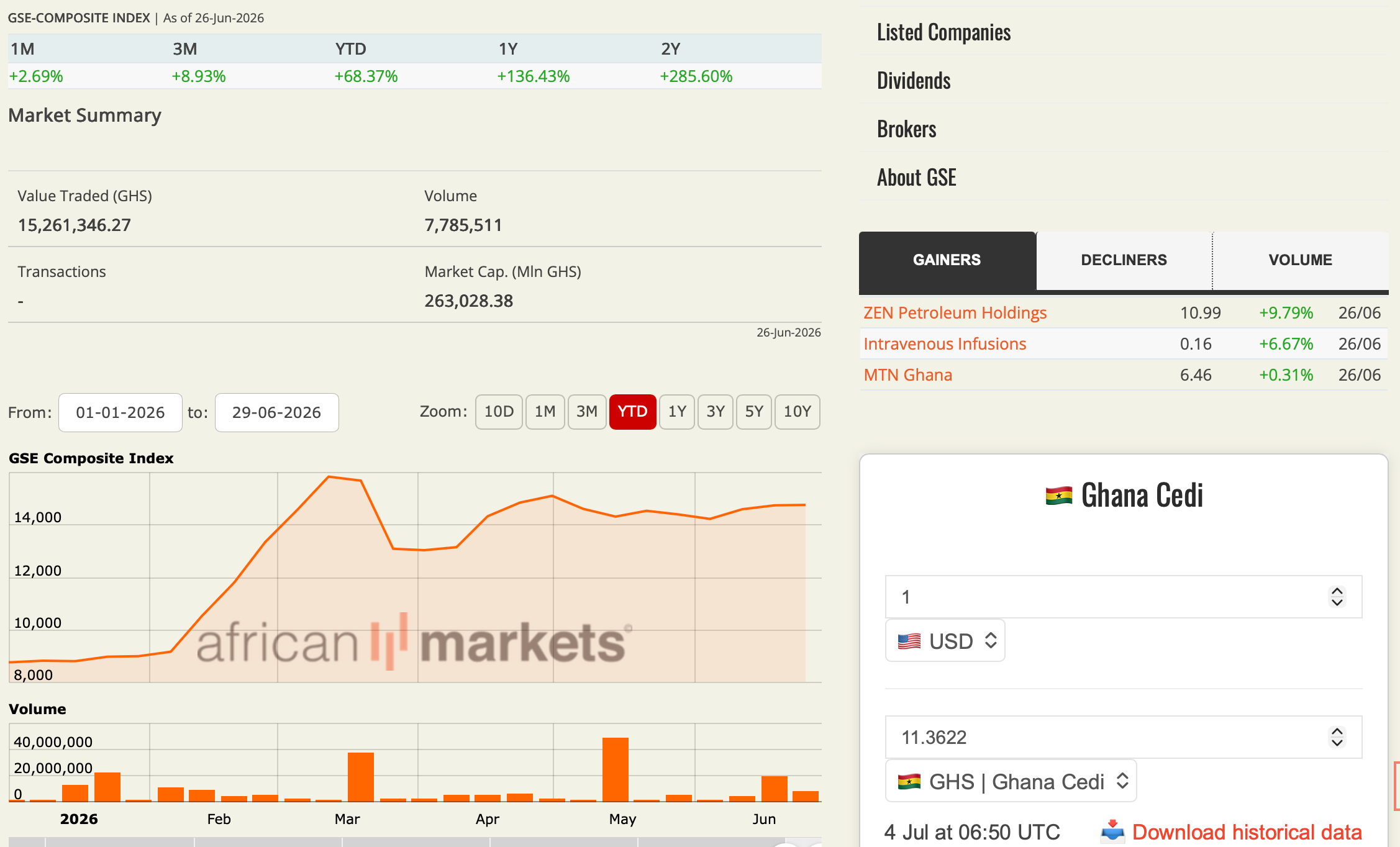
At the same time, policy decisions by the Federal Reserve, the European Central Bank, or the People’s Bank of China can reverberate through financial markets thousands of miles away. The events of 2026 provide an excellent illustration of why global awareness matters. Many Americans naturally assume that the United States remains the best-performing stock market in the world because of its remarkable technological leadership and the continued strength of companies involved in artificial intelligence. Yet the U.S. market has not been among the world’s top-performing stock markets this year. As of July 3, 2026 (on a year-to-date basis), South Korea’s equity market has surged by approximately 91.9%, Ghana’s stock market has advanced by roughly 68.4%, and Japan’s Nikkei Index has climbed by approximately 38.6%. By comparison, the U.S. S&P 500 is up 9.3%.
These differences do not suggest that investors should abandon American equities; rather, they underscore the importance of understanding the dynamics of international equity markets.
South Korea
The country’s remarkable stock market performance, with a market cap of $4.6 trillion, has been driven largely by surging global demand for artificial intelligence infrastructure. As AI applications have expanded rapidly, demand for advanced memory chips has surged. Two South Korean companies—Samsung Electronics and SK Hynix—have become indispensable suppliers of high-bandwidth memory for advanced AI servers and data centers worldwide. Their exceptional earnings growth has fueled a historic rally in South Korean equities.
However, simply observing South Korea’s impressive returns is not enough to justify investing there. Investors must also understand the market’s composition. Approximately 52% to 55% of the KOSPI Index is represented by just two companies: Samsung Electronics and SK Hynix. This concentration creates both opportunity and risk. If the global AI boom continues, these companies may continue to generate exceptional profits. However, should demand for memory chips weaken or investor sentiment toward the semiconductor industry turn less optimistic, the entire Korean market could reverse course, given how much the index depends on the fortunes of these two companies.
Source: Yahoo Finance
Ghana
Ghana offers perhaps the most compelling example of international awareness, showing how a frontier market with a $23.2 billion market cap can generate extraordinary returns. Following significant macroeconomic reforms, inflation has declined sharply, and sovereign debt restructuring has restored investor confidence, prompting institutional capital to flow into the country’s equity market, which comprises 37 companies. These developments helped propel Ghana’s stock market to second place among the world’s top equity market performers in 2026!
Source: African-Markets.com
Yet Ghana also illustrates why understanding macroeconomics is indispensable when investing internationally. Unlike developed markets, frontier economies frequently face substantial currency risk. Even if local stock prices appreciate significantly, international investors ultimately measure returns in their home currency. If Ghana’s stock market rises, but the Ghanaian cedi depreciates substantially against the U.S. dollar, international investors will realize lower returns after converting their investment proceeds back into dollars.
Historically, the cedi has steadily depreciated against the dollar. The good news, however, is that Ghana’s economic reforms have improved stability, and the currency’s outlook appears considerably better than during the country’s debt crisis, leading most analysts to expect only a 7.0% to 8.0% depreciation in 2026, which is significantly below its current 68.4% YTD return!
Ghana’s stock market also requires careful analysis. Similar to South Korea, it is highly concentrated, with MTN Ghana, a major telecom firm, making up about 30% of the market cap and often dominating up to 90% of daily trading volume. This means investors in Ghana are heavily exposed to a single telecom company instead of diversifying across the entire economy. Recognizing this concentration and thoroughly understanding MTN Ghana are crucial for evaluating the risks and opportunities in this frontier market.
Japan
Japan presents a very different investment story. Rather than being driven primarily by a single industry, Japan’s strong performance reflects years of structural reforms that are finally yielding measurable results. Corporate governance reforms initiated by the Tokyo Stock Exchange have encouraged companies to improve capital efficiency, increase dividends, repurchase shares, and focus more aggressively on shareholder value. Together with renewed foreign investment, accommodative monetary conditions, and improved corporate profitability, these reforms have helped propel the Nikkei Index to a 38.6% YTD return, with a market cap of $8.6 trillion.
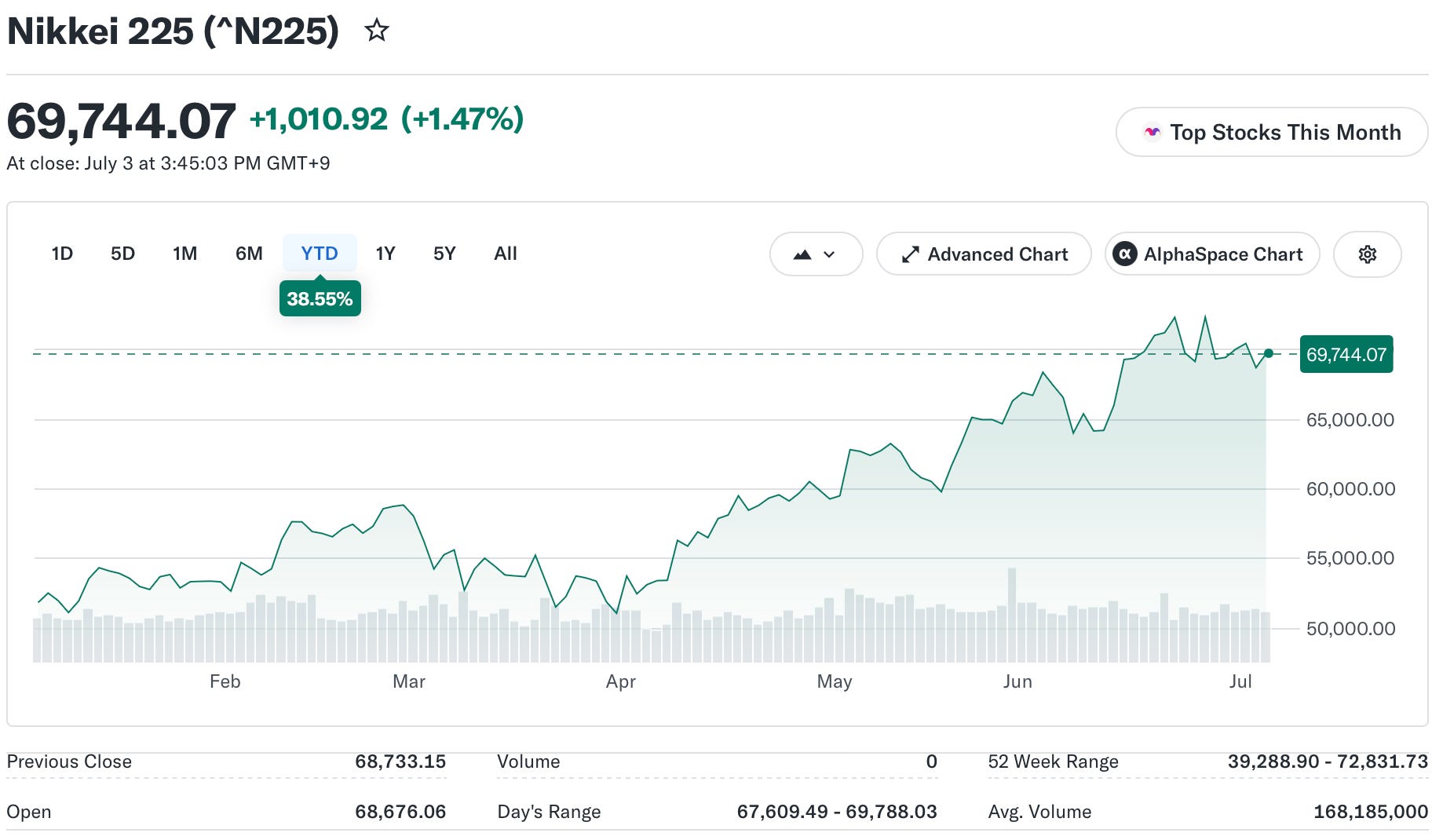
Source: Yahoo Finance
For decades, many investors largely ignored Japanese equities because of sluggish economic growth, persistent deflation, and weak corporate profitability. Yet structural reforms gradually reshaped the investment landscape. Investors who recognized these changes early outperformed many other global equity markets.
United States
The United States, by contrast, has the world’s deepest, most liquid, and most diversified capital market. The total U.S. equity market cap is approximately $75.5 trillion, while the S&P 500 alone accounts for roughly $67 trillion, representing more than 80% of total U.S. market capitalization. Not surprisingly, its enormous size also makes it increasingly difficult to generate exceptionally high percentage gains compared with much smaller markets, which may explain the S&P 500’s year-to-date return of 9.3%.
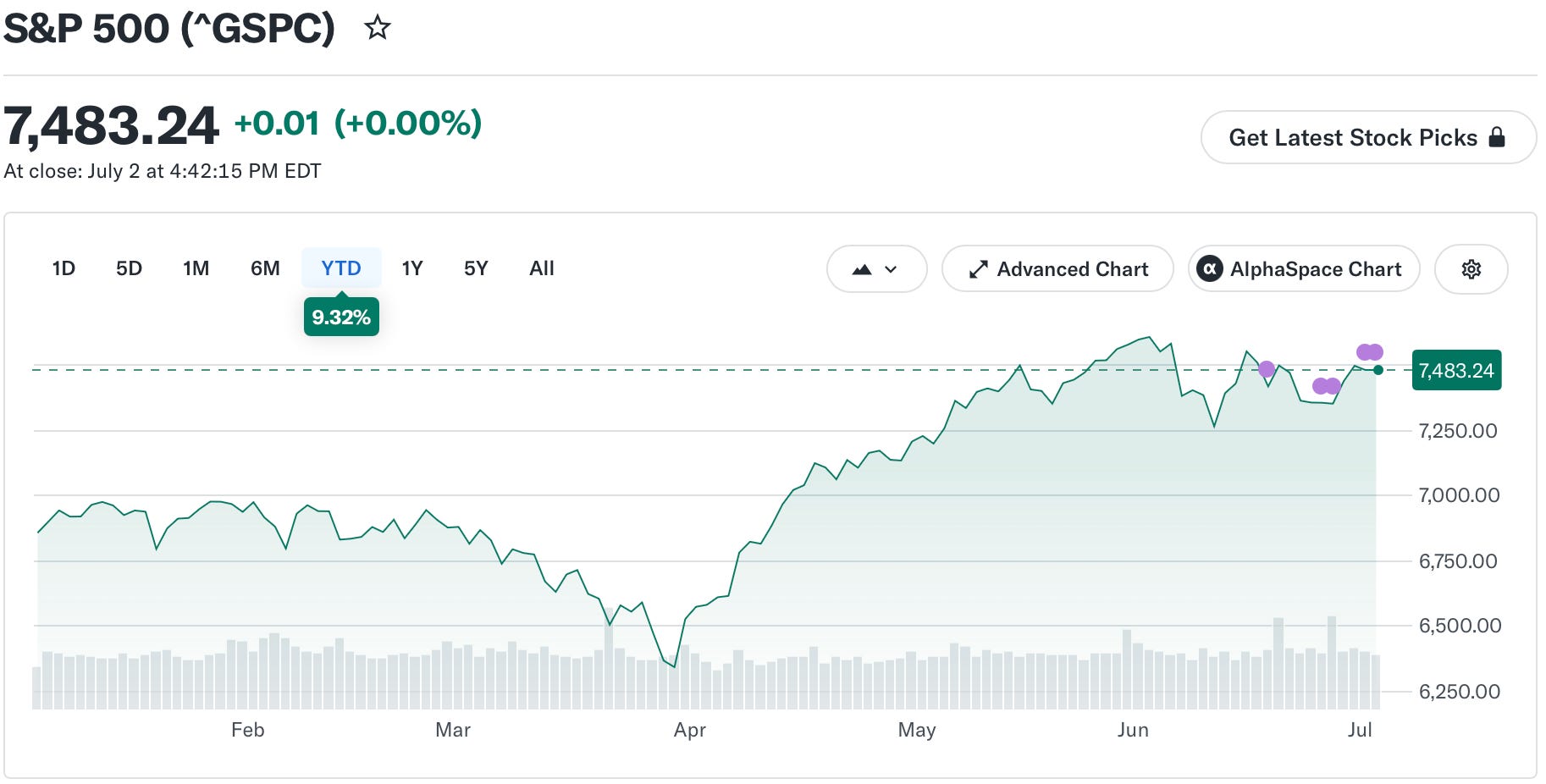
Source: Yahoo Finance
A useful analogy compares the acceleration of a speedboat to that of an aircraft carrier. A relatively small amount of new investment capital can significantly influence prices in small frontier markets such as Ghana and even South Korea. Japan, with a larger market capitalization, occupies the middle ground.
Economic Outlooks for Each Country
Every investment ultimately reflects expectations about the future, not the past. Investors who focus exclusively on yesterday’s performance often arrive after the greatest opportunities have already been realized. Understanding the macroeconomic outlook, government policy, corporate earnings, demographic trends, monetary policy, and geopolitical developments provides a reliable framework for evaluating future returns.
South Korea arguably possesses one of the strongest structural growth stories, although it also carries one of the highest levels of concentration risk. Over the next 12 to 24 months, the durability of South Korea’s stock market will largely hinge on whether global demand for AI infrastructure remains robust. Continued capital spending by technology giants on data centers should support earnings growth across the semiconductor supply chain. In addition, South Korea continues to pursue the elimination of trading restrictions on the Korean Won to facilitate the KOSPI’s inclusion into major global equity indices as a developed market. Such a reclassification would likely attract significant passive investment flows from institutional investors worldwide and boost its equity market valuation.
Ghana’s outlook highlights both the promise and complexity of frontier-market investing. The country’s economy has stabilized impressively after recent financial difficulties. Inflation has fallen sharply, fiscal reforms have restored investor confidence, and debt restructuring has improved the nation’s financial outlook. Economic growth is expected to remain healthy. After enjoying 5.8% real GDP growth in 2025, the African Development Bank projects growth of 5.0% and 5.4% during 2026 and 2027, respectively, supported by expanding gold production, improved public finances, and stronger business confidence.
For international investors, however, an important variable to watch is the Ghanaian cedi. Although the cedi appears considerably more stable than at the height of the country’s financial crisis, most economists still expect gradual depreciation over time. Databank research and Fitch project the Cedi will depreciate by 7.2% and 8.0%, respectively, during 2026. This means foreign investors will need to generate equity returns that exceed the currency’s depreciation rate to enjoy a positive dollar-denominated performance.
Fortunately, the Ghana equity market has produced a YTD rate of return in 2026 that greatly exceeds this currency hurdle. Other indicators worth watching include gold and cocoa prices, which have become a critical pillar of macroeconomic stability.
Japan’s equity market outlook rests on a fundamentally different foundation. Rather than relying on a single industry, Japan’s resurgence reflects broad structural improvements across its corporate sector. Corporate governance reforms have prompted management teams to deploy capital more efficiently, reduce excess cash balances, improve shareholder returns through dividends and stock buybacks, and unwind cross-shareholdings that historically reduced market efficiency. These changes have attracted foreign institutional investors who had previously viewed Japan as a mature market with limited growth prospects.
Japan also benefits from its leadership in industrial automation, robotics, advanced manufacturing, precision machinery, and the automotive industry. Although demographic challenges remain, Japanese corporations have become increasingly global in their operations and revenue mix. Other primary risks that remain are shifts in the Bank of Japan’s monetary policy and movements in the Japanese yen. A sharp rise in domestic interest rates needed to combat inflation could pressure equity valuations. Nevertheless, the combination of improving corporate governance, relatively attractive valuations, and continued foreign investment suggests that Japan remains well positioned, even if annual returns moderate relative to the latest YTD returns in 2026.
United States
The outlook for the United States remains favorable, though expectations should remain realistic given the enormous size and maturity of its financial markets. The American economy continues to benefit from technological innovation, world-class capital markets, entrepreneurial dynamism, and leadership in artificial intelligence, biotechnology, aerospace, and financial services. Corporate earnings remain healthy and are continuing to exceed expectations.
However, the law of large numbers inevitably applies. As the U.S. stock market approaches $76 trillion in total market capitalization, achieving annual gains comparable to those of the Kospi or Ghana stock market is increasingly difficult.
Summary and Concluding Thoughts
Successful international investing requires thoughtful analysis of economic fundamentals, political stability, corporate governance, demographic trends, currency dynamics, and market structure. Investors must ask whether recent gains reflect sustainable improvements or temporary enthusiasm. They should assess whether earnings growth justifies higher stock prices, whether currencies are likely to appreciate or depreciate, and whether geopolitical developments could materially alter the investment outlook.
Access to international markets has also become significantly easier than in previous decades. Investors no longer need to open brokerage accounts in foreign countries to gain international exposure. Exchange-traded funds (ETF’s) have democratized global investing, allowing individuals to gain diversified exposure to entire countries through a standard brokerage account. Investors seeking exposure to South Korea, for example, can use country-specific ETFs such as the iShares MSCI South Korea ETF.
Frontier markets such as Ghana remain more difficult to access directly, reflecting their smaller size and less developed financial infrastructure. Still, gaining access to frontier markets like Ghana is not impossible, as many investors are able to gain exposure through regional African investment funds.
Japanese equities are similarly accessible through several widely traded ETFs, including currency-hedged alternatives for investors concerned about exchange-rate fluctuations. Individual Japanese companies can also be purchased via American Depositary Receipts listed on U.S. exchanges.
Perhaps the greatest lesson from 2026 is that wealth creation increasingly requires a global perspective. Capital today flows rapidly across national borders in search of innovation, productivity gains, policy reform, demographic opportunities, and attractive valuations. Investors who understand these forces are better positioned to spot opportunities before they become widely recognized.
Financial literacy extends far beyond reading a balance sheet or interpreting a company’s earnings report. It also requires understanding how global economies interact, how currencies affect investment returns, how government policies shape financial markets, and how technological innovation can rapidly reshape the world’s investment landscape. The investors who consistently build wealth over decades are rarely those who react to headlines. They are those who develop a disciplined understanding of the broader economic forces that shape markets around the world.
The global economy and investment opportunities are more interconnected than ever. Investors who look beyond their local markets and analyze carefully may discover that the most profitable investments often come from complementing their home market rather than abandoning it. In a time when information spreads more quickly and capital moves swiftly across borders, understanding the global economy is not just beneficial—it’s vital for building a legacy of wealth for current and future generations.
Source: Original Article