

















Just as President Donald Trump announced a Memorandum of Understanding to end the Iran War, the Dallas Federal Reserve was taking the temperature of the oil & gas industry in Texas and portions of northwest Louisiana and southern New Mexico.Exploration and production and oil and gas support services firms used the survey as an opportunity to share frustrations.
“Markets can price risk, but they can’t price a tweet. The whiplash from diplomacy-by-social-media has become the single most unpredictable input in our planning,” said one respondent.
“If the Iranian war hasn’t ended by the end of July, we will see the supply cliff hit, whereby all of the various releases from strategic reserves will have been used and actual physical shortages will start showing up. Then all bets will be off on oil prices,” said another.
“I am confident that the administration is doing the right thing as to resolving the conflict,” offered a third.
Some 125 oil and gas firms responded to a series of Fed questions with opinions that ran across the board.The Dallas bank wanted to know what price per barrel of oil would cause production to dramatically increase. Nearly 45% said that with a per-barrel price of $125 they would increase output by more than 250,000 but less than half a million barrels per day.
Only about 15% of the respondents told the Fed that they would be willing to pump out more than 1 million barrels per day for $150 per barrel pricing.Why the hesitancy at potentially higher prices?
Shreveport oil and gas industry veteran Robert Mills said the companies would need to believe higher prices would last before they would approve additional investments. “We’d (oil and gas companies) love to have $125 a barrel. We’d be pretty darn happy about $100 a barrel. The main thing is stability when you’re having to borrow money like a major company does either from yourself or from stockholders or from banks. You just want stability.”
Respondents were overwhelmingly of the belief that no matter what happens, the price of a barrel of oil would not spike higher than it has been to date. If the MOU and further negotiations are unsuccessful and the Iran War continues, nearly 70% of those responding believed that the cost of a barrel of oil would remain at $125 or less. A very small percentage felt prices could jump to $150 or above.
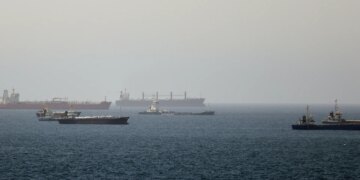
Fears persist that crude oil exports from the Persian Gulf will continue to be throttled back, and a question about that split the respondents.Fifty-seven percent said they considered a permanent restriction of crude oil through the gulf unlikely, but the remaining 43% believe that such a restriction could be ‘somewhat’ or ‘very’ likely.
The United States could weather this better than other countries, said Mills. “I’ve said this before, we are an island in America and it’s a wonderful place to be. The rest of the world is not on this same island. They don’t have their own reserves, and so they’re quite reasonably worried about their energy future.”
“If the price stays at the $70 range, we’re going to eventually be short of crude oil and if the price stays in this $2.75 range for MMBtu (one million British thermal units) of natural gas, we’re going to not have as much available as we would like. And so, you know, the prices need to be higher for crude oil and natural gas if we want energy security in the United States and in the world.”