



















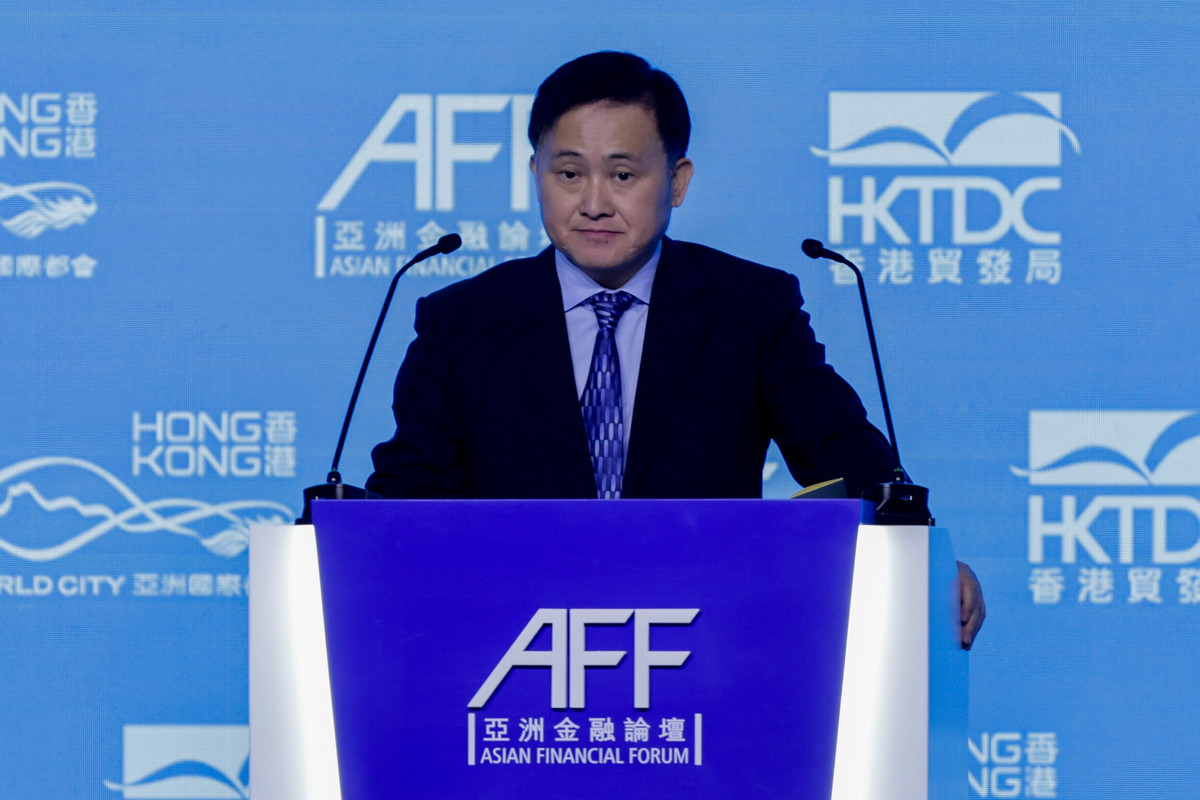
China rarely has just one objective when it announces a financial reform. The six measures unveiled at the opening of the Lujiazui Forum, held in Shanghai on 17 and 18 June, are a further illustration of this. They cover interest rates, the offshore renminbi, foreign central banks, corporate financing, interbank markets and even the digital yuan. At first glance, the package may seem technical. On closer inspection, however, it reveals a much clearer ambition: Beijing wants to make its financial system more sophisticated, more useful to its industrial economy and more open to the international community, whilst retaining control.The starting point is monetary policy. Pan Gongsheng, governor of the People’s Bank of China, has announced an adjustment to the mechanism for regulating short-term interest rates. The corridor for overnight repo and reverse repo operations is to be narrowed around the seven-day reverse repo rate: 25 basis points below for the repo, 25 basis points above for the reverse repo. In other words, the band is being reduced from 70 to 50 basis points. The central bank also intends to conduct overnight reverse repo operations, if necessary, in order to better meet the banking system’s very short-term liquidity needs.Conflicting analysesFor the non-specialist reader, the issue is straightforward. China has long steered its economy through credit volumes, quotas, directives to banks and major funding channels. It is seeking to move towards a framework based more on prices, that is to say, on the rates actually observed in the money markets. It is not yet the US Federal Reserve or the European Central Bank (ECB). But it is a step towards a central bank that seeks to exert more precise control over the cost of money in the very short term.It is precisely on this point that initial analyses differ. Is China preparing to make the overnight repo rate its de facto policy rate, or is it simply strengthening the role of the seven-day reverse repo? The distinction is important. In the first scenario, the People’s Bank of China would move even closer to the practices of major international central banks. In the second, it would merely be stabilising its current framework by reducing the volatility of very short-term rates.The analysis published by Bloomberg, and reported on by The Business Times amongst others, suggests a move towards greater alignment with international standards. By placing greater emphasis on the overnight rate, Beijing would have a more precise tool with which to influence immediate financing conditions. However, caution remains warranted. Even analysts who see this reform as a significant step forward do not suggest an instantaneous shift. China is proceeding in stages, with tools that are tested, adjusted and then rolled out more widely.Internationalisation of the renminbiThe second measure is directly aimed at the internationalisation of the renminbi (RMB). The People’s Bank of China is to set up an RMB repo facility for foreign monetary authorities, international financial organisations and sovereign wealth funds. These entities will be able to obtain yuan liquidity from the Chinese central bank by providing Chinese government bonds or other high-quality securities as collateral. The underlying message is clear: if you hold Chinese assets denominated in RMB, Beijing wants to offer you a liquidity mechanism.This is where the analysis takes on a geopolitical dimension. According to Reuters, the package of measures is part of a new push to promote the international use of the yuan. The Wall Street Journal also interprets these announcements as an effort by China to strengthen the resilience of its financial infrastructure in the face of external shocks and the dominance of the dollar. But we must avoid oversimplification: China is not replacing the dollar by decree. It is patiently building channels, markets, facilities, platforms and use cases.The CIO Perspectives report by Indosuez and Degroof Petercam puts these figures into perspective. According to its authors, the RMB still accounts for only around 3 per cent of global payments, compared with over 50 per cent for the US dollar. In trade finance, the RMB’s share has risen sharply since 2022, but remains a long way behind that of the greenback. The analysis is therefore balanced: the announcements are significant, but they are based on a reality in which the yuan remains a second-tier international currency.Bridging the gap between onshore and offshoreThe third measure concerns Shanghai. Six banks – ICBC, the Agricultural Bank of China, the Bank of China, the China Construction Bank, the Bank of Communications and China Citic Bank – will be authorised to carry out offshore RMB foreign exchange transactions in the Shanghai Pilot Free Trade Zone, via the China Foreign Exchange Trade System. The official aim is to bring the onshore and offshore markets closer together, to support RMB asset allocation and to develop yuan risk management.This point is crucial, as it illustrates the Chinese approach. China is not opening up its capital account abruptly. Instead, it is creating zones, channels, accounts, pilot projects and platforms. China Briefing describes Shanghai’s offshore finance plan as a hybrid model: greater international integration, but with full traceability and strict control between the offshore and domestic systems. Put simply, Shanghai is set to become more international, but not to become Hong Kong, London or Singapore in the traditional sense.A macroprudential tool under considerationThe fourth measure is perhaps the most telling of Beijing’s concerns. The People’s Bank of China is considering a macroprudential liquidity support tool for non-bank financial institutions. This is not a standing facility. The tool would be reserved for exceptional circumstances, for example, when bond markets or other markets come under systemic pressure, when ordinary liquidity channels cease to function, and when several institutions are at risk of simultaneously facing a liquidity crisis.This is where the announcement goes beyond a mere announcement of the market’s opening. China is aware that the development of capital markets also increases the risk of contagion. The more bonds, funds, asset management products and non-bank institutions grow in importance, the more quickly tensions can spread from one market to another. The new measure under consideration therefore signals two things at once: Beijing wants more market-driven activity, but it also wants more safety nets.Shanghai, the future hotspot for corporate financeThe fifth measure follows the same approach as the offshore foreign exchange pilot scheme. The People’s Bank of China and the Shanghai authorities are to publish an action plan to develop offshore finance in Shanghai’s international financial centre. The plan must cover operational rules, risk management and the business environment. It focuses in particular on offshore bonds in free trade zones, offshore trade finance services and international treasury centres.For businesses, this is potentially the most tangible aspect. Globalised Chinese groups, multinationals operating in China and regional treasury departments could, in the long term, find that Shanghai offers them more tools to centralise their cash, finance their operations and settle certain transactions in RMB. But here again, everything will depend on implementation. The promise of an offshore centre is worth less for the announcement itself than for the depth of the markets, legal certainty, regulatory predictability and genuine freedom of capital movement.The sixth measure is less spectacular, but important for regulators: the launch of an interbank market data repository. By centralising transaction, custody and settlement data, the central bank aims to improve the oversight and transparency of financial markets. In a system that is becoming more open and where markets are taking on greater importance, information is becoming a tool for oversight. The message is consistent with the rest of the package: openness, yes; blind spots, no.In addition to these six measures, there is a symbolic development: the international operations centre for the digital yuan in Shanghai is now fully operational, and the e-CNY cross-border settlement services platform is officially live. Here again, we should not overestimate the immediate impact. But we must understand the rationale. China is not merely working towards the internationalisation of a currency; it is working towards the internationalisation of a monetary infrastructure.That is what makes the whole thing interesting. Western analyses focus on monetary policy reform, the possible rise in the overnight rate and the desire to reduce dependence on the dollar. Analyses closer to the Chinese ecosystem emphasise Shanghai, controlled liberalisation, offshore accounts, enterprises and the modernisation of markets. Indosuez and Degroof Petercam offer a more structural perspective: China is reportedly changing the composition of its financing, reducing the relative weight of traditional bank lending in favour of bonds and shares.Moving away from older enginesThis last point is key. Pan Gongsheng himself explained that bank credit growth is slowing, but that market-based financing is gaining ground. He presents this shift as reflecting an economy that is moving away from its traditional drivers – property, infrastructure and traditional industries – towards greater funding for technology, innovation, asset-light businesses and new industrial sectors. China’s financial sector is therefore likely to resemble less a vast banking pipeline and more an ecosystem of markets.But this interpretation also has its limitations. Weak demand for credit in China is not merely a sign of successful modernisation. It also reflects the property crisis, household caution, the difficulties faced by certain local authorities and the slowdown in domestic demand. The six measures announced in Shanghai are not a stimulus package. They do not address consumer confidence, the stock of property debt, or the tensions between financial liberalisation and capital controls.This is undoubtedly the main conclusion of this “analysis of analyses”. Beijing is not launching a liberal revolution in its financial sector. It is building an architecture. This architecture is designed to enable the RMB to circulate more widely, Shanghai to move upmarket, the capital markets to finance the real economy, the central bank to manage short-term interest rates more effectively, and the regulators to anticipate risks. China is opening doors, but it is keeping the keys.
Source link


The Federal Reserve's preferred inflation gauge showed prices heated up to the highest level in three years, likely keeping the central bank holding interest rates...
Read moreDetails