






















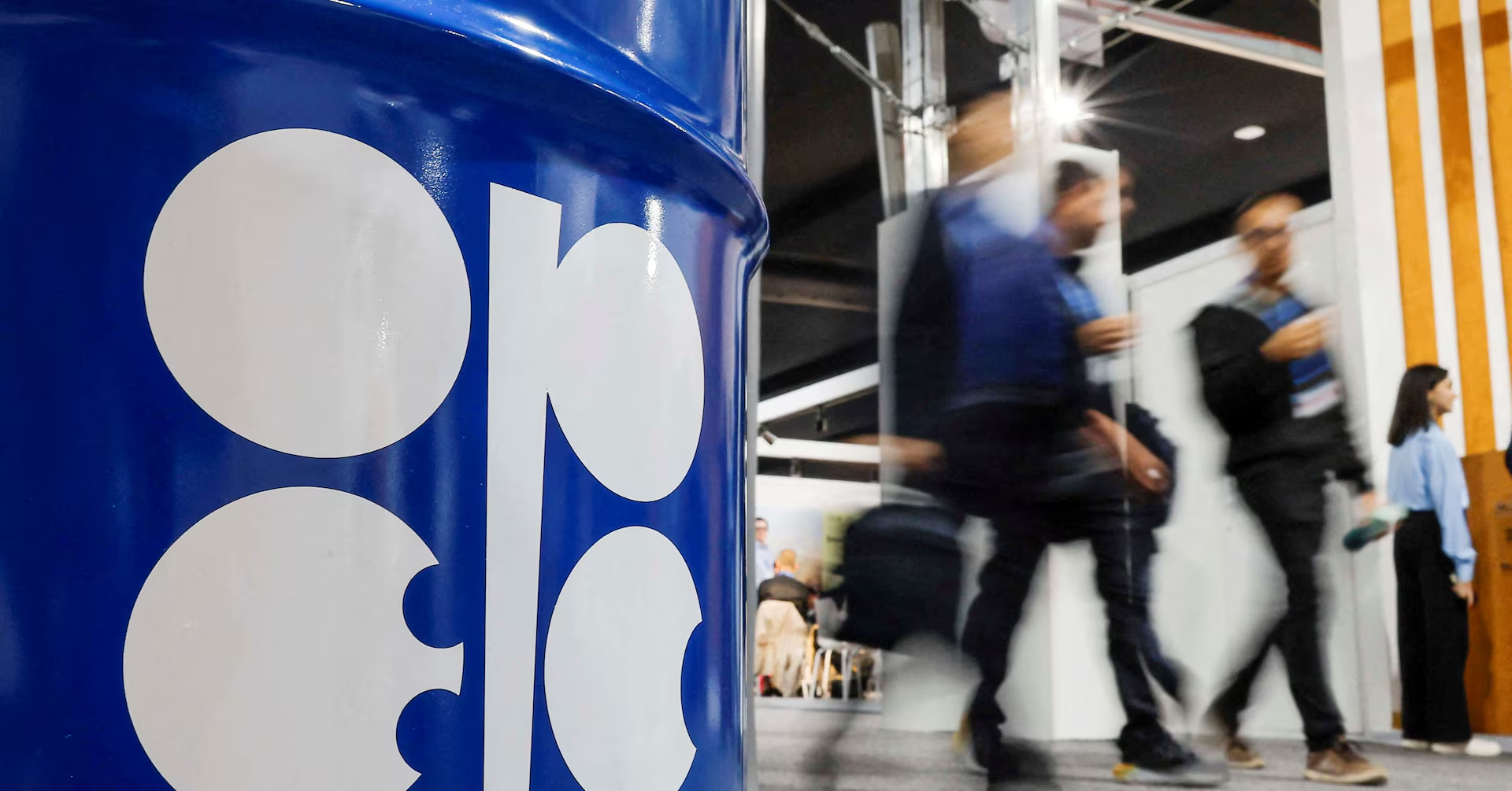
Item 1 of 2 People walk past an installation depicting barrel of oil with the logo of Organization of the Petroleum Exporting Countries (OPEC) in Baku, Azerbaijan November 19, 2024. REUTERS/Maxim Shemetov/File Photo
LONDON, July 5 (Reuters) – OPEC+ is set to agree on Sunday another increase in output targets from August, sources with knowledge of the matter said, adding to global supply amid falling oil prices due to a gradual reopening of the Strait of Hormuz for oil exports.
The oil-producing group has agreed in principle to increase quotas by 188,000 barrels per day from August, on top of similar increases for June and July, two sources with knowledge of OPEC+ thinking said ahead of the group’s online meeting later on Sunday.
Sign up here.
Seven core members of OPEC+, which groups OPEC and allied producers including Russia, have increased their output quotas from April through July by almost 800,000 barrels per day.
PRODUCTION BEGINS TO RECOVER
Despite persisting supply disruptions, oil prices have returned to pre-war levels, pressured by lower Chinese imports, higher exports from non-Middle East producers, and a record global strategic stock release coordinated by the International Energy Agency.
The memorandum of understanding to end the war has also helped convince traders that supply would ultimately return to normal levels.
IRAQ PRESSING FOR HIGHER QUOTAS
The seven producers — Saudi Arabia, Russia, Iraq, Kuwait, Algeria, Kazakhstan and Oman — are boosting output as part of the phased rollback of a 1.65 million bpd supply cut agreed in 2023, when the group still included the UAE.
The UAE quit the alliance in late April because it wanted to align its capacity more closely with its production, free of production restraints imposed by the group.
From August, the seven have about 379,000 bpd of the original cut to return to the market, taking into account the UAE exit from May 1, according to Reuters calculations.
That would mean that the group would unwind the remainder of the cut by the end of September if they continue increases at the same pace.
Reporting by Alex Lawler, Olesya Astakhova, Ahmad Ghaddar and Dmitry Zhdannikov; Editing by Joe Bavier and David Holmes
Our Standards: The Thomson Reuters Trust Principles.
Source: Original Article