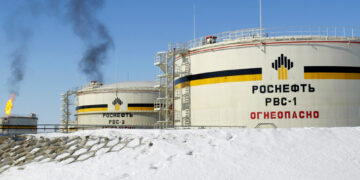


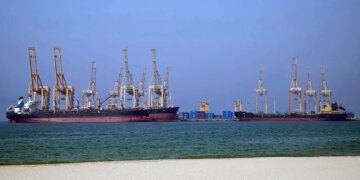





















Middle East oil producers are grappling with significant challenges in selling their crude, even as global benchmark prices (Brent and WTI) have surprisingly softened below or near pre-conflict levels. This comes despite a major supply shock from disruptions in the Strait of Hormuz following the early 2026 Iran conflict (U.S./Israeli strikes on Iran). The market appears to be pricing in a surplus, but physical realities tell a more complex story of tightening inventories, regional demand weakness, and potential pent-up demand. Key questions emerge: Have demand destruction effects gone further than anticipated? What complicates market balancing? And will prices rebound once equilibrium returns—or will non-Middle East supplies (e.g., U.S. shale, Brazil) gain ground faster?
The Strait of Hormuz Shock and Middle East Export Struggles
The Strait of Hormuz remains a critical chokepoint, normally handling around 20% of global seaborne oil trade. Post-conflict, flows dropped dramatically—to roughly one-third of pre-war levels at times—due to attacks, safety concerns, and restricted tanker movements. A June truce allowed partial reopening (around 5 million barrels per day in some reports), but normalization is slow.
This has idled significant Middle East production and exports. Refineries in the region faced shutdowns or curtailed runs due to lost feedstock access and export outlets. Iran, heavily reliant on the strait and shadow fleets for sales (mostly to China), has exported more volume in recent periods but at steep discounts—reportedly $8–10 below Brent by late 2025/early 2026—eroding revenues despite higher volumes.
Other Gulf producers (Saudi Arabia, UAE, Iraq, Kuwait) faced export bottlenecks. While Saudi and UAE bypass pipelines (East-West and Fujairah routes) provide partial relief (several million b/d capacity), they cannot fully offset the strait’s role. Some output cuts and refinery issues compounded the pressure.
Market Balancing Complications: Supply Shock Meets Demand Weakness
Global oil supply plunged sharply—by about 10.1 million barrels per day (mb/d) in March 2026 alone, with OPEC+ output down ~9.4 mb/d. This was one of the largest disruptions in history.
Yet prices have not sustained highs. By late June 2026, Brent settled around $72–74/bbl and WTI near $69–71/bbl—levels at or below pre-war benchmarks—after an initial surge.
Key complications include:
- Inventory dynamics and buffers: Massive stock draws (e.g., 430 million barrels cited since late February) signal tightness, but headline figures can mislead. Much stored oil serves operational minimums (“tank bottoms”) for pipelines and systems. SPR releases and released tankers from the strait added short-term supply relief.
- Demand side pressures: Global demand forecasts were slashed. The IEA projected a contraction or minimal growth in 2026 (down sharply from prior expectations), with sharp drops in the Middle East and Asia-Pacific (naphtha, LPG, jet fuel). Demand destruction from higher prices/scarcity is spreading.
- China’s role: Weak economic conditions (banking stresses, real estate woes, collapsing consumer spending) have suppressed imports. Some analysts point to possible coordinated holds on strategic reserve refills.
- Paper vs. physical markets: Futures markets price a surplus, while physical crudes in Asia show tightness (e.g., explosive product prices in Singapore, diesel overtaking jet fuel).
Has Demand Destruction Kicked In Farther Than Predicted?
Yes, according to macro analyst Jeffrey Snider (featured in a recent Mario Nawfal discussion). He argues the market is mispricing a surplus while underestimating deeper demand destruction from the energy shock. Manufacturers front-loaded inventories early in the conflict, creating an “air pocket” now that the initial rush has ended.
IEA and EIA data support notable demand weakness and revisions lower for 2026.
Jeff Currie’s Perspective on Pricing and Rebalancing
Veteran commodities strategist Jeff Currie (ex-Goldman Sachs, now with Carlyle/Abaxx Markets) offers a bullish counterpoint focused on physical markets. He has warned of “tank bottoms” already hit in Asia, with Europe following soon, and the U.S. potentially facing issues by July amid the summer driving season.
Currie sees prices overshooting to the downside (approaching low $70s pre-war levels) and expects pent-up demand to push markets higher as rebalancing occurs. Physical tightness (e.g., high prices for Asian-traded crudes like Oman) will eventually dominate. Reopening and normalizing Hormuz flows could take until year-end or longer.
He emphasizes that only increased physical supply (“molecules”) solves the core issue—not short-term policy tweaks.
Will Prices Rebound Once Balance Returns—or Will Non-Middle East Oil Rise Faster?
- Rebound scenario (Currie lean): Once inventories deplete further and pent-up demand emerges (especially post-summer or with any sustained tightness), prices should rise. Physical markets in Asia are already signaling stress. Prolonged disruption favors higher prices overall.
- Snider view: Deeper demand destruction and economic fragility (global cycle concerns) could keep pressure on prices longer, even with supply constraints.
- Non-Middle East advantage: Alternative supplies (U.S. shale, Brazil, other non-OPEC) may fill gaps more readily and command relatively better realizations or market share as buyers seek reliability. Physical non-ME crudes in tight regions could see faster price support or premiums compared to discounted ME barrels struggling with logistics.
Short-term volatility persists amid geopolitical headlines, truce talks, and seasonal demand. Longer-term, underinvestment legacies and any extended disruption point to upside risk, per Currie-style analysis. EIA scenarios assume a gradual Hormuz recovery in 3Q 2026 onward, with prices elevated mid-year before potential moderation.
Middle East producers are indeed facing real selling difficulties due to logistics and discounts amid Hormuz constraints. Demand destruction appears deeper than many initially modeled, driven by China’s weakness and inventory cycles (per Snider). However, physical market signals (per Currie) suggest the current soft prices may prove temporary as true balancing reveals shortages and pent-up needs.
Prices are likely to firm once equilibrium emerges—potentially with non-Middle East supplies benefiting disproportionately in the interim. The market remains in a “bumpy ride” phase of rebalancing.
Tomorrow, Stu Turley will be interviewing Doomberg on the oil markets and asking him some pointed questions about the rebalancing.
Doomberg Stops by the Energy News Beat Channel

Appendix: Sources and Links
This article synthesizes public reports and analyst commentary as of early July 2026. Oil markets are highly volatile; readers should consult multiple sources and consider professional advice for investment decisions.
Source: Original Article