



















TradingKey – On June 19, 2026, South Korea’s benchmark KOSPI index touched 9,385.59 points intraday, setting another all-time high. However, the KOSPI index failed to sustain its gains, pulling back on the same day and subsequently embarking on a downward trend.
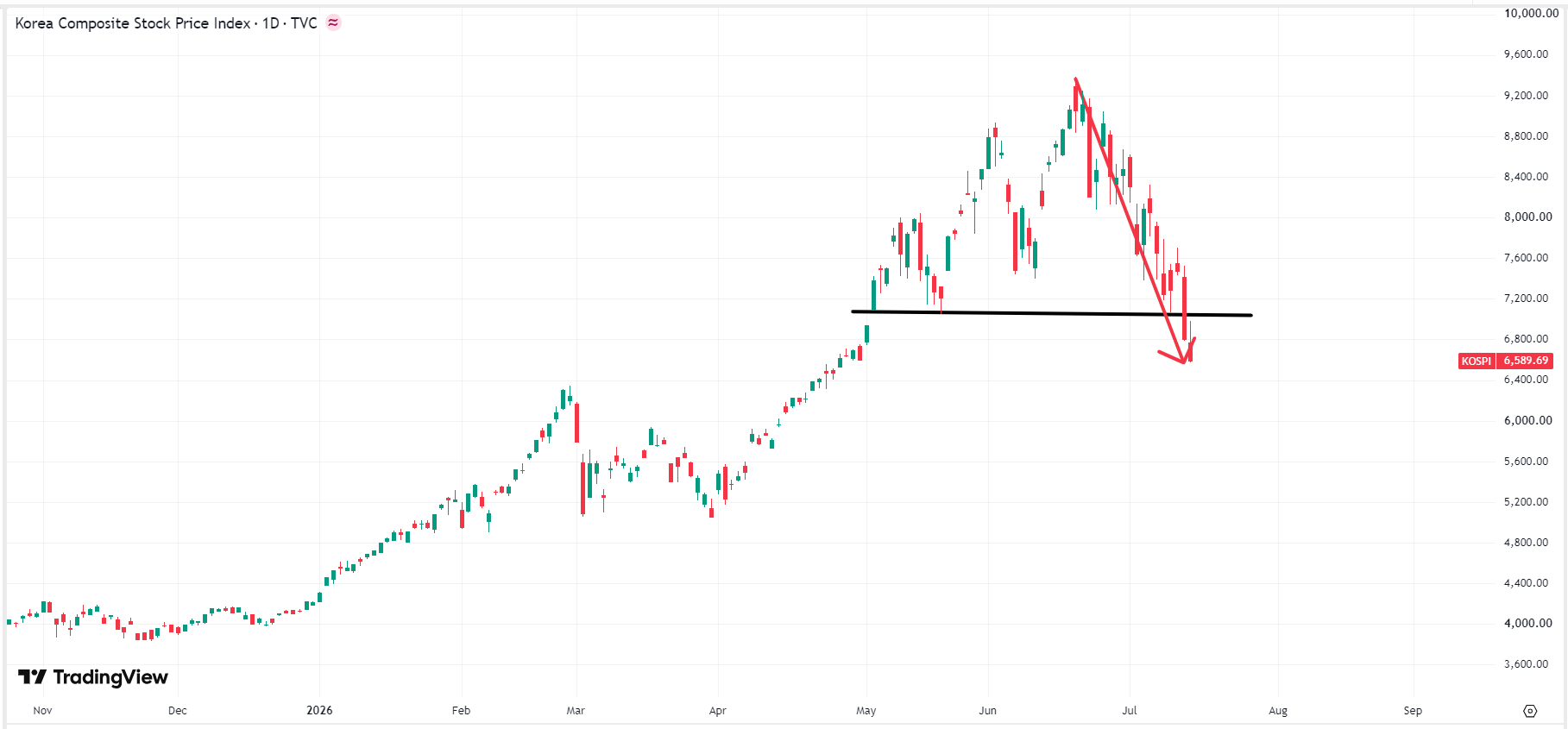 KOSPI index chart, Source: TradingView
On June 23, the KOSPI index staged its most brutal ‘Black Tuesday’ stampede of the year, plunging nearly 850 points in a single day, a drop of close to 10%. The Korea Exchange (KRX) activated emergency market-wide circuit breakers, halting all trading for 20 minutes; as programmatic selling pressure spiraled out of control, temporary margin and short selling restriction mechanisms to limit program sell orders were also triggered several times that day.
On July 13, the KOSPI index suffered another historic, epic ‘Black Monday’ crash, plunging nearly % by the close and twice triggering trading restriction mechanisms. This was not only the worst single-day drop in months, but it also shattered the key psychological barrier of 7,000 points, which was an important technical line of defense formed in early May this year. As of press time, the KOSPI index has fallen below 6,600 points, representing a cumulative decline of nearly 30% from its peak.
South Korea’s KOSPI Index has tumbled all the way from its late June record high, currently undergoing an epic and sharp correction. However, this sudden crash was not caused by a single factor, but was rather the combined result of AI industry reassessment and geopolitical black swans.
Recently, Wall Street began to calmly reassess, even questioning whether Microsoft (MSFT), Meta (META) and other tech giants’ frenzied AI capital expenditures will fail to generate matching returns, leading to an indiscriminate capital flight from the semiconductor sector, with Samsung Electronics and SK Hynix (SKHY) also finding it hard to escape. In addition, Samsung announced stellar preliminary profits in early July, and SK Hynix celebrated a historic and successful ADR listing on the U.S. Nasdaq, which instead triggered intense sell-on-the-news profit-taking sentiment among institutional investors, further dragging down the KOSPI Index.
Recently, the Middle East geopolitical crisis, which had just eased, escalated sharply once again as Iran claimed it would block the strategic Strait of Hormuz, prompting the U.S. to announce a naval counter-blockade. With the Strait of Hormuz—the conduit for one-fifth of the world’s oil—facing a potential shutdown, international oil prices instantly surged past $80 per barrel. This triggered extreme global fears of a resurgence of inflation, forcing foreign capital to flee emerging markets for safety, and South Korean equities were hit by indiscriminate sell-offs as well.
After experiencing extreme frenzy, the South Korean stock market is currently undergoing an extreme valuation and liquidity correction. The KOSPI Index has already broken below technical support at 7,000 points, meaning the South Korean stock market is entering a technical bear market, with the next key support at 5,000 points, representing about 24% further downside from current levels.
However, if the KOSPI Index can reclaim 7,000 points this week, it will be able to reverse this trend, though a reversal remains unlikely. Currently, the market is hoping that U.S. CPI data and the congressional debut of the new Fed Chairman Kevin Warsh will deliver dovish signals, but geopolitical tensions in the Middle East show no signs of abating, which continues to weigh on liquidity.
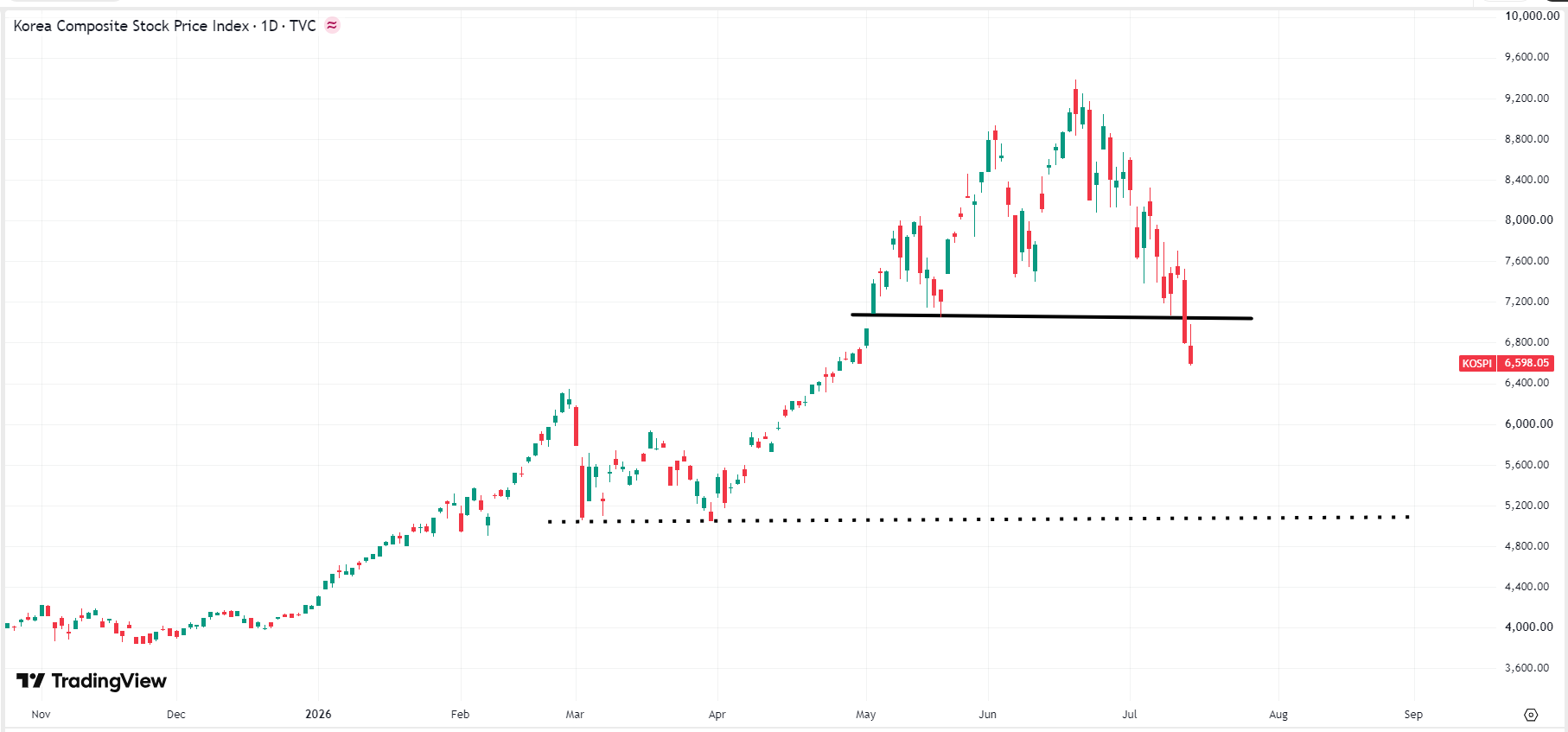 KOSPI Index chart, Source: TradingView
This content was translated using AI and reviewed for clarity. It is for informational purposes only.
Source: Original Article