























Out in the open, DeFi cuts out banks and brokers, while skipping payment processors, too. Known fully as decentralized finance, in 2026, it still stands as a central test within crypto.
Trading, borrowing, lending, saving – anyone holding a digital wallet plus an online connection gets these options via software rules. Access opens doors. Yet flaws in those rules, security breaks, or simple human slips might shift funds forever. Money moves fast when machines run the show.
Related: DeFi Is Undergoing a ‘Quiet Repricing’ — Sector Tokens Are Holding Up Better Than Bitcoin
Contents
What Is DeFi? Decentralized Finance Explained
Definition of DeFi in Simple Terms
Open networks host these money apps, outside old bank walls. Think code managing value, not clerks behind counters. Plugging in your digital wallet opens the door. You step into programs handling cash like robots. These tools swap coins, lend sums, keep fees, pass out payouts – no middlemen shouting orders. Software runs it all, quietly, and lives on chain ledgers. Real work happens when users click, not when boards decide.
Why DeFi Became One of the Biggest Crypto Narratives
Something different happened when people started using blockchains for more than just storing value. Not long after, one network proved that cash did not need banks to work. Then another system made clear that contracts might function like code. Trading platforms without middlemen appeared.
So did loan systems where supply met demand automatically. Coins tied to real-world values joined the mix. People began chasing returns by moving assets around these pieces. Each part built on what came before, quietly shaping how things moved.
Key Principles: Decentralization, Transparency, and Smart Contracts
DeFi builds on three core thoughts. Getting into systems does not require approval from any firm. What moves and what sits where shows up clearly on the blockchain. Rules are locked in place through code that runs itself. Not all setups hand full control to the crowd, though – people need to look under the hood at who holds power to change things, vote, or update functions.
How Does DeFi Work?
Role of Smart Contracts in DeFi Systems
Running on blockchains, smart contracts power DeFi systems. These coded tools go live once uploaded. When triggered, they take in funds, apply logic, and then carry out trades if terms align. Think of them as digital marketplaces, shared loan sources, secure storage, or automated clearing units.
How Users Interact With DeFi Protocols
Starting with a wallet is often the first move in using DeFi. Funding comes next, done by moving assets into that space. A network must be picked – each supports different options. Jumping into a protocol follows once the foundation exists. Permissions get granted before anything shifts. Actions unfold after approval clears the path. Watching what happens takes focus afterward. Every confirmed step holds weight since undoing actions rarely works here.
Liquidity Pools and Automated Market Makers (AMMs)
Pools of tokens sit ready for trades on many decentralized exchanges. Instead of matching buyers and sellers directly, these platforms let people exchange one token for another straight from the stash inside a pool. As someone pulls out one kind of coin, the remaining coins automatically shift the value. The math behind pricing depends on how much remains after each trade. People who add their coins into the mix collect small rewards over time. Yet they also carry the chance of losing value if markets swing hard.
Main Components of the DeFi Ecosystem
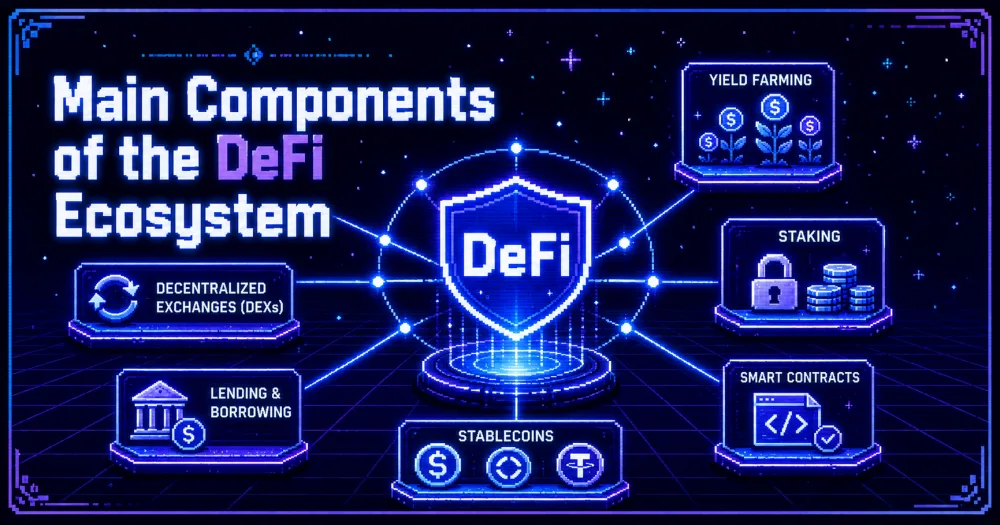
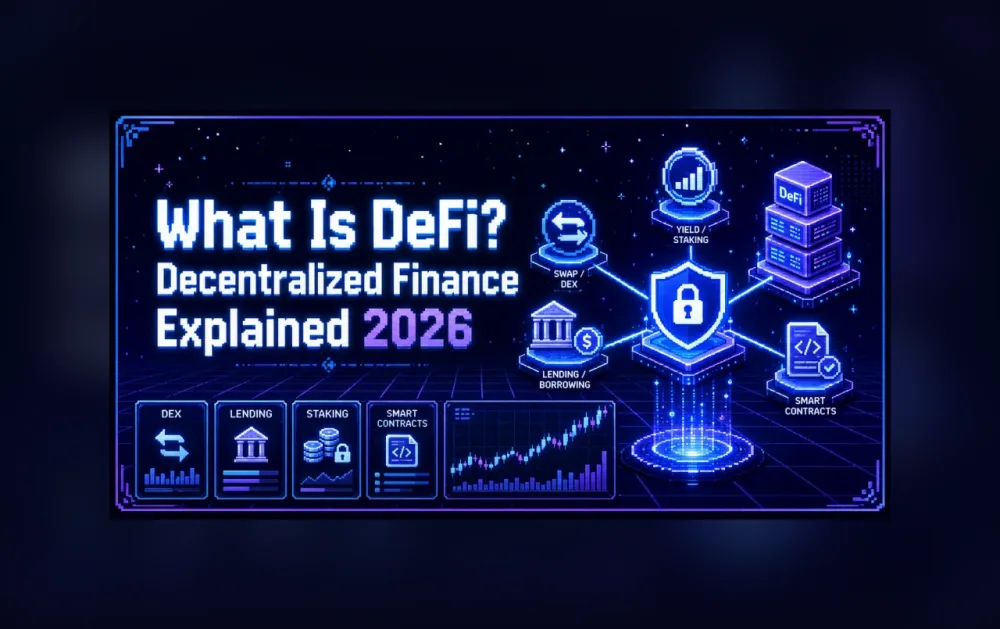
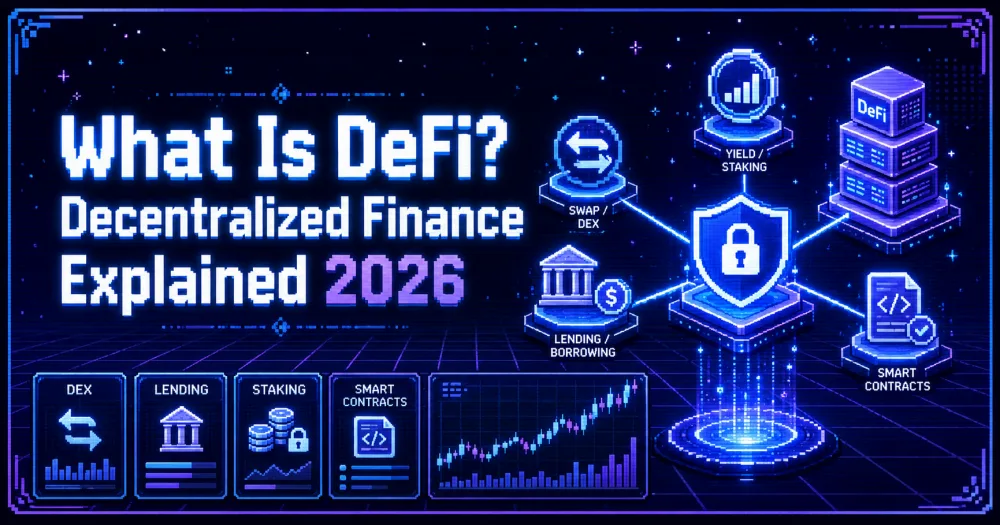
Decentralized Exchanges (DEXs)
Trading happens straight from personal wallets on these platforms. Instead of a central business keeping money, software handles swaps automatically. People exchange assets using code rules rather than handing cash to an organization. Access opens up to many different digital coins, yet some are copies made to trick buyers. Liquidity sometimes dries up, making trades harder when few participate.
Lending and Borrowing Protocols
Lending on DeFi apps means giving your coins to earn interest. On the flip side, some people put up something valuable to get a loan. Most times, borrowers must secure their debt with extra funds – more than the amount taken. If markets drop fast, those positions might vanish in moments.
Related: Top 5 High-Growth DeFi Projects in 2026: Where Smart Money Is Moving
Stablecoins and Their Role in DeFi
Money that holds its value sits at the core of digital finance. When shifting funds between trades, people skip going back into traditional cash systems each time. Whether borrowing, swapping assets, or earning returns, these steady coins usually serve as the starting point. Risks tied to who backs them, who issues them, and what rules might change still matter much to those using them.
Yield Farming and Staking Platforms
Lots of folks begin chasing returns by shifting coins between platforms – payouts come from fees, bonuses, or fresh tokens. Locking up holdings? That backs a system, helps verify transactions. Making cash in decentralized finance typically kicks off one of these two ways. Big gains might mask shaky ground – inflation pressure, borrowed funds piling up, code that could fail.
DeFi vs Traditional Finance (CeFi)
Key Differences Between DeFi and Banks
Led by official firms, banks rely on private records, rule checkers, plus binding paperwork. Public digital tracks take center stage in DeFi, guided by coded deals, personal vaults, and open moves. Mistakes sometimes get undone in old-school money systems. With DeFi, people steer their own path – just without backup plans nearby.
Advantages of DeFi Over Traditional Systems
Open finance works anywhere, anytime. Nighttime? No problem – lending markets stay available. Crossing borders happens without bank delays. Trade freely, skip the approvals. Built-in speed means money moves like messages. Apps connect when developers stack old tools into new ones. One piece fits another, even if made by different teams. Global access comes by design, not permission.
Limitations and Weaknesses of DeFi
Getting into DeFi isn’t easy if you’re just starting out. Mistakes with wallets stick – there’s no reset button. Gas prices shift without warning, sometimes fast enough to ruin a plan. Websites vanish overnight, leaving nothing behind. Crooks hang around every corner, waiting quietly. Code runs exactly as built, yet that doesn’t mean it keeps funds safe. When something breaks down, nobody might take the blame.
Benefits of DeFi in 2026
Financial Inclusion Without Intermediaries
People without reliable banks might find better options through DeFi. Access opens up when a digital wallet acts like a door to financial systems once out of reach. Especially where money rules are tight, local currency falters, or bank services barely exist – this shift counts.
Global Access to Financial Services
No borders built in. Anyone, anywhere, might tap into a public blockchain’s rules if their screen works and laws back off. Yields here, code there – choices spread wide when apps talk to each other. Old bank paths don’t twist this way. Pockets of money flow where structure, depth, and return pull them. Borders blur when math runs the gate.
Higher Yield Opportunities Compared to Traditional Banking
Money grows faster in DeFi compared to savings accounts since funds move through markets, loans, pools, or reward setups. Returns might come from actual usage, digital tokens handed out, or risks tucked beneath the surface. Before putting money in, sharp users check what’s really feeding the profit.
Risks and Challenges of DeFi
Smart Contract Bugs and Exploits
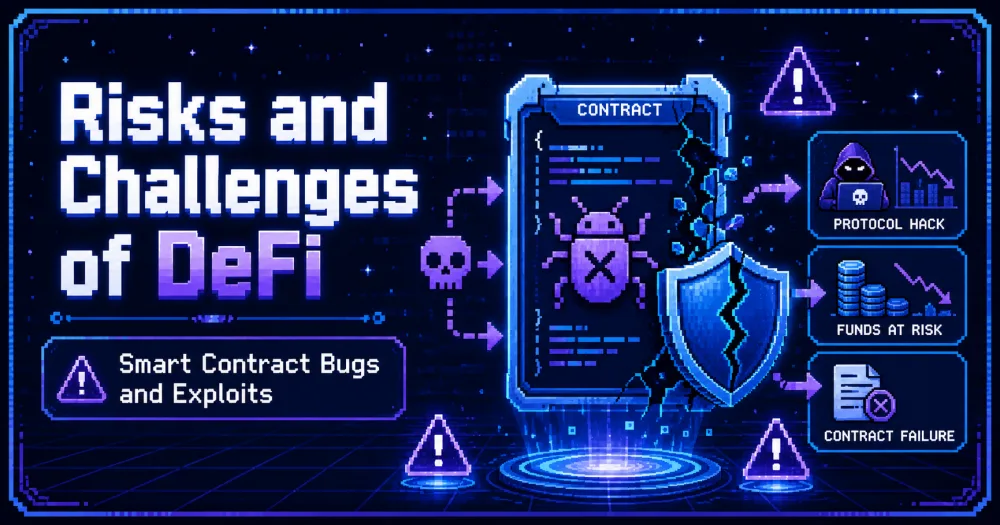
Safety in DeFi? It is not complete. While it may lower the chance of asset control issues, risks tied to code stay high. Flaws might hide in software – like bugs or mistakes in data feeds. Access rules can fail, just as financial models can break under stress. Reviews by experts add a layer of trust, yet never promise full protection.
Related: Top 5 DEX Wallets in 2026: Which Crypto Wallet Is Best for DeFi and Swaps?
Rug Pulls and Scams in DeFi Projects
When developers suddenly take funds and vanish, it’s called a rug pull. Easy access to asset creation in DeFi opens doors just as wide for scams. Projects run by hidden founders often carry higher risks. Promises of huge returns usually signal trouble ahead. If you cannot withdraw your holdings freely, step back. Tokens without clear rules on how many exist can be dangerous.
Sudden disappearances after funding are red flags worth noting. Transparency matters more when systems lack oversight. Unverified code and secret owners go hand in hand too often. High rewards paired with no accountability tend to end badly. Some launches are built to fail from day one.
Liquidity drained overnight leaves investors with nothing. Trust fades fast when communication stops abruptly. Features that block selling should never feel normal. Hidden mechanics behind supply can hide malicious intent. Newcomers face the sharpest dangers in unchecked spaces. Empty promises echo loudly where regulation is absent. Withdrawal limits quietly appear before projects collapse. Anonymous creators rarely stick around during crises. Clear numbers on total tokens protect against deception.
Regulatory Uncertainty in 2026
One big uncertainty sits around DeFi – what exactly it should be labeled as. Is it just code, a bank-like tool, or some mix of the two? Officials might aim rules at user interfaces instead of core systems. Developers could face scrutiny even if they write neutral programs. Power held by token voters may draw regulatory eyes, too. Stablecoin issuers are another possible focus under new frameworks. Even third parties helping networks run might fall within reach.
Market Volatility and Liquidity Risks
Fast swings hit crypto values. When markets jump, DeFi feels it through forced exits, uneven trades, or shaky pools. Thin trading depth makes even minor deals slip sideways. Those lending assets need constant ratio checks. Anyone swapping tokens looks at price gaps before confirming.
Related: Best Web3 Wallets 2026: Secure Picks for DeFi, XRP and Beginners
Popular DeFi Use Cases
Trading Without Centralized Exchanges
Out there beyond big exchange platforms sits decentralized trading – plain to see, right up front. A person hooks up their digital wallet, picks two coins they want to trade, then swaps straight inside an app. Moving quickly like that opens doors to fresh market chances almost right away. Still, risks tag along just as fast: phony tokens might slip in, bots can sneak ahead of trades, thin pools make prices jump, and mistakes lock in forever.
Passive Income Through Yield Farming
Most folks hope to earn while doing nothing, yet yield farming demands attention. Watch those positions like a hawk – ignoring them bites back. What looked profitable yesterday might fizzle today; rewards shift fast. Don’t skip the fee math – it sneaks up on gains. Code can fail, even when it looks solid. The steady growers spread bets and mind the true payout once gas eats its share.
Borrowing Crypto Without Banks
Borrowing via DeFi moves quickly. Someone puts up collateral, then receives a different asset – no credit history needed. Lenders stay shielded because the system enforces automatic liquidations. Trouble comes when prices swing too hard. Should collateral drop in value, bots step in and close the deal instantly.
Cross-Chain DeFi Applications
Across different blockchains, DeFi links money pools together. To shift assets from one network to another, people rely on bridges along with communication layers and shared rules. Wider reach becomes possible because of this setup. Yet trouble can come up – bridges often bring extra steps and problems to manage.
Top DeFi Platforms in 2026
Ethereum-Based DeFi Ecosystem
Still ahead in DeFi, Ethereum hosts major protocols. From stablecoins to voting setups, much began on this platform. Tools for coders are solid here; big players keep watching. High fees became a problem, though, so people moved parts of their activity elsewhere.
Solana DeFi Growth and Low-Fee Networks
Speed drives Solana’s DeFi rise, with slim costs enabling quick trades, everyday payments, and even app use. What stands out? Blazing pace. Yet staying steady under pressure remains tough – markets need deep pools of funds, consistent uptime, and confidence from big players. Tiny fees let minor transfers happen without friction.
Layer 2 Solutions and Scalability Improvements
DeFi moves faster on Layer 2s – transactions cost less without ditching Ethereum’s safety net. Take Arbitrum or Optimism, even Base – they’re now central spots for activity. Savings show up fast in users’ wallets, though managing things gets trickier.
Future of DeFi: What to Expect Beyond 2026
Institutional Adoption of DeFi Protocols
Most big financial players won’t jump into DeFi the way individuals do. Compliance needs come first – along with audit trails, controlled entry points, plus defined roles for each party involved. Yet pieces of decentralized finance might still take root behind the scenes. Token-based securities could shift how value moves; automatic clearing processes may quietly reshape backend operations.
Integration With Traditional Financial Systems
One day, banks might ride on blockchain tracks instead of stepping aside. Settlements could shrink from days to minutes, maybe seconds. Transparency often lifts when records stop living in locked cabinets. Collateral management might run on coded rules, not phone calls. Progress tends to crawl, even when money is involved. Hype usually runs faster than real change ever does.
Evolution Toward Regulated DeFi (RegDeFi)
One way to look at RegDeFi is rules baked into open networks. Think real identity tied to wallet access, pools that check who joins, stablecoins backed by licensed entities, and structures where decisions follow legal guardrails. Open lanes might still exist alongside these checked zones. A divide could form – wildcode on one path, rulebound code on another.
FAQ
What Does Defi Crypto Mean?
Out there, finance shifts gears on blockchains – trading, loans, deposits, locking coins, growing returns. Run by code lines, not bank desks. Machines handle tasks once reserved for lenders in towers.
How Does Defi Work?
Most of the time, DeFi runs on blockchains using digital wallets. A person links their wallet first thing. After that comes picking a service they want to use. Then there’s approving a move by signing off on it. The rest happens automatically once the code takes over.
Is DeFi Safe?
Most people think DeFi locks things down tight – the truth is, it only shifts where danger shows up. Taking out middlemen cuts certain holding dangers, yet opens doors to code flaws instead. Hackers find new ways through weak links coded into apps themselves.
Scams slip in when promises sound too good to be true. Moving money between chains? Bridges often crack under pressure. Prices jump wildly if pools run thin on trade activity. Data feeds mislead when sources feed lies. Typing one wrong address wipes funds for good. Mistakes like these stick around long after the click.
Is Investing in DeFi Wise?
Start learning before putting money into DeFi – try tiny trades first. Rather than rushing in, pick platforms others rely on. Set clear boundaries on what you might lose. Always guard your wallet like it holds cash. Tokens open doors, but so does letting others borrow them. Putting funds to work often means locking them up. Helping markets move value pays sometimes. Each step builds slowly when done with care.
What Are Top DeFi Platforms?
Picking a DeFi platform really comes down to what you’re doing. Liquidity matters most if trading is your thing, so decentralized exchanges often fit better. Those offering loans tend to lean toward markets with solid track records. New users might want to look first at how long something has run without issues, plus whether it’s held up over time.
Can Beginners Use DeFi?
True, though starting out in DeFi means taking it step by step. Begin with tiny amounts just to get a feel. Stay clear of unfamiliar web links – they can lead anywhere. Always confirm the address of any smart contract before interacting. Get comfortable with how costs add up on each transaction. Never rush through approving tokens without knowing what you allow.
Ways to Earn From DeFi?
One way people make money is by letting others borrow their assets. Lending might bring gains, yet it opens the door to exposure. Staking locks up funds to support a network, which could pay off – or not. Putting money into shared pools helps trades happen; rewards come, but value can shrink, too.
Growing returns in complex setups sound good until things shift unexpectedly. Some platforms hand out special coins, promising future worth that may never arrive. Each path offers potential, though downsides always tag along. Balancing what you might gain against what you could lose matters most.
What Does The Future Hold For DeFi Beyond 2026?
Open networks might shape what comes next. Growth on secondary layers could play a big role. Tools that link different blockchains may become more common. Stablecoins are expected to stay central. Real-world assets turned into tokens might gain ground. Institutions could enter through structured gateways.
Source: Original Article