


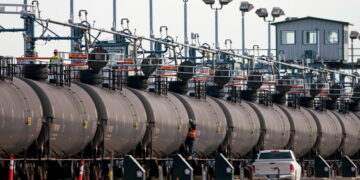














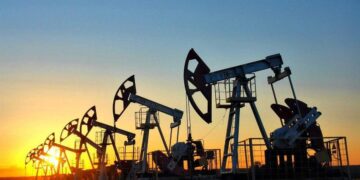






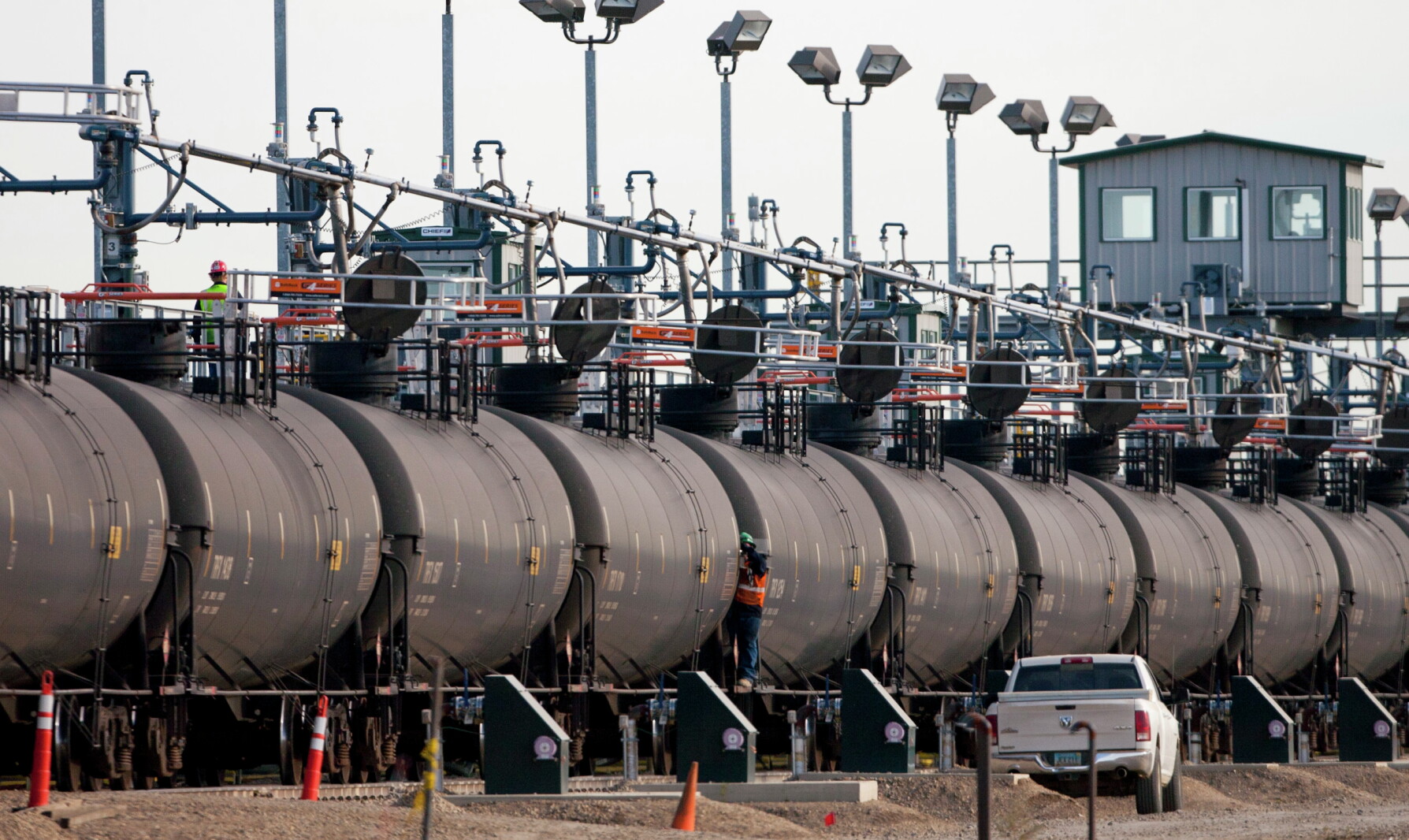
GRAND FORKS — North Dakota’s oil and natural gas industry makes up more than 30% of the state’s economy and pays more than half of all state taxes. But unpredictable oil prices since the beginning of the U.S.-Iran war have created some uncertainty. Drivers have felt a pinch at the gas pump over the last few months, but prices have been falling for the past few weeks.
The average price of gasoline in North Dakota on June 18 was $3.80 per gallon, almost 20 cents less than the national average of $3.99. A month ago, North Dakota’s average gas price was $4.16 per gallon. The price of diesel fuel has been dropping as well, going from $5.23 per gallon in May to $4.68 per gallon in mid-June, but all fuel prices are still about $1 more a gallon than this time last year.
In March, Gov. Kelly Armstrong highlighted a study showing the economic impact of the state’s oil and gas industry, which accounted for more than $48.8 billion in gross business volume and more than 63,000 jobs in 2023.
“The oil and natural gas industry continues to be a major force in North Dakota’s economy, benefiting communities across our great state,” Armstrong said. “Taxes and royalties paid by the industry support state and local investments in infrastructure, schools, communities, tax relief and the Legacy Fund, among other areas.”
Total gross business volume, which includes direct sales in the oil and natural gas industry and business generated from indirect and induced economic activity throughout North Dakota, set an all-time high record at $48.8 billion — an increase of $6.2 billion over 2021 and over 30% of the state’s overall gross business volume, a release from the governor’s office states.
According to another recent study conducted for the Western Dakota Energy Association (WDEA) and North Dakota Petroleum Foundation, tax revenues paid by North Dakota’s oil and natural gas industry from fiscal years 2008 to 2024 now exceed $32 billion. These revenues supported $5.9 billion for local communities and infrastructure, over $2.36 billion for K-12 education, $1.75 billion for water and flood control projects, and over $1.24 billion for property tax relief. Additionally, $8.5 billion in oil and gas taxes went into the Legacy Fund, which benefits future generations, the release states. The Legacy Fund’s total value is now more than $14 billion.
According to the State Treasurer’s Office, a
portion of the state’s tax collections
from oil and gas production and extraction is allocated to the state and deposited in a number of funds, or “buckets.” Prior to deposit in these buckets, 2% of revenues (up to $17.5 million for the 2025-20257 biennium) is deposited into the Oil and Gas Research Fund. Another 1% of revenues (up to $7.5 million per biennium) goes into the State Energy Research Center Fund.
The price of North Dakota crude oil was about $71 per barrel on June 16, down from almost $86 per barrel on June 5, higher than the
($53.92) but lower than March’s $84.70 price per barrel. North Dakota currently produces approximately 1.1 million barrels per day.
A recent $36 million award from the U.S. Department of Energy will help get more oil out of the ground in North Dakota. The “
” initiative, championed by Sen. John Hoeven, R-N.D., uses carbon dioxide from the state’s coal plants for enhanced oil recovery by pumping a gas, like natural gas or carbon dioxide, into oil and gas formations underground to make it easier to get the oil out. The state is partnering with the Energy & Environmental Research Center at the University of North Dakota in Grand Forks to advance the initiative.
In its
June Short-Term Energy Outlook
, the U.S. Energy Information Administration reduced its expectation for global oil demand in 2026.
High fuel prices, reduced fuel availability and government initiatives are curbing oil consumption this year, particularly in Asia, resulting in the world consuming one million fewer barrels of oil each day on average than it did last year, the outlook says. The reduced demand could limit crude oil price increases resulting from near-term disruptions in the flow of oil out of the Middle East.
“Any scenario involving full restoration of inventories, production and trade flows to pre-conflict levels must account for the partial restructuring of the global oil market that has already occurred,” EIA Administrator Tristan Abbey said.
Carrie McDermott joined Prairie Business magazine in March 2023. She covers business industry trends in North Dakota, South Dakota and west central Minnesota. Email address: [email protected].
Source: Original Article