




















MAPS never stopped mattering. We merely convinced ourselves they did.
For almost three decades, globalisation encouraged governments and businesses alike to believe that technology, markets and just-in-time supply chains had conquered geography.
Production shifted to wherever costs were lowest, capital flowed with unprecedented ease, and the physical map appeared increasingly subordinate to the digital economy.
Recent events have exposed that assumption as one of the defining strategic miscalculations of our time.
Around one-fifth of globally traded crude oil passes through the Strait of Hormuz, while the Suez Canal carries roughly one-third of global container traffic.
Meanwhile, the Strait of Malacca remains one of the world’s busiest maritime corridors and the principal maritime gateway linking East Asia with the Indian Ocean, the Middle East and Europe.
These are not merely shipping routes; they are the arteries through which the global economy breathes.
Few countries have a greater stake in this return of geography than Malaysia.
Situated astride the Strait of Malacca, Malaysia’s prosperity has always depended as much on its strategic location as on its natural resources.
At a time when multinational corporations are reassessing supply chains and governments are recalibrating national security strategies, Malaysia occupies one of the most strategically valuable positions in the emerging geoeconomic landscape.
More importantly, these waterways are no longer merely geographical features.
They function as economic institutions, shaping commodity prices, insurance premiums, investment decisions and supply-chain resilience in much the same way that financial markets, payment systems and capital markets influence the global economy.
Their uninterrupted operation underpins international commerce; their disruption reverberates across industries and continents. This represents one of the defining transformations of the contemporary international political economy.
If the first article in this series argued that geopolitical uncertainty has become the new currency of power, this second proposition follows naturally: geography determines where that currency is minted, traded and priced.
Maritime chokepoints have become the exchanges through which geopolitical risk is transmitted into the global economy.
When Geography Becomes An Economic Institution
The world’s major maritime chokepoints – the Strait of Hormuz, Bab el-Mandeb, the Suez Canal, the Strait of Malacca and increasingly the Taiwan Strait – should no longer be viewed simply as narrow waterways connecting oceans.
They are strategic economic institutions that sustain the movement of energy, manufactured goods, agricultural commodities, semiconductors and intermediate inputs upon which the global economy depends.
When these arteries function normally, their significance is often overlooked.
Their value becomes apparent only when they are disrupted.
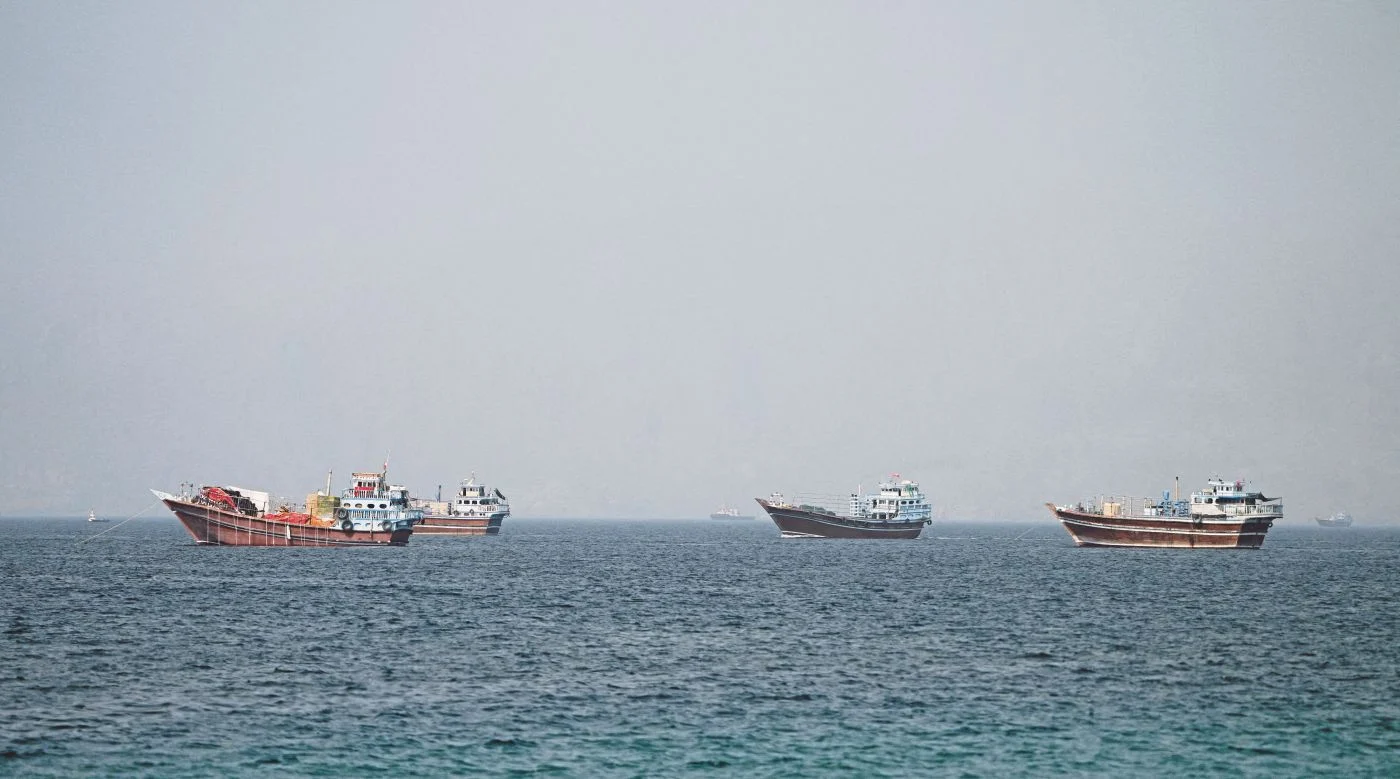
The tensions surrounding the Strait of Hormuz in 2026 provided a vivid reminder of this reality.
Even after military tensions subsided and shipping resumed, commercial confidence recovered far more slowly.
Shipping companies, insurers and commodity traders continued to factor geopolitical uncertainty into freight rates, insurance costs and operational decisions.
The episode demonstrated that markets respond not merely to actual conflict, but to the probability that disruption may occur.
Risk itself has become an economic variable.
The same logic applies to the Red Sea. Repeated attacks on commercial vessels forced many shipping lines to reroute around the Cape of Good Hope, extending voyages by thousands of nautical miles, increasing fuel consumption, reducing fleet availability and raising transportation costs across multiple industries.
A relatively narrow maritime corridor generated consequences that reached manufacturers in Asia, retailers in Europe and consumers around the world.
The Suez Canal reinforces the same lesson. The grounding of the Ever Given in 2021 demonstrated that a single incident could interrupt hundreds of billions of dollars in global trade within days.
No military confrontation was required. The episode simply exposed how heavily global commerce depends upon a handful of critical geographical corridors.
The Taiwan Strait illustrates that geography today is no longer about the movement of oil alone. It also underpins the movement of semiconductors, advanced electronics and the digital infrastructure upon which the modern economy increasingly depends.
Any sustained disruption would reverberate far beyond Northeast Asia, affecting industries ranging from artificial intelligence and automotive manufacturing to telecommunications and advanced defence technologies.
In every case, geography becomes economics.
From Efficiency to Resilience
For much of the post-Cold War period, efficiency defined globalisation. Companies optimised production around cost, speed and scale.
Inventories were minimised, production dispersed across multiple jurisdictions and redundancy was viewed as inefficiency.
Today, resilience increasingly defines geoeconomics.
Corporations now evaluate investment destinations using criteria once associated primarily with national security planners: political stability, maritime security, alliance networks, energy resilience, logistics redundancy and strategic access to reliable shipping routes.
Supply-chain resilience has become as important as production efficiency.
The objective is no longer simply to produce at the lowest possible cost, but to ensure that production can continue during periods of geopolitical uncertainty.
This represents a profound transformation in how businesses assess comparative advantage. Geography has once again become a commercial asset rather than merely a physical characteristic.
For Malaysia, this shift presents both opportunity and responsibility. The country’s strategic location, established manufacturing ecosystem, sophisticated financial sector and longstanding commitment to an open trading system position it favourably as firms diversify supply chains and seek trusted partners within the Indo-Pacific.
Malaysia’s diplomatic tradition further reinforces this advantage.
By maintaining constructive relations with major powers while remaining firmly anchored within Asean, Malaysia has cultivated a reputation for strategic balance and policy predictability.
In an increasingly fragmented international environment, these qualities enhance investor confidence and strengthen the country’s role as a regional commercial hub.
Yet geography alone is never sufficient.
Strategic location must be complemented by efficient ports, world-class logistics, institutional credibility, regulatory certainty, digital infrastructure and sustained investment in human capital.
Geography creates opportunity; policy determines whether that opportunity is realised.
The broader lesson extends well beyond Malaysia.
The 21st century is witnessing the return of geography as a central organising principle of international economics.
Artificial intelligence, cloud computing, advanced manufacturing, renewable energy and digital commerce all depend upon physical infrastructure – ports, undersea cables, shipping lanes, logistics hubs and maritime chokepoints.
Even the digital economy ultimately rests upon tangible geographical foundations.
The countries that prosper in the decades ahead will not necessarily be those with the largest economies or the strongest militaries. They will be those that best understand how geography, economics and diplomacy reinforce one another.
History has not ended. Geography has returned – and with it, the enduring reality that control over the world’s arteries of commerce remains one of the oldest and most effective forms of strategic power.
Source: Original Article