


















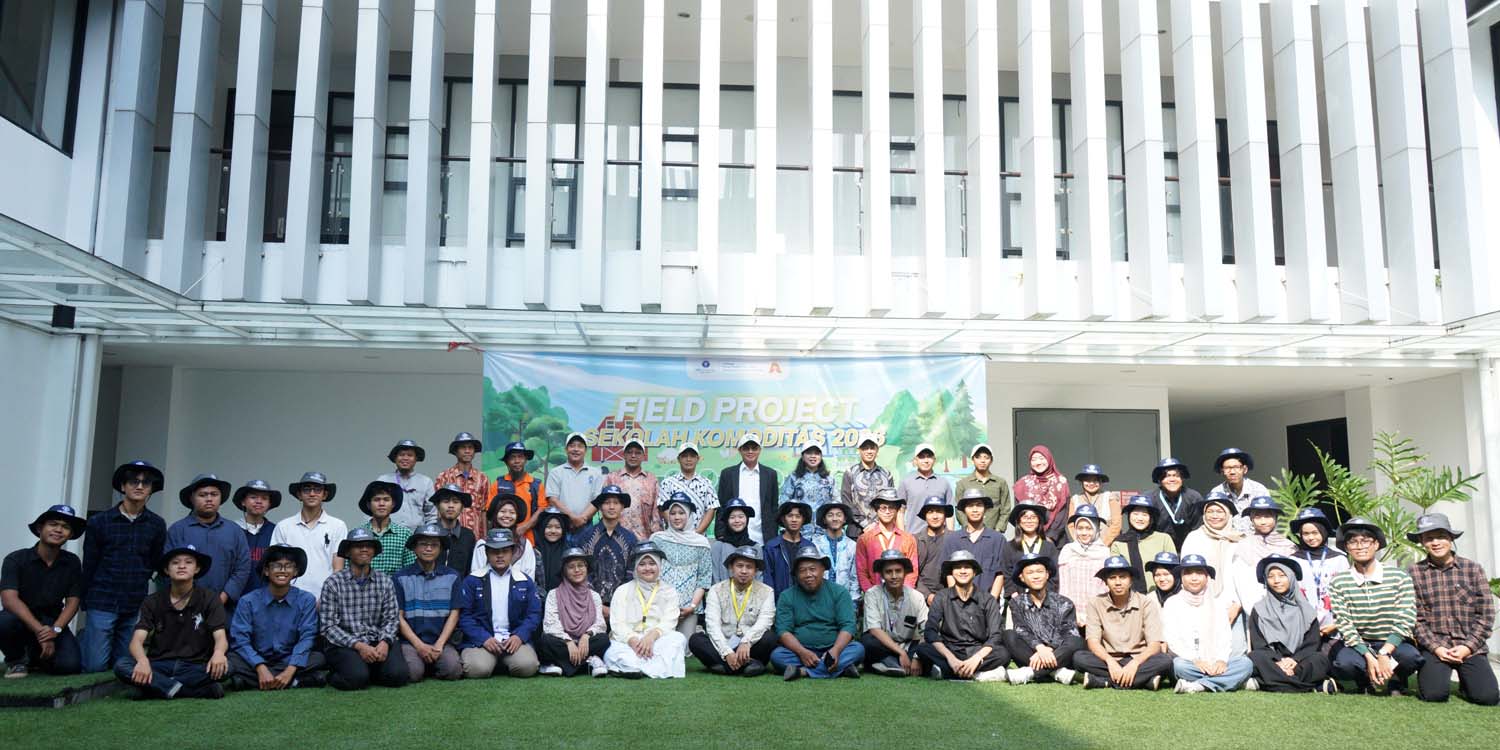
The 2026 Commodity School officially kicked off its series of activities with the Opening Field Project. This event serves as the first step for participants to understand the commodity business ecosystem while strengthening their entrepreneurial capacity in the agromaritime sector.
The Commodity School is a capacity-building and mentoring program aimed at fostering the development of flagship commodities based on local potential through multi-stakeholder collaboration. These commodities include avocados, durians, edamame, sweet potatoes, coffee and its processed products, quail, laying hens, and freshwater fish.
Initiated by the Institute for Agromaritime Development and Innopreneurship Acceleration (LPA2I) at IPB University, the 2026 Commodity School serves as a learning platform that integrates academic knowledge, field experience, and collaboration with industry partners. Through this program, it is hoped that a sustainable and competitive commodity development ecosystem will be created, capable of generating positive impacts on the community and the regional economy.
“This learning takes place not only in the classroom but also through real world field experiences that allow participants to gain practical knowledge and skills directly from experts and practitioners,” explained Dr Roza Yusfiandayani, Vice Chairman of LPA2I for Innovation, Technology Transfer, and Community Empowerment, in her opening remarks at the Commodity School 2026 launch event.
The Opening Field Project featured two speakers who provided strategic insights on commodity development and market opportunities. The first session was presented by Dr Iqbal Irfany, Assistant for Techno-Sociopreneurship at LPA2I, on the topic “Introduction to the IPB University Business Ecosystem.”
In his presentation, he explained community-based business development models through the One Village One Product, One Village One Innovation, and One Village One Exporter approaches, which have been implemented in various regions across Indonesia. The program has successfully reached more than 1.000 villages in 25 provinces and encouraged dozens of villages to break into export markets through the development of flagship commodities, product innovation, and strengthened market access.
The second session featured Dwi Ananda Cesario from PT Bienature Farm Indonesia, who presented on Market Potential and Opportunities from Corporate Partners. During the session, participants gained insight into the market trends for sweet potatoes and edamame, which are showing positive growth trends in both domestic and global markets.
He added that an integrated business model is also a crucial component of PT Bienature’s business development. “PT Bienature Farm Indonesia’s business model encompasses everything from cultivation guidance and post harvest processing to product quality standardization and market access through various distribution channels,” explained Dwi Ananda.
Moving forward, the Commodity School is expected to continue evolving as a space for collaboration, learning, and innovation that fosters a generation of young agripreneurs who are adaptable, creative, and capable of optimizing the potential of Indonesia’s flagship commodities to support the sustainable development of the agromaritime sector. (*/Rz) (IAAS/LAN)


Same data, opposite conclusions The hold camp centres on near-term inflation relief. Westpac now expects annual inflation to peak at around 4% in the June...
Read moreDetails