















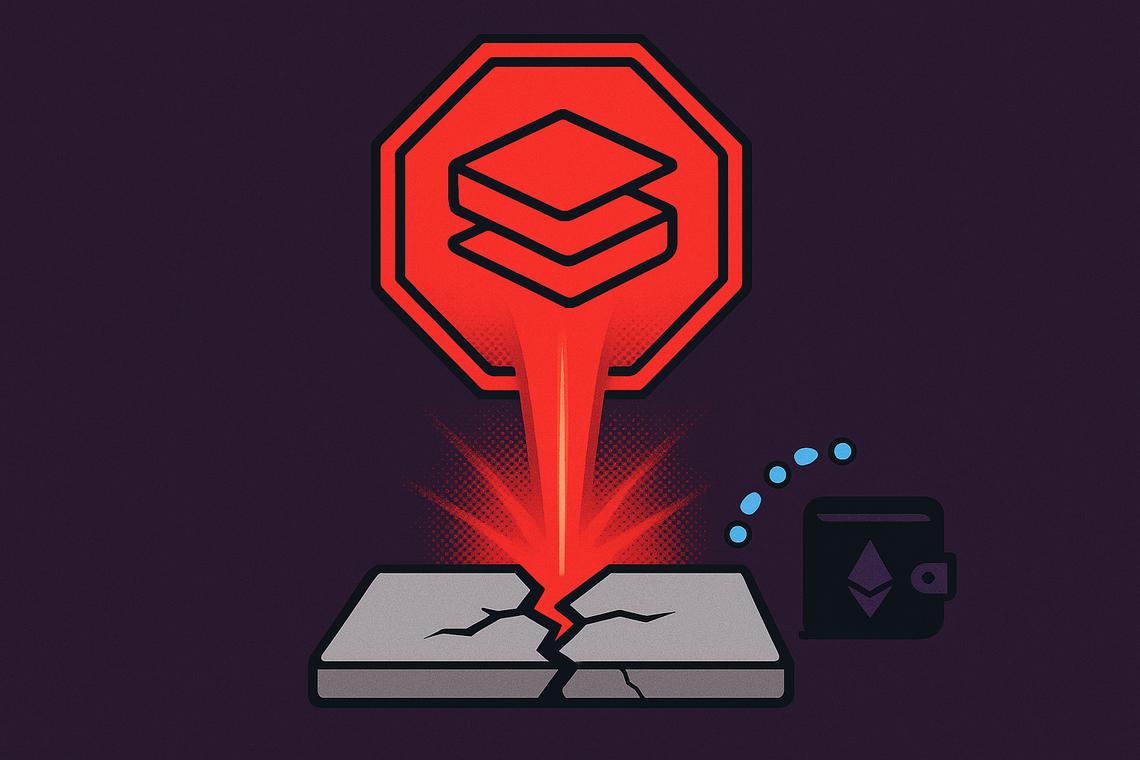
One of Ethereum’s earliest scaling experiments is gone. Loopring, the platform that helped pioneer zero-knowledge rollup technology for decentralized trading, has shut down its zk rollup DEX after years of declining usage and an inability to compete with the next generation of Ethereum scaling networks it helped inspire.
Key takeaways
Loopring shut down its Ethereum-based zk rollup decentralized exchange on June 28, 2026, ceasing all trading and relayer operations immediately.
The team cited weak user adoption, limited business development, and competition from newer zkEVM networks as the reasons for closure.
Total value locked collapsed from roughly $760 million in November 2021 to about $8 million, while the LRC token fell from $3.75 to approximately $0.01.
Loopring will distribute remaining user funds directly to Ethereum wallets in batches and cover all associated gas fees.
More than 60 crypto projects have shut down in 2026, reflecting prolonged market weakness and shifting technology trends across the sector.
Loopring’s Immediate Shutdown of Its zk Rollup Decentralized Exchange
The closure is immediate and total. All trading services have stopped, and the protocol’s relayer — the off-chain component that batches and processes transactions — has ceased operating. There is no wind-down period for trading, no transitional phase. The platform that once processed hundreds of millions in volume simply went dark.
The announcement was made by the team on X on June 28, 2026, confirming what the protocol’s metrics had been signaling for years.
User fund distribution plan after closure
The one area where Loopring is moving carefully is user funds. The team confirmed it will calculate final balances and distribute them directly to users’ Ethereum wallets in batches. Importantly, Loopring will also cover the gas fees required for those on-chain withdrawals — a notable commitment given the cost involved in batch settlement at scale.
This process follows the earlier closure of Loopring’s wallet service in July 2025, which the team had attributed to scaling challenges at the time. The June 2026 announcement effectively completes the full shutdown of Loopring’s remaining products.
Reasons Behind Loopring’s Closure and Technical Limitations
Three forces converged to make Loopring’s position untenable: weak adoption, limited commercial execution, and the rise of more capable competitors.
Weak adoption and business development challenges
The team acknowledged frankly that while they excelled at building on the technical side, they failed to develop the commercial side of the business. Exchange delistings of LRC during 2026 accelerated a collapse that was already well underway. Without a growing user base and sufficient liquidity, the protocol was operating a service that had become, in their own words, hollow.
Competitive pressure from newer Ethereum zkEVM networks
Loopring helped lay the intellectual groundwork for zkEVM — Ethereum-compatible zero-knowledge virtual machines — but ultimately could not match what those newer networks offered. Modern zkEVM-based scaling networks are fully programmable, supporting complex smart contracts and a wide range of DeFi applications. Loopring’s narrower architecture simply could not keep up with that expanding capability.
This is perhaps the sharpest irony in the story: a pioneer displaced by the technology it helped pioneer.
Protocol architecture lacked virtual machine affecting composability
At the core of Loopring’s structural problem was a fundamental design choice. The protocol was built without a virtual machine, which meant it could not support composable smart contracts the way general-purpose rollups can. That constraint blocked Loopring from expanding into payment use cases and broader DeFi integrations — exactly the areas where user activity and developer interest migrated over the past few years. What worked as a specialized DEX architecture in 2019 became a ceiling by 2024.
Decline in Loopring’s Metrics and Market Impact
The numbers tell the story without ambiguity.
Total value locked plummeted from $760 million to $8 million
According to L2Beat data, Loopring’s total value locked reached approximately $760 million in November 2021, when the broader crypto market was at its peak. By the time of the shutdown, that figure had fallen to roughly $8 million — a decline of nearly 99%. That trajectory is not a market correction; it is an ecosystem abandonment.
LRC token price dropped from $3.75 to about $0.01
The LRC token mirrored the protocol’s decline almost precisely. From an all-time high of $3.75, also recorded in November 2021, LRC has fallen to approximately $0.01. That represents a loss of more than 99% of peak value, effectively wiping out the holdings of anyone who bought near the top and held through the shutdown.
Impact on partnerships such as GameStop’s NFT marketplace
In 2021, Loopring secured one of its most high-profile partnerships when it agreed to power GameStop’s NFT marketplace, which launched in 2022. That deal generated significant attention and briefly boosted the project’s visibility. But neither the partnership nor the broader NFT boom translated into sustained user growth for the underlying protocol — and the GameStop marketplace’s own trajectory largely mirrored the sector’s cooling.
Broader Context of Crypto Project Shutdowns in 2026
Loopring is not an isolated case. According to RootData, more than 60 crypto projects and protocols have discontinued services in 2026 alone, as prolonged market weakness and evolving technology trends have reshaped which platforms can sustain operations.
More than 60 crypto projects closing amid prolonged market weakness
The scale of closures in 2026 reflects something more structural than a typical bear market shakeout. Projects that survived earlier downturns but never achieved meaningful user retention are now exhausting runway without clear paths to recovery.
Examples of other shutdowns linked to exploits and low demand
The circumstances vary widely across closures. Among the projects that have also exited the market in 2026:
Pyra announced plans to wind down after losses linked to the Drift exploit, halting new user registrations and setting a September 15, 2026, deadline for fund withdrawals.
Carrot, a Solana-based yield protocol, also attributed its shutdown to losses from the Drift Protocol exploit.
Botanix Labs, a Bitcoin Layer 2 developer, stated that user demand had never reached a level sufficient to support long-term operations.
The through-line connecting many of these closures is not dramatic failure — it is the quiet math of insufficient demand meeting finite resources. Loopring’s case adds a particular edge to that pattern: it was technically ahead of its time, but being early in crypto does not guarantee being relevant later.
The deeper question Loopring’s shutdown raises for the broader zero-knowledge ecosystem is whether protocol design choices made in 2018 and 2019 — before zkEVM was even conceived — can ever be retrofitted for what users now expect, or whether first movers in highly technical infrastructure simply carry an architectural debt that compounds until it becomes insurmountable.
FAQ
Why did Loopring decide to shut down its zk rollup decentralized exchange?
Loopring cited three main factors: weak user adoption, limited business development capabilities, and intensifying competition from newer Ethereum zkEVM-based scaling networks that offered greater composability and a broader range of use cases.
How will Loopring handle user funds after the exchange shutdown?
Loopring will calculate final user balances and distribute them directly to Ethereum wallets in batches. The team has committed to covering the gas fees associated with those on-chain withdrawals.
What technical limitations affected Loopring’s protocol?
Loopring’s protocol was built without a virtual machine, which prevented composability with other smart contracts and limited practical payment use cases. This design constraint restricted ecosystem growth as the broader DeFi landscape evolved toward more programmable rollup environments.
How did Loopring’s total value locked and token price change over time?
Total value locked fell from approximately $760 million in November 2021 to roughly $8 million at the time of shutdown — a near-99% decline. The LRC token dropped from its all-time high of $3.75 to about $0.01 over the same period.
Article produced with the assistance of artificial intelligence and reviewed by the editorial team.