










An adage in investing and policymaking circles is the reminder that the markets are not the economy. While the former tracks profits and expectations, the latter busies itself with tangible stuff, from jobs and wages to GDP. Often the two can tell a similar story, but there are also times when they become disjointed, and economic fortunes get tied up with the whims of financial markets.
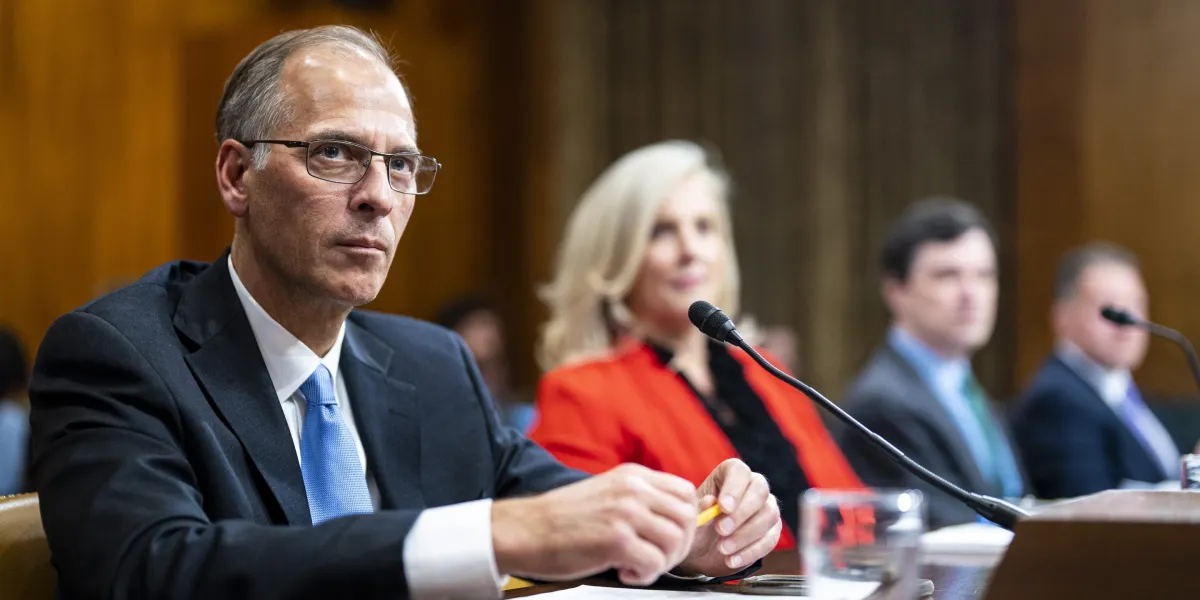
According to Mark Zandi, Moody’s Analytics’ prominent chief economist, we are now in one of those moments.
“I rarely weigh in on financial markets, as they generally reflect and are broadly consistent with economic conditions. But there are times when I feel markets are overdone and increasingly disconnected from the economy,” Mark Zandi wrote in an X thread Sunday.
The disconnect Zandi is talking about has left many analysts scratching their heads over the past year. While financial markets have performed well, including not only stocks but also commodities such as gold and silver, the economy as a whole seems to be in a bit of a lull, and has flashed more than a few warning signs. As the disconnect grows, propelled by high valuations and rising speculation in financial markets, Zandi cautioned that the real economy could be suffocated.
Real GDP growth in the U.S. decelerated sharply to just 1.4% in the last quarter of 2025, down from 4.4% in the previous quarter, the Commerce Department announced last week. This pace falls below the economy’s potential of around 2.5%, Zandi wrote, signaling unsustainable momentum. Job market indicators further underscore the rift. Unemployment ticked down slightly to 4.3% last month from 4.4% in December, and employers added more jobs than expected in January, but revised 2025 estimates released this month suggested almost no job growth at all last year.
Those factors do not paint a particularly rosy economic picture. But in the background, financial markets keep punching above their weight. Fueled by strong returns last year, expected rate cuts and artificial intelligence hype, many analysts project 2026 to be another banner year for assets. Researchers from Goldman Sachs, for instance, expect the S&P 500 to rise 12% this year.
The disconnect risks a rude reversal. If stocks falter—say, high valuations end up not panning out, and the tech-heavy U.S. stock indexes take a hit—wealthy households could slash spending, dealing a blow to GDP. As Moody’s estimated last year, the top 10% of earners in the U.S. account for around half of all spending. Should that activity dry up, it could lead to businesses cutting back and an economic contraction.
If everything rides on markets continuing to perform well, it could be a bad sign for everyone involved with the U.S. economy. “Financial markets feel increasingly fraught to me, with the elements for a meaningful selloff coming into place,” he wrote.
According to Zandi, markets have been “increasingly tainted by speculation,” leading to today’s high and possibly problematic valuations. Technology giants—the five largest of which currently account for around 30% of the S&P 500’s value—have unleashed billions in AI-related investments over the past year, although much of that expenditure is on the hope that future ROI will justify it. That may be the case, but for many investors, the strong returns over the past few years are validating enough, according to Zandi.
“Investors are simply investing on the faith that prices will rise quickly in the future because they have in the recent past,” he wrote.
The danger of this disconnect is not merely a loss of paper wealth for investors. Zandi warned that a collapse in the markets would actively threaten a fragile economy, as consumer spending dries up and businesses become more cautious. External shocks, such as renewed confusion over the Trump administration’s tariffs or the potential of a military strike against Iran, could also aggravate the economic picture.
Sometimes markets and the economic reality on the ground sing the same tune. As business fundamentals improve, so do their valuations, and that can trickle down into more hiring and higher wages. But with the economy now struggling for momentum and markets soaring on shaky ground, the story of this moment of disconnect could be very different, according to Zandi.
“Markets risk moving in a big way, causality is reversed, and falling asset prices threaten an already vulnerable economy. This is one of those times,” he wrote.