











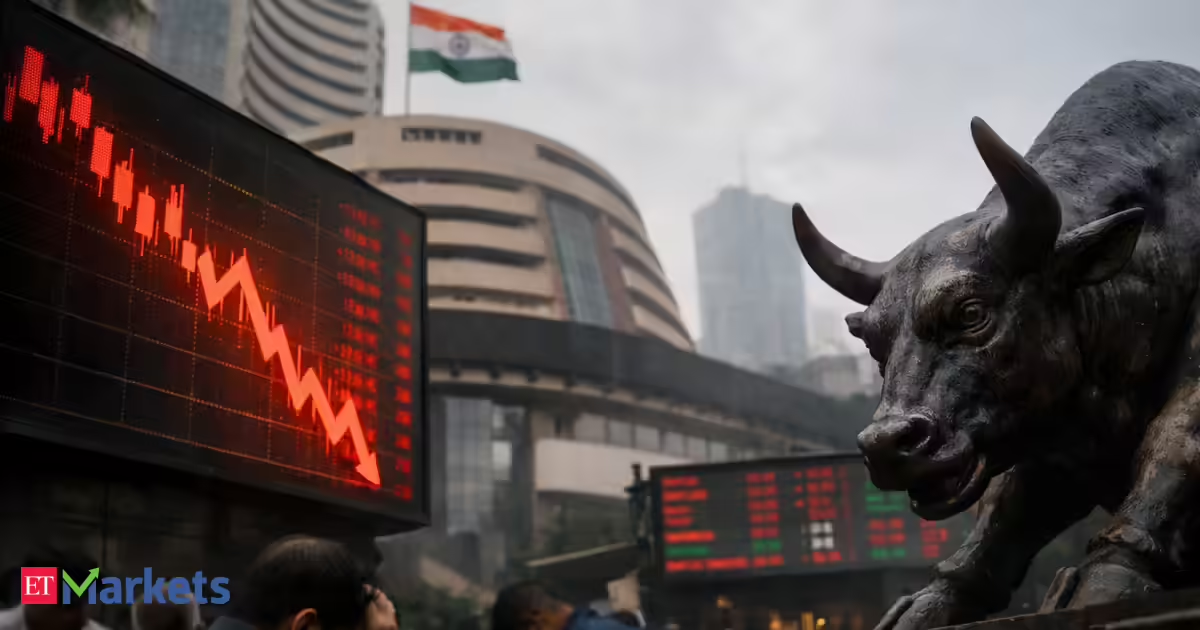
Sensex closed 1,069 points lower at 82,226 or down 1.28%, while the 50-share Nifty index plunged 288 points in the red to 25,425, falling below the 25,450 level.
On the 30-share Sensex, Tech Mahindra, HCL Tech, Eternal, Infosys, TCS, L&T, and Bharti Airtel slipped up to 6.3% on Tuesday. NTPC, HUL, Power Grid Corp, Tata Steel, and Adani Ports were the gainers, rising up to 2.12%.
Why is the stock market falling today? Here are 6 key factors
1) IT bloodbath gets new jolt
Shares of information technology (IT) companies such as Tata Consultancy Services (TCS), Infosys and HCL Technologies, among others, faced heavy selling pressure in Tuesday’s trade after Anthropic said its Claude Code tool can be used to modernise legacy systems that run on COBOL.
Infosys shares declined nearly 3.5%, while HCL Technologies, Mphasis and Persistent Systems shares ended up to 6% lower. TCS, Tech Mahindra, Wipro and other stocks plummeted up to 6% each, pushing the Nifty IT index down to a steep 4.74% in the negative.
Anthropic on Monday said Claude Code could automate much of the exploration and analysis that drives the complexity of COBOL modernisation. In the US, the selloff was worst for IBM, which declined 13% overnight. Short for Common Business-Oriented Language, COBOL is a dominant programming system developed in the late 1950s and is commonly used in business data processing, including payment processing and retail transaction systems. According to Anthropic, an estimated 95% of ATM transactions in the U.S. still rely on COBOL, making it a potential target for cost-efficient AI disruption.
2) Trump’s newest tariff threat
Concerns around US President Donald Trump’s trade stance further deepened the selloff. Posting on Truth Social on Monday, Trump warned that any country attempting to “play games” with the recent court ruling would face significantly higher tariffs.
His remarks came after the Supreme Court of the United States on Friday struck down tariffs imposed under the International Emergency Economic Powers Act. In response, Trump said he would instead introduce a 15% global tariff under Section 122 of the Trade Act of 1974.
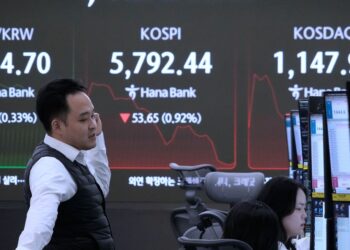
3) US tech selloff, Asian markets fall
Global shares fell for a second straight day on Tuesday as investor sentiment weakened amid multiple concerns, including uncertainty over Donald Trump’s tariff policy, rising geopolitical tensions and renewed worries about the potential economic disruption caused by artificial intelligence.
MSCI All Country World Index edged lower for a second day. In Europe, the STOXX Europe 600 steadied but remained close to record highs. Asian markets found some support as traders in China and Japan returned from holidays. Meanwhile, U.S. stock futures were modestly higher, rising about 0.2%–0.3%.
On Monday, the S&P 500 fell 1.0%, wiping out the previous week’s gains, while the Nasdaq Composite declined 1.1% as fears grew that artificial intelligence could disrupt software and other industries. A bearish analysis from Citrini Research on the potential risks to the global economy further unsettled already fragile investor sentiment, Reuters said.
4) Monthly expiry adds to unease
The decline comes alongside the monthly expiry of Nifty 50 derivatives, a period when traders typically square off or roll over their positions. As large options positions are adjusted, the underlying index can see sharper-than-usual moves. Unwinding of long bets and fresh hedging activity can add to selling pressure.
At the same time, option writers often attempt to anchor prices near key strike levels, which can heighten intraday volatility. With liquidity thinning in some stocks during these adjustments, even modest selling can magnify the downside across the broader market.
5) Weak Rupee vs Dollar
The Indian Rupee was down 0.07% at 90.95 against the US dollar on Tuesday. Currency depreciation could trigger foreign capital outflows, which can pressure equities. A weaker rupee also increases the cost of imports—especially crude oil—raising inflation risks and squeezing margins for companies dependent on imported inputs. This can dampen earnings expectations and market sentiment.
6) US-Iran tensions
Even as a new round of talks between the United States and Iran is scheduled to take place in Geneva, Donald Trump said on Friday that he was considering a strike if Tehran failed to reach a deal with Washington. “I guess I can say I am considering that,” he said in response to a reporter’s question, adding to the prevailing uncertainty.
Responding to the remarks, Esmaeil Baghaei, spokesperson for Iran’s Ministry of Foreign Affairs, said on Monday that any U.S. attack — including limited strikes — would be viewed as an “act of aggression” and would trigger a response.
(Disclaimer: Recommendations, suggestions, views and opinions given by the experts are their own. These do not represent the views of The Economic Times)