












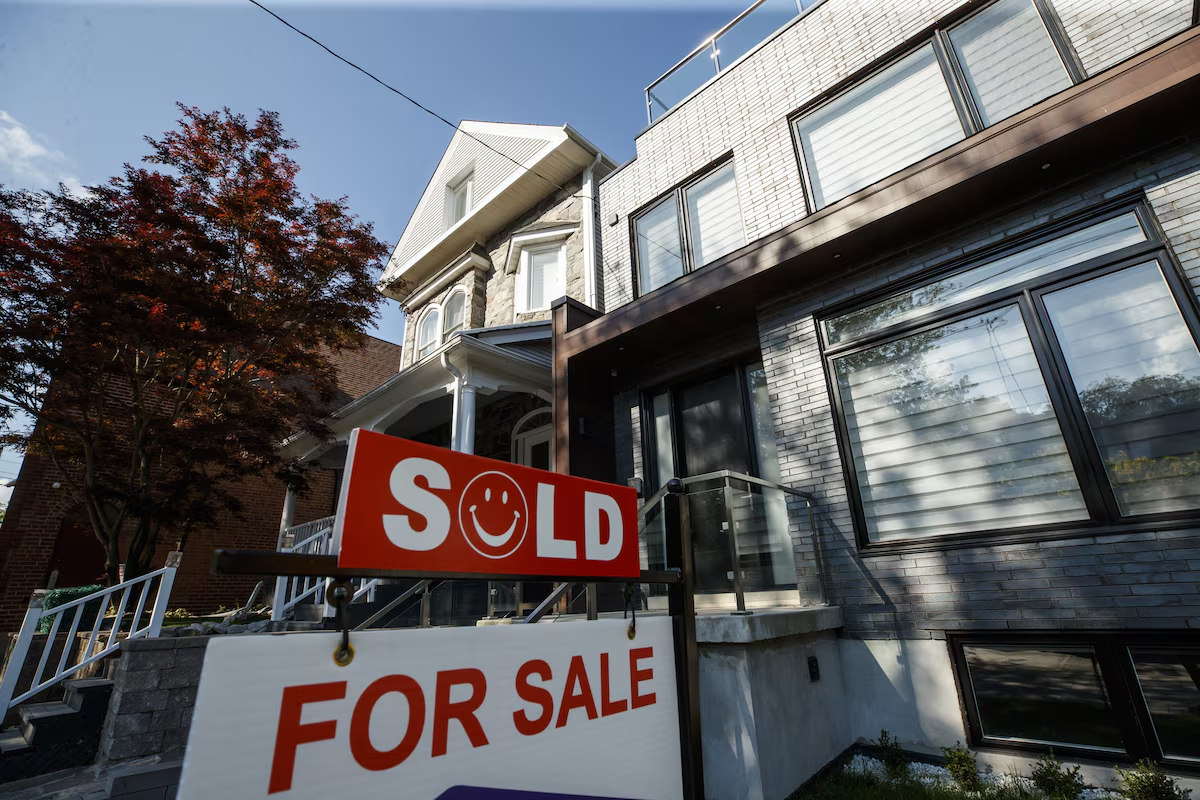
A sold sign sits in front of a house in Toronto in July, 2022. The idea of Gen Z being locked out of home ownership, pensions and career-launching job opportunities is gaining traction.COLE BURSTON/The Canadian Press
Gen Z financial narratives usually have the life of a soap bubble. Is anyone still talking about loud budgeting? Yeah, no.
But the idea of today’s young adults being locked out of home ownership, pensions and career-launching job opportunities is gaining traction. A recent academic study has warned of the dangers of Gen Z acting on this feeling of financial hopelessness by prioritizing spending over saving.
One thing Gen Z has going for it is the high-flying stock market. Yes, young adults are in the stock market in a big way. The financial industry has seen enough interest from this demographic to create apps for buying and selling stocks that cost little or nothing to use. We are in a new age of democratized investing.
We’re also in an age of effortless investing. In fact, there may never have been a more inclusive stock market than we’ve seen in recent years. Every sector gets a turn being the star, and every investor has a greater-than-usual chance of making money by following influencers or their own research. This cannot last.
Opinion: Unaffordable housing is pushing more young people to give up. Why that’s dangerous
Moonshot markets like we’ve seen lately present a risk of a proportionately strong pullback. This isn’t a rule, but let’s get real. In your investing lifetime, Canada’s S&P/TSX Composite Index may never deliver better results than the 16.4-per-cent average annual gain over five years to Jan. 31. That’s share price gains plus dividends, or total return.
Boomers have learned from experience how to take a punch, investing-wise. Gen Xers have seen their market crashes as well, and older millennials had some skin in the game during the 2008-09 financial crisis. Gen Z’s bear attack will be its first, and with higher stakes than previous generations faced.
There’s a sense of urgency in the way Gen Z invests that flows from a feeling of being left out of other opportunities to build wealth. The book on wealth-building in Canada was until recently just three words long: “Buy real estate.”
But homes remain expensive in some cities, even as we enter a period of readjustment for housing in which ownership is more about lifestyle and family than it is about making money. The real estate market in some markets has done okay, but the onetime hot spots in and around Toronto and Vancouver have gone cold.
Cryptocurrency was one answer for Gen Zs and millennials who were seeking a path to wealth that avoided housing. Lots of money was made as crypto surged, but latecomers and those who didn’t lock in profits face serious adversity. Bitcoin is down about 25 per cent already this year and about 34 per cent in the past 12 months.
Stocks are hanging in for now and investors who have been in the market for a year or more are almost certainly sitting on strong returns. Getting a taste of these gains has never been easier for young investors, a demographic that in past years never had a minute’s attention from Bay Street’s brightest marketing minds.
Lately, the appeal of turning Gen Zs into stock market investors has drawn the interest not just of upstart independent financial platforms such as Wealthsimple and Questrade, but also bigger players such as the banks.
Royal Bank of Canada just introduced GoSmart, an investing app that directly targets young investing rookies and offers 50 free stock trades a year. Toronto-Dominion Bank is relaunching its already established Easy Trade app, which offers a comparable level of free trading.
Gen Z’s investing skills will be tested when the markets correct, just as boomers were when the tech bubble burst 25 years ago. Profitable trades will combust in days or weeks, and maybe even minutes.
The big stock indexes will rebound over time, as they always do. But what about the sense of economic belonging that some Gen Zs are getting from the stock market? Without it, there could be more financial despair and, in turn, more reckless spending and investing. The study that investigated this type of behaviour found it can lead to wider financial inequality.
My take is that Gen Z will find its way financially in time, just as many millennials have since their difficult welcome-to-the-economy moment 15 or so years ago. An encouraging thought for the near term: Housing prices look squishy in some places. Might there be a chance to take some stock market gains off the table and use them for a home down payment?
Rob Carrick is a personal finance expert and former Globe and Mail staff columnist.
We’re looking to speak with a young committed renter who has decided to spend freely and travel widely. Oh, and who has doubled down on their investing. If you’re interested in sharing your personal story on our Stress Test podcast, please email Globe editor Roma Luciw at [email protected]